

Cut Glass Pendant Ceiling Lights
Cut glass pendant ceiling lights catch the light in hallways and rooms, bringing period glass and brass into a modern interior.
Cut Glass Pendant Ceiling Lights
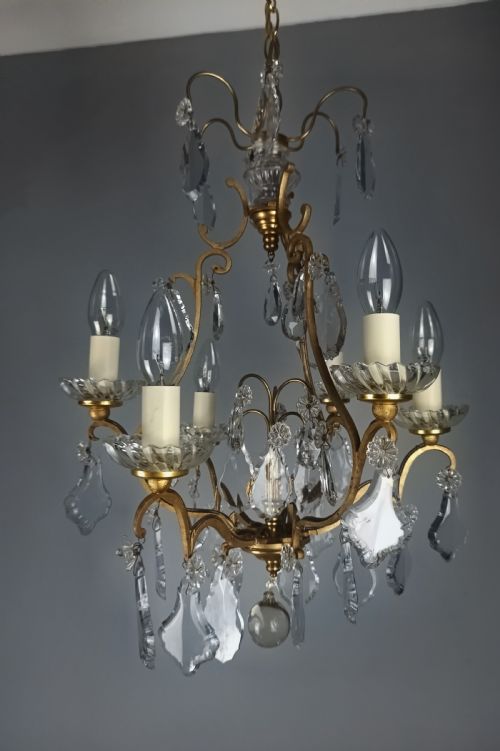
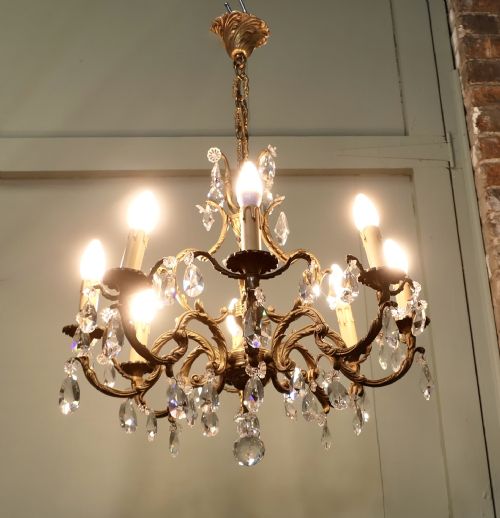
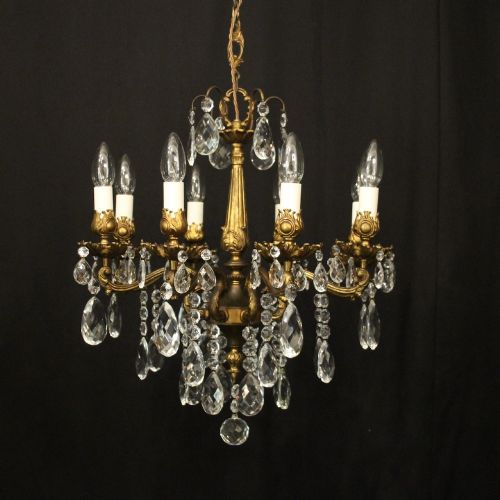
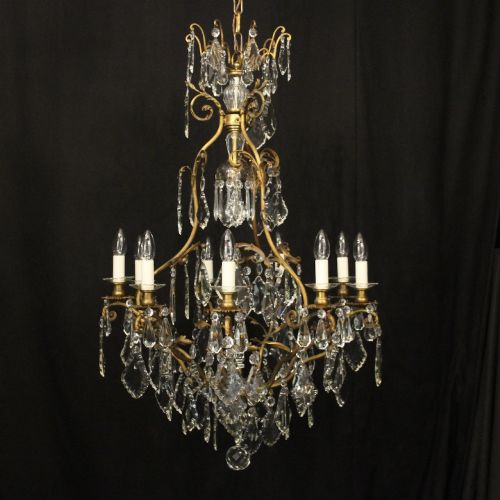
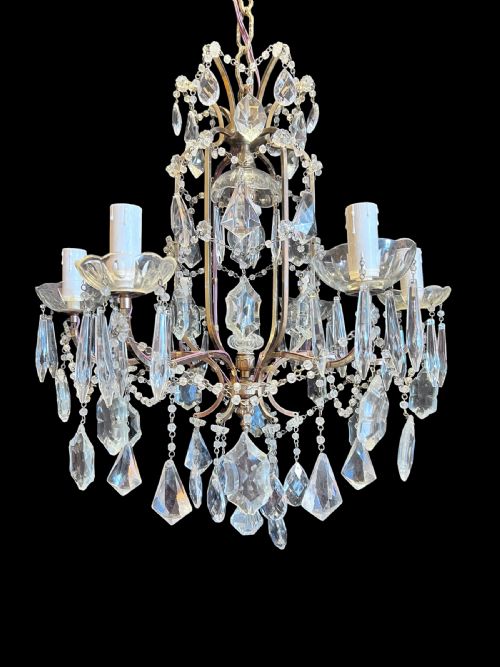
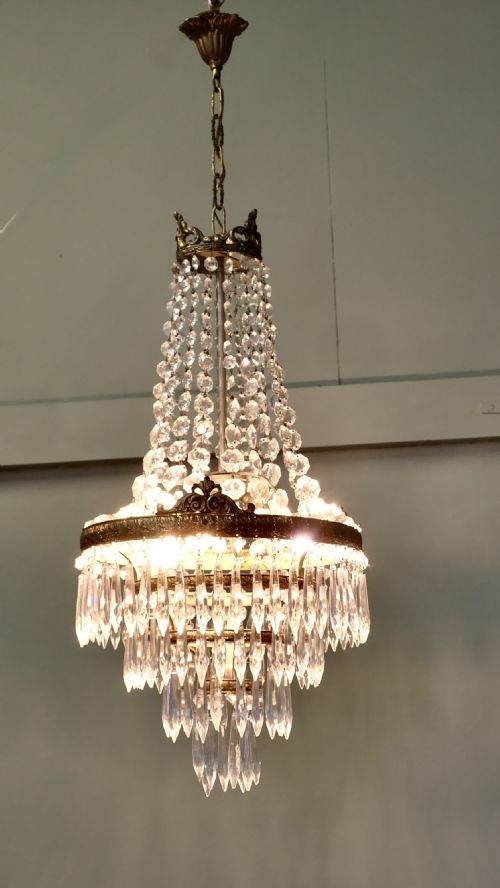
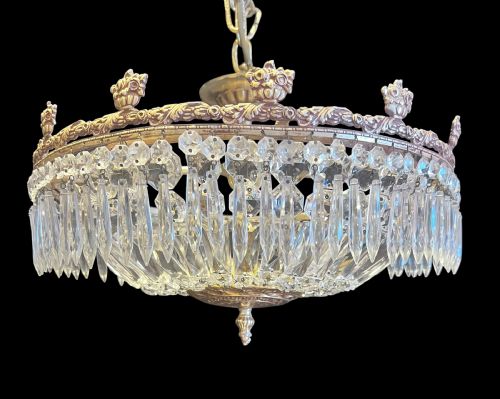
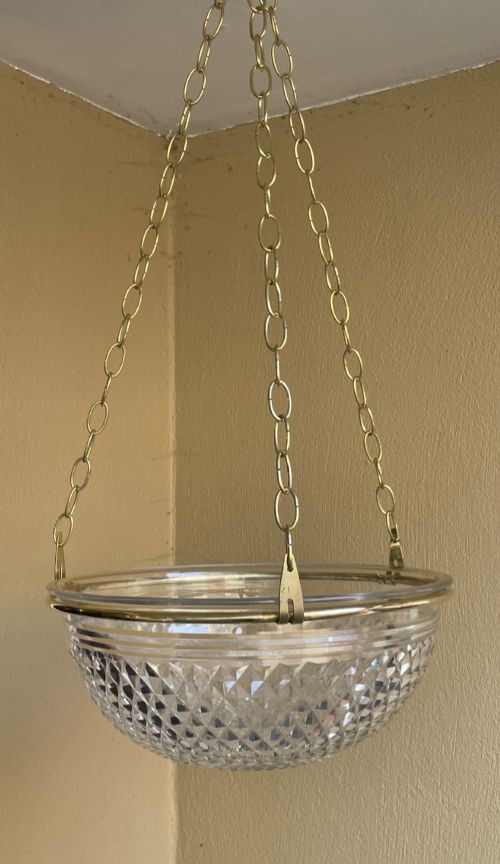
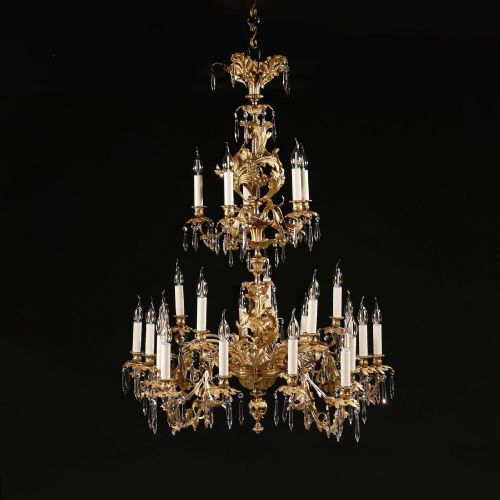
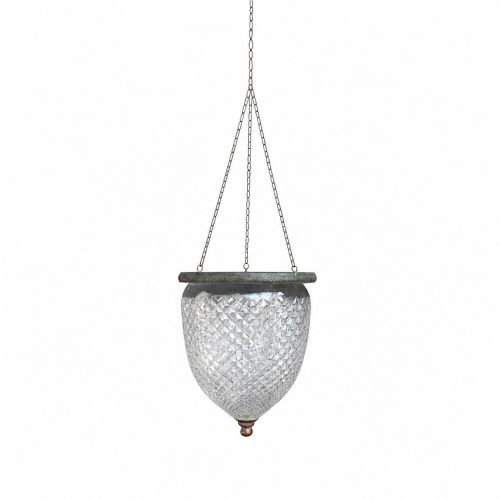
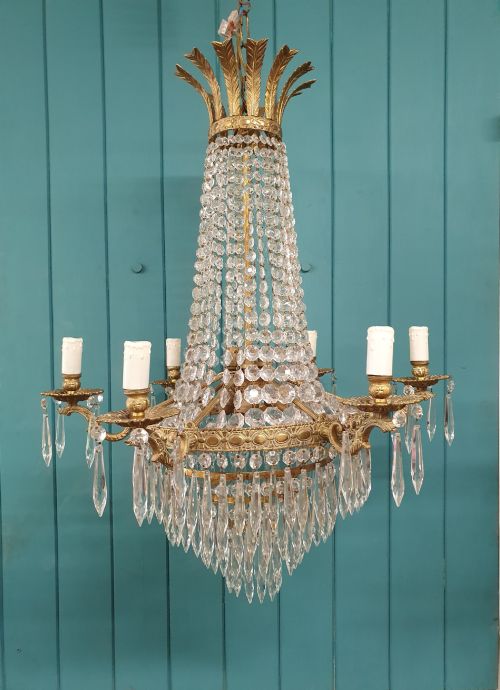
Cut glass pendant ceiling lights encompass hanging illumination from the nineteenth and early twentieth centuries, spanning Edwardian plafonniers, French basket chandeliers, and hall lanterns. You will frequently encounter fixtures featuring brass or gilt metal frames mounted with cut crystal drops, lustres, and beads.
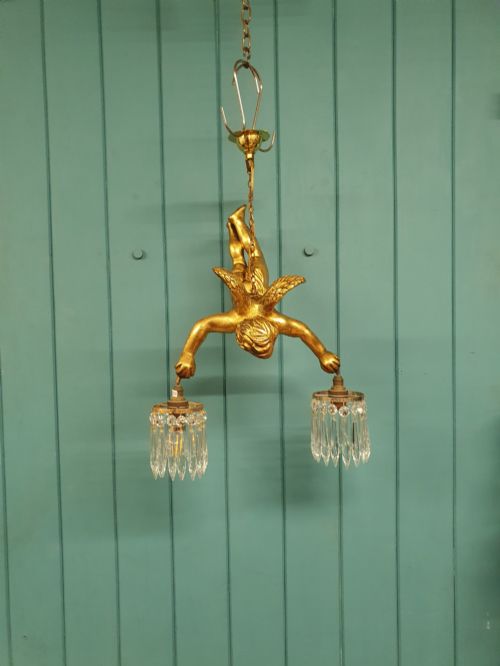
The selection ranges from single-light bowls and bag chandeliers to large multi-arm fixtures originating from English, French, and Italian workshops. These fittings serve to illuminate rooms while providing the reflective qualities characteristic of period cut glass.
How they were made
Maker's workshops built these lights using cast brass, bronze, and gilt metal frames to support intricate arrangements of lead glass and crystal. Individual components such as spikes, beads, and pendeloques were hand-cut to maximise light refraction before being wired onto metal armatures.
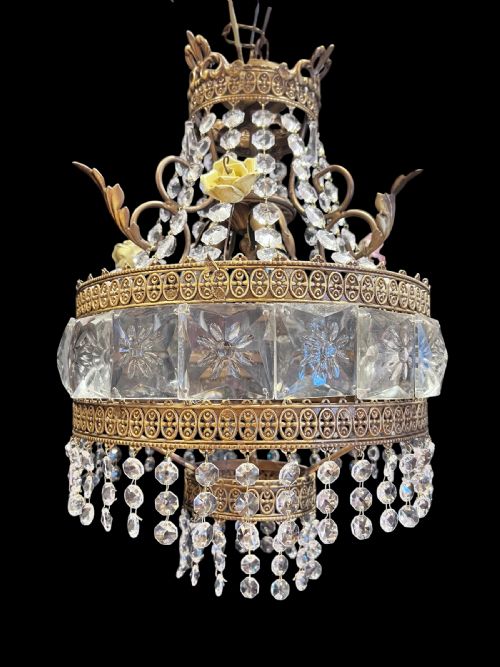
Frames often incorporated decorative metalwork including lion masks, leaf motifs, and porcelain flower elements, secured with wire loops or pins to hold the glass pendants in place.
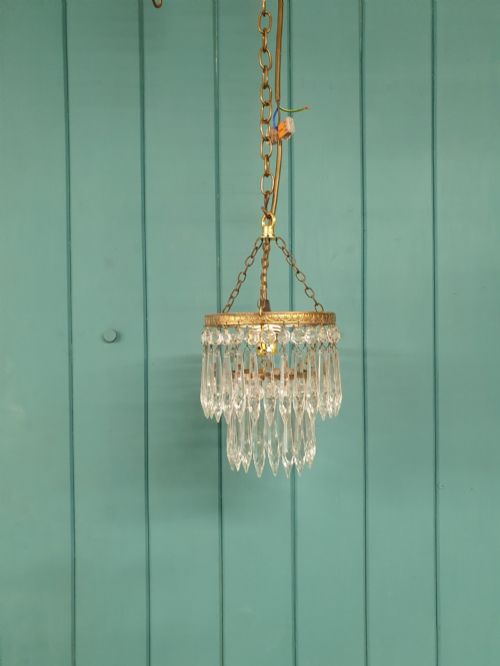
Some tiny Edwardian dome lights measure a mere six inches across, proving that grand crystal sparkle comes in miniature sizes.
What varies in quality
Quality shows in the depth and crispness of the glass cutting, where sharper facets produce a brighter reflection than softer moulded surfaces. The weight and casting detail of the brass or gilt bronze frames similarly indicate the standard of production.
Completeness of the crystal drops and matching components distinguishes better examples, as replacements alter the uniformity of a tent or bag fixture over time.
S. FAUER
The Cut Glass Pendant Ceiling Lights Glossary
- Plafonnier
- A ceiling-mounted bowl light sitting close to the surface. These glass or crystal fixtures direct light downward into entrance halls and smaller rooms.
- Tent and bag chandelier
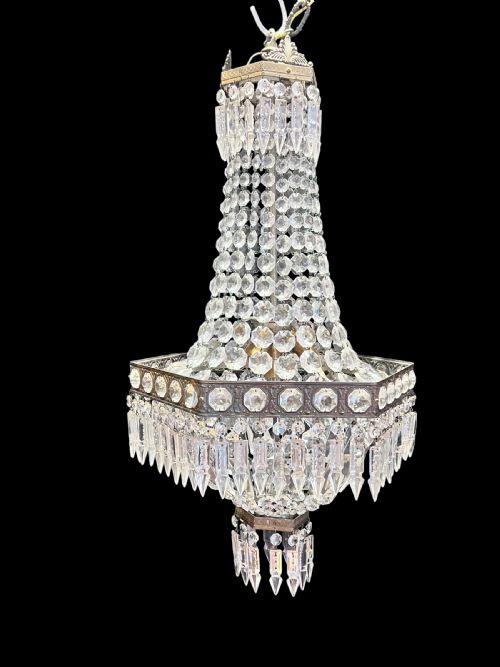
- A lighting fixture featuring an upper conical section of strings of beads dropping to a lower gathered basket. This design creates a tiered silhouette typical of French and Edwardian styles.
- Lustre
- A cut glass or crystal pendant hung from a chandelier or wall bracket. These drop stones catch and scatter light across the room.
- Hall lantern
- An enclosed ceiling pendant designed for corridors and stairwells. They usually feature brass frames glazed with glass panels.
- Spike chandelier
- A hanging light characterised by upward-pointing glass or crystal spikes mounted around a central frame. These compact fixtures often measure under a foot in diameter.
Cut Glass Pendant Ceiling Lights: Frequently Asked Questions
How do I hang a heavy brass chandelier safely?
Heavy brass and crystal chandeliers require direct suspension from a ceiling joist using a rated metal hook and bracket system. Wiring must support the weight independently of the chain.
Professional installation is recommended for multi-arm fixtures due to their substantial weight and delicate glass components.
How do I clean cut glass pendants?
Cleaning involves removing dust with a soft brush and wiping glass components with a mild solution of warm water and dish soap. Rinsing with distilled water prevents mineral spots on the crystal facets.
Leaving drops attached to the frame while cleaning avoids breaking the wire ties, provided you support the underside with a towel.
What is the difference between a plafonnier and a pendant?
A plafonnier mounts directly against the ceiling as a dome or bowl, fitting spaces with lower headroom. A pendant hangs down on a chain or rod, placing the light source lower in the room.
Plafonniers suit hallways and vestibules, while hanging pendants suit rooms with higher ceilings.
How do I date an Edwardian cut glass light?
Edwardian lights often feature brass frames combined with cut crystal spikes, domes, or beaded bags dating from around nineteen hundred to nineteen ten. Construction methods show machine-assisted brass stamping alongside traditional hand-cut glass.
Comparing the mount style and hanging mechanism with dated examples helps confirm the period.