
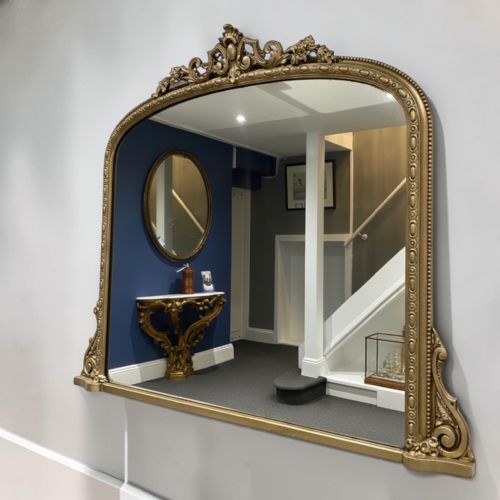
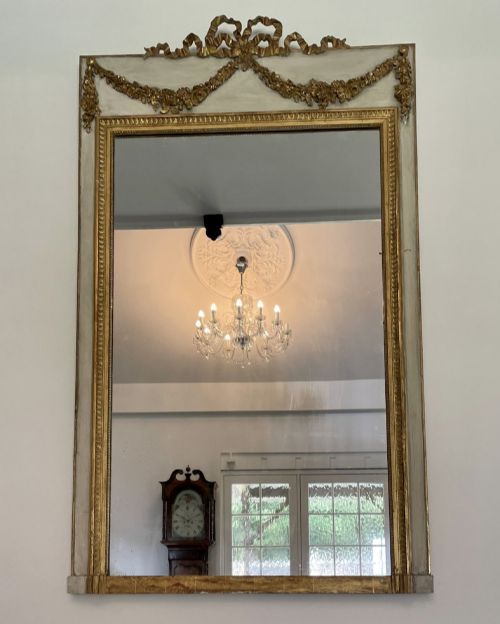
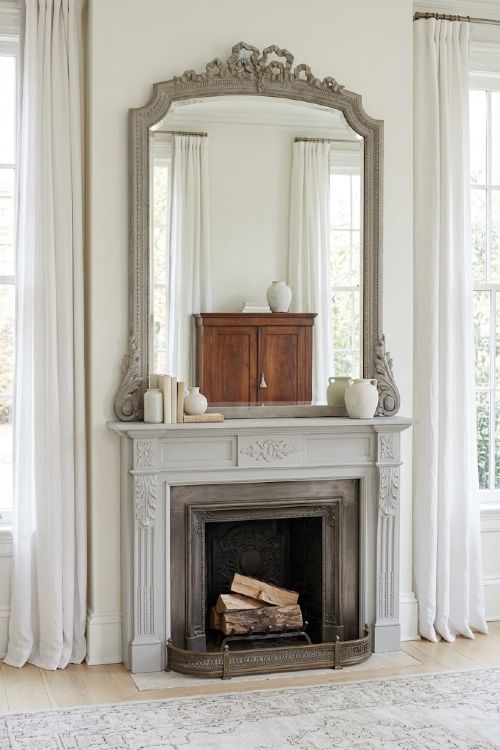
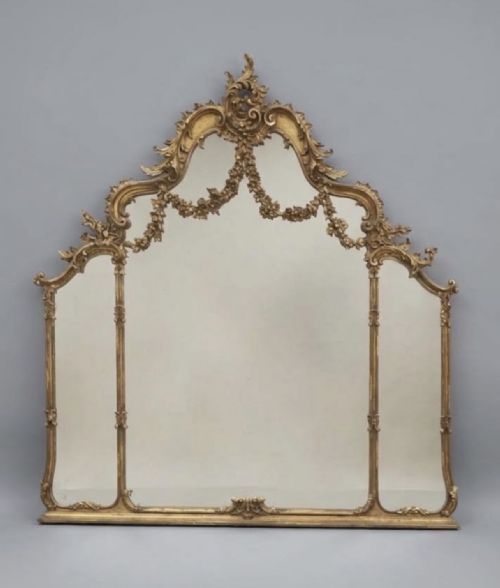
French Crest Overmantel Mirror
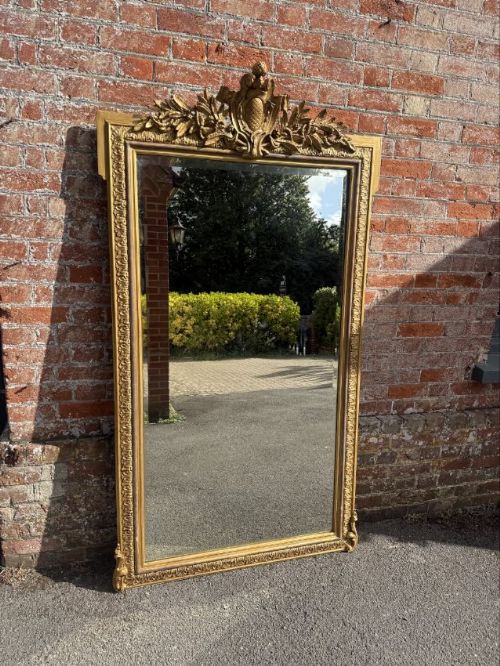
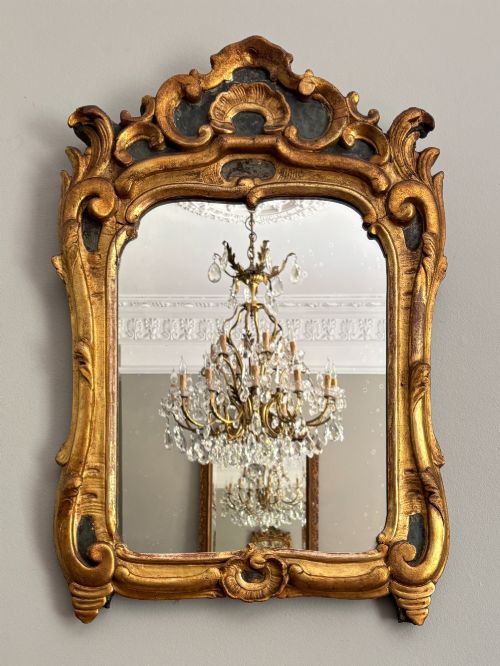
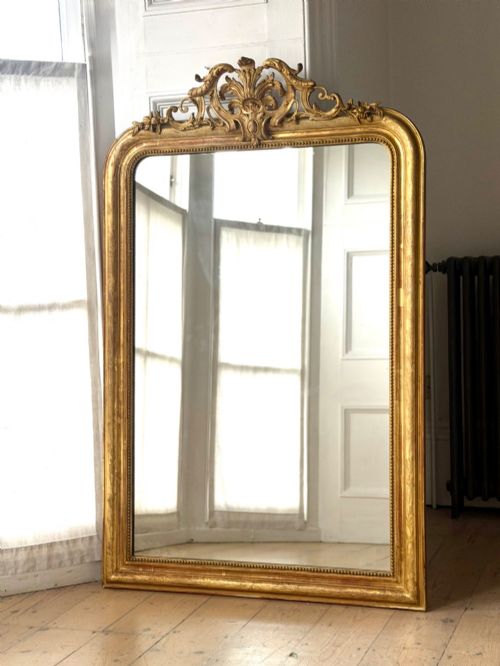
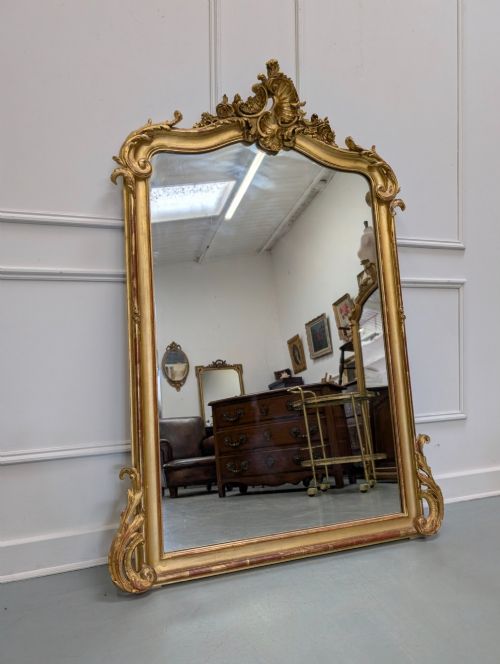
A french crest overmantel mirror brings architectural presence and reflected light to a fireplace, defined by ornate cresting above grand proportions.
French Crest Overmantel Mirror
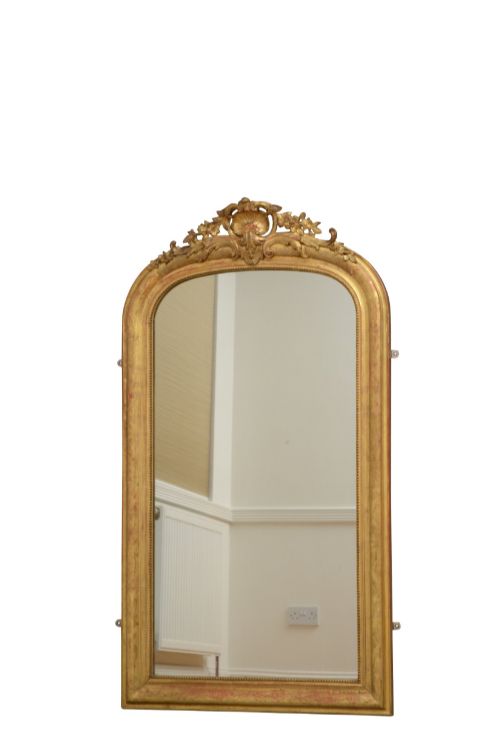
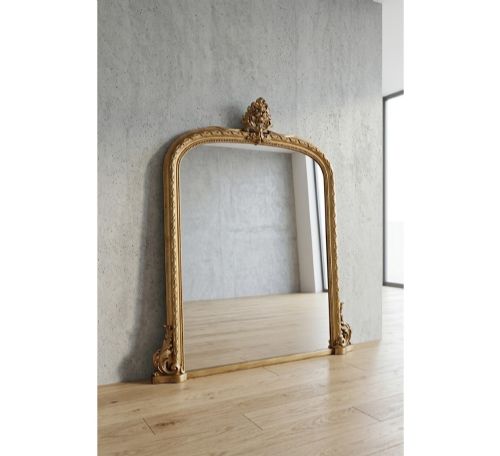
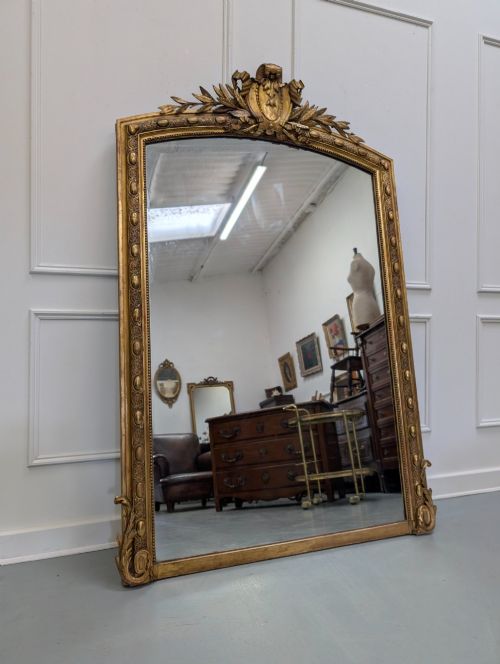
A french crest overmantel mirror is designed specifically to sit above a mantelpiece, often stretching wide to reflect the room or rising tall with an arched or shaped top. These large wall mirrors anchor a chimney breast, drawing the eye upwards through elaborate crests and carvings.
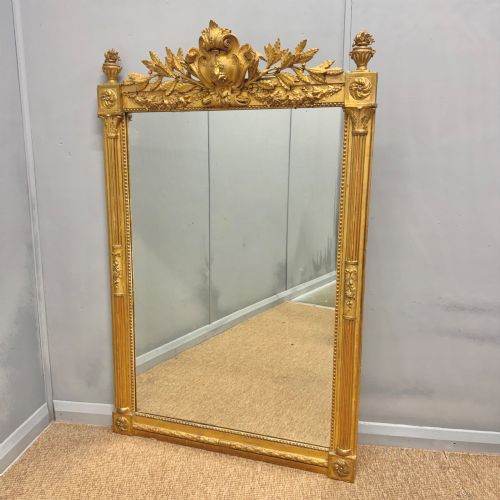
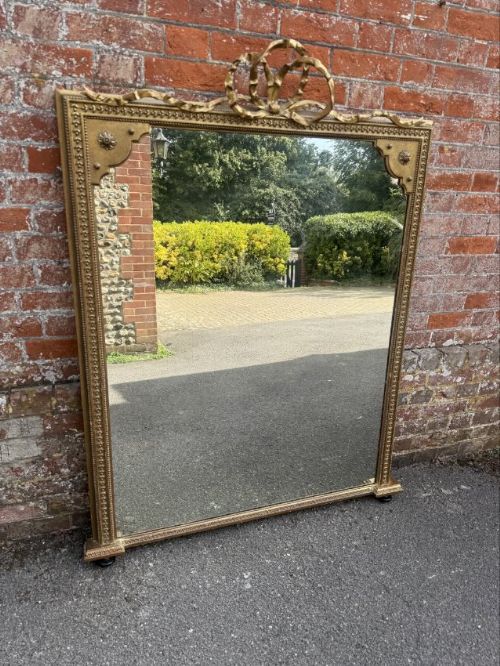
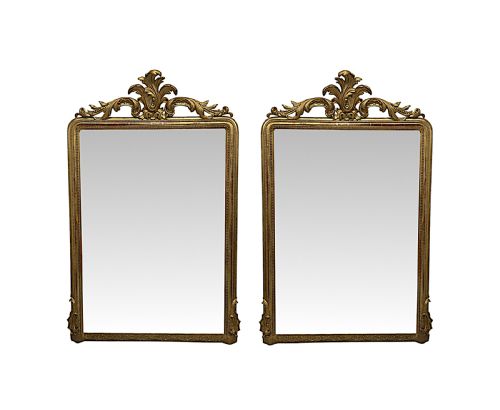
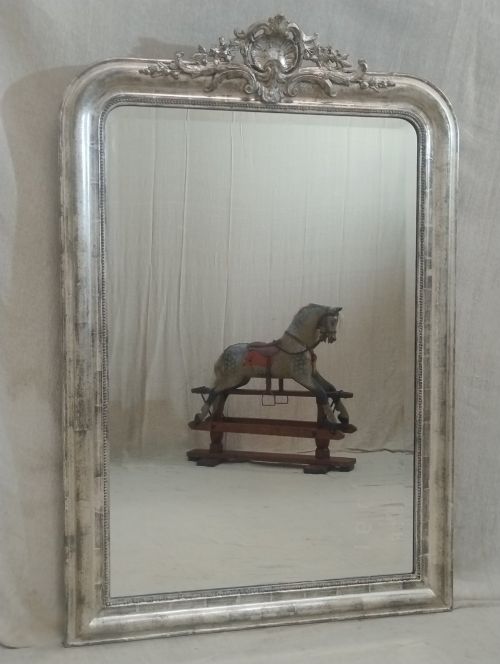
The versions met most frequently on this page date from the nineteenth century, including Napoleon III, Victorian, and various revival epochs such as Louis Philippe, Louis XV, and Louis XVI styles. They appear in giltwood, painted wood, and ebonised finishes, occasionally incorporating ribbon crests or central cartouches.
Originating predominantly from French chateaux and salons, alongside English interpretations of the same aesthetic, these pieces combine utility with decorative grandeur. They function both as wall mirrors and leaner mirrors, depending on their scale and the height of the room they inhabit.
How they were made
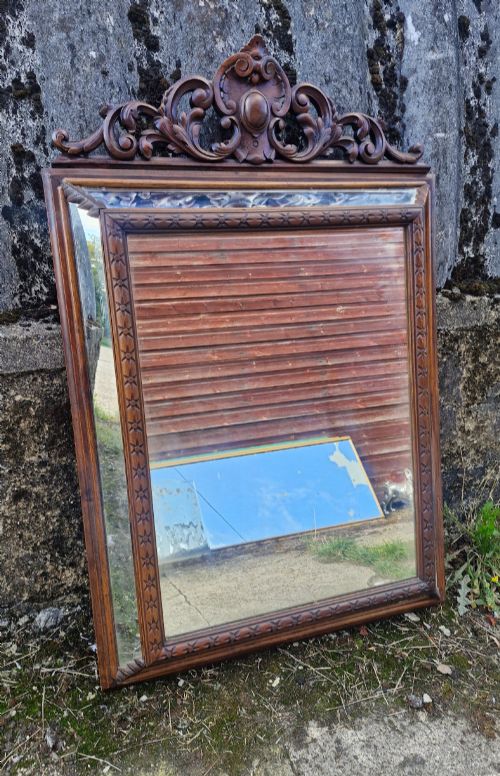
The primary structural frames are constructed from carved wood, often pine or hardwoods, providing a robust armature for heavy glass. Artisans applied layers of gesso to the timber base to build up intricate relief details before gilding.
Finishes rely heavily on gold leaf, silver leaf, or painted surfaces, applied by hand to achieve the characteristic lustre of the period. Glazing utilised traditional techniques, resulting in original glass panels that frequently display foxing over time.
Design styles span Rococo revival, Napoleon III, Louis Philippe, and Louis XVI aesthetics across wall and overmantel formats.
What varies in quality
The depth and crispness of the carved ornamentation separate standard examples from finer pieces, particularly where gesso enrichment defines the crest and corners. Relief work executed with precision reveals the hand of a skilled artisan rather than a hurried mould.
The integrity of the original gilding and the condition of the glass plate heavily influence the character of the mirror. Retaining original gold leaf and untouched mercury glass denotes a higher degree of historical preservation.
The French Crest Overmantel Mirror Glossary
- Overmantel mirror
- A large wall mirror specifically proportioned to hang on the wall directly above a fireplace mantel. These pieces often feature wide horizontal formats or tall arched tops.
- Gesso
- A plaster-like mixture applied to wood frames to create a smooth surface for carving relief decoration or applying gold leaf. It allows for sharp, intricate moulding.
- Giltwood
- Timber that has been coated in gold leaf or gold paint to give a luxurious metallic finish. It forms the primary visual identity of many nineteenth-century salon mirrors.
- Pier mirror
- A tall, narrow mirror designed to hang on the pier of wall space between two windows. They share many stylistic traits with overmantels of the same period.
- Foxing
- The natural ageing process in mirror glass resulting in small dark spots or speckled discolouration. This chemical reaction occurs behind the glass plate over many decades.
- Cartouche
- An ornamental tablet or oval frame design resembling a rolled-up piece of parchment, often placed centrally on the crest of a mirror.
French Crest Overmantel Mirror: Frequently Asked Questions
How do I hang a heavy overmantel mirror?
Due to the substantial weight of carved wood and glass, these mirrors require secure anchoring directly into wall studs or masonry using heavy-duty brackets.
Many period pieces were originally intended to rest on the mantelpiece itself while secured safely to the wall at the top to prevent tipping.
What is the difference between Louis Philippe and Rococo styles?
Louis Philippe mirrors tend to feature cleaner, more restrained architectural lines with gentle rounded top corners and subtle decorative motifs.
In contrast, Rococo revival pieces embrace asymmetry, elaborate C-scrolls, floral carving, and exuberant crests that dominate the silhouette.
Can these mirrors be used without a fireplace?
These pieces function successfully as standalone wall mirrors or leaner mirrors in hallways, bedrooms, and living spaces.
Their grand scale allows them to expand visual space and reflect light effectively in rooms lacking a traditional chimney breast.
How do I identify original antique mirror glass?
Original glass often exhibits slight distortions, hand-beveled edges, and characteristic foxing or clouding across the reflective surface.
Twentieth-century replacements usually present a uniform, flawless reflection without the characteristic age marks of period silvering.