




French Countryside Wall Painting
These French countryside wall painting works capture rural life and landscapes, bringing authentic pastoral character and historic charm into any interior.
French Countryside Wall Painting
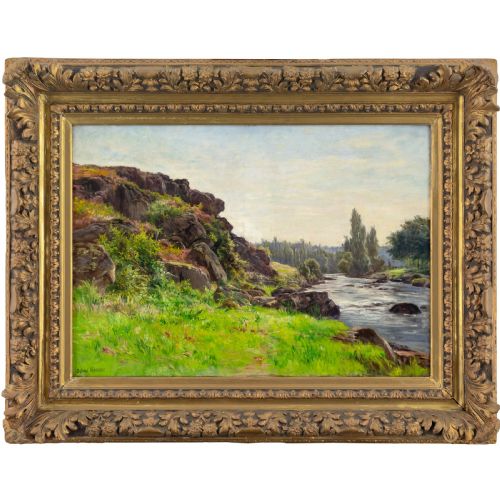
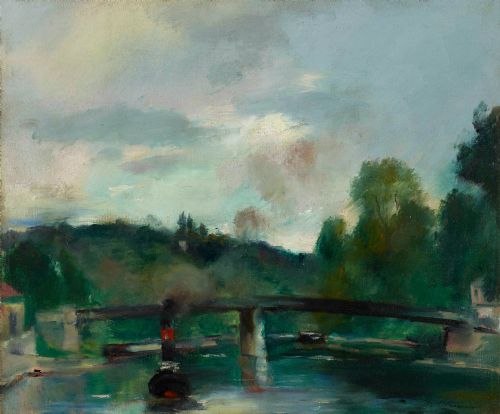
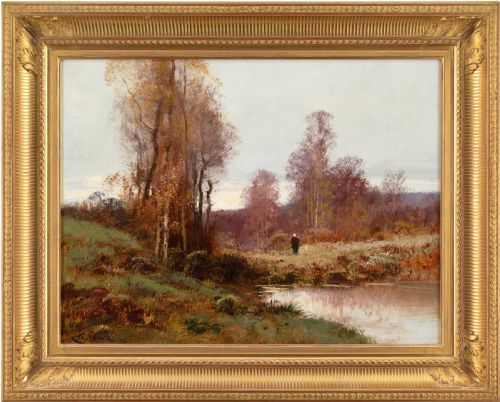
A french countryside wall painting typically portrays pastoral scenes, rivers, orchards, and agricultural life executed during the late nineteenth and mid-twentieth centuries. The selection available here spans periods from the nineteenth century through the 1960s, reflecting changing regional aesthetics.
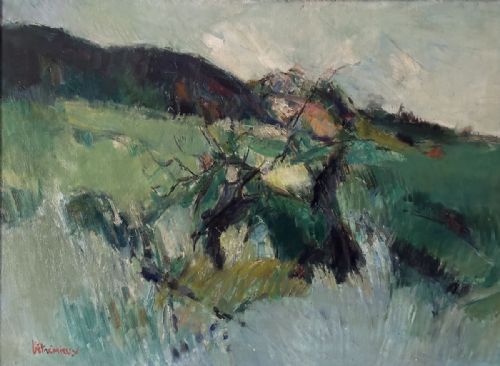
The prevalent forms are oil paintings on canvas or board, categorized under fine art painting styles such as Impressionism, Post-Impressionism, and Fauvism. Buyers most frequently encounter works attributed to the French School or independent continental artists working in these traditions.
Subjects range from river landscapes and farm gates to Mediterranean views and Normandy hills. These pieces offer direct visual records of rural France through varying decades of the modern era.
Assessing quality and execution
Quality in these works rests upon the confidence of the brushwork and the cohesion of the composition. Stronger pieces demonstrate purposeful handling of light and pigment, whether within an Impressionist river scene or a Post-Impressionist orchard.
The depth of the artist's engagement with the specific regional topography - such as the hills of Corsica or the riverbanks of Normandy - differentiates standard decorative canvases from compelling artistic records.
One canvas preserves a direct love letter to the Mediterranean sun through vibrant Fauve brushwork.
Gabriel Mathieu·Henri Ottmann·Charles Clair·André Prévot-Valéri·Mario Pinetti·Jeffrey Pratt·Henri Therme·Martin Lamotte
The French Countryside Wall Painting Glossary
- Oil on Canvas
- Pigment mixed with drying oil applied to a stretched woven fabric support. This serves as the primary medium for the majority of these landscape works.
- Post-Impressionism
- An artistic movement extending Impressionism while rejecting its limitations, emphasising symbolic content and vivid colours. Artists in this category often utilised expressive brushstrokes.
- Fauvism
- A style characterised by strong colours and painterly qualities rather than realistic or representational values. Works of this nature capture Mediterranean light with high saturation.
- Gesso
- A paint mixture consisting of a neutral binder mixed with chalk, pigment, or plaster. It is applied to wood panels to prepare a smooth surface for oil painting.
- French School
- A term denoting artists trained or working within the French artistic tradition across various centuries. It encompasses diverse approaches from pastoral realism to colourist landscapes.
French Countryside Wall Painting: Frequently Asked Questions
What periods do these paintings cover?
The listings span from the late nineteenth century through the 1960s, with strong representation from the interwar decades and mid-century.
Key periods include the 1890s, the 1920s, and the 1950s, each reflecting distinct regional painting movements.
What subjects appear in these landscapes?
Common subjects include riverbanks, farm gates, orchards, olive trees, and rural workers such as washerwomen or fishermen.
Locales range from Normandy and the Dauphiné to the Mediterranean coast and Corsica.
How do Impressionist and Fauve styles differ here?
Impressionist works focus on natural light, atmospheric effects, and everyday rural scenes with harmonious palettes.
Fauve and colourist works employ intensified hues and expressive brushwork to evoke the warmth and sunlight of the south.
What supports were used for these artworks?
Artists painted primarily on stretched canvas or wooden boards.
Some period pieces utilise wood panels or canvas mounted over structural supports.