




French Country Prep Console
A french country prep console brings utilitarian character into a modern interior, offering generous proportions and hard-wearing surfaces built for daily use.
French Country Prep Console
A french country prep console is fundamentally a work table adapted from domestic and commercial spaces, ranging from drapers' counters to patisserie display boards and kitchen preparation benches. These pieces originate primarily across the nineteenth century, with occasional examples extending back into the eighteenth century and forward into the nineteen-twenties.
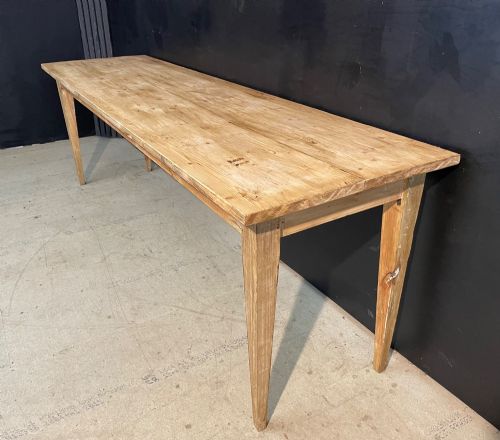
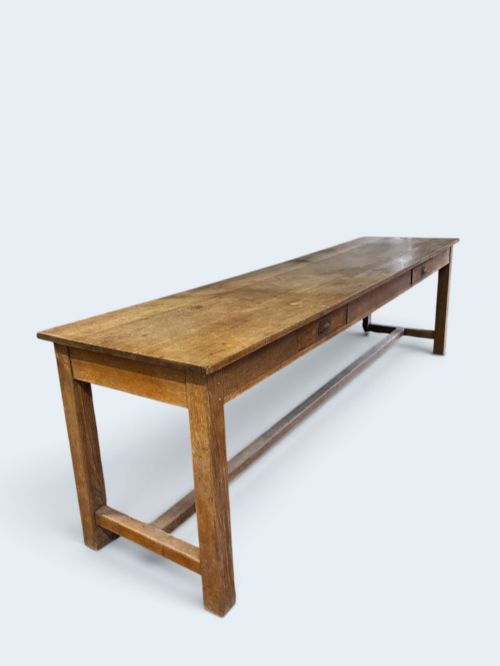
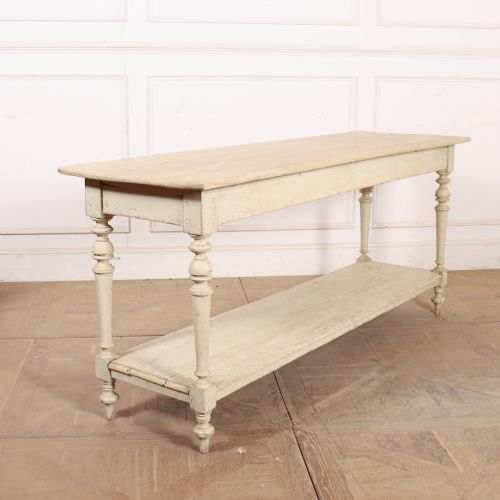
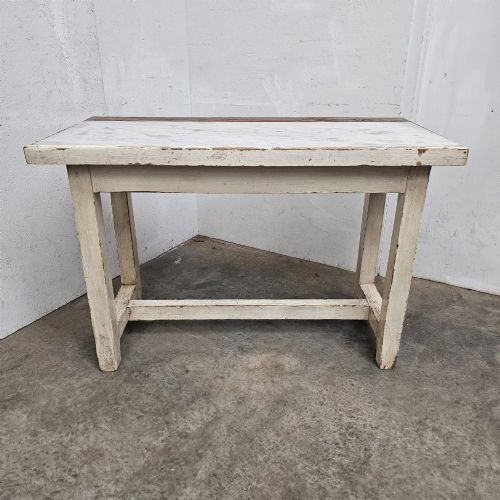
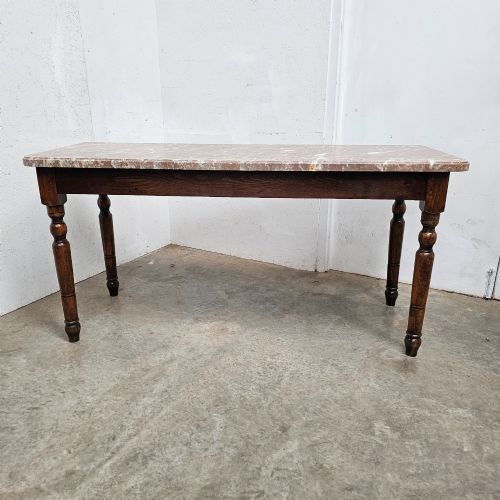
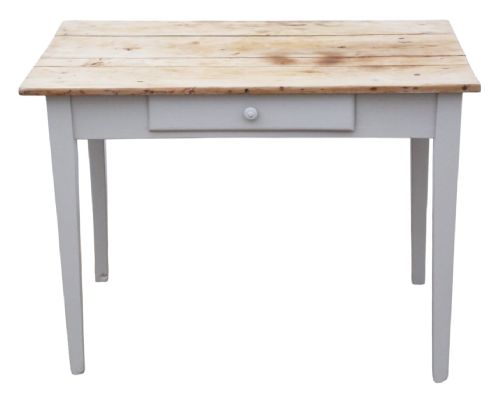
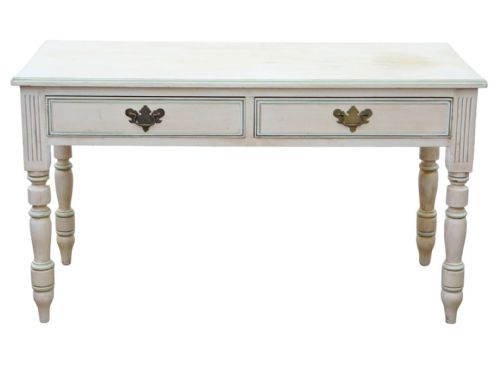
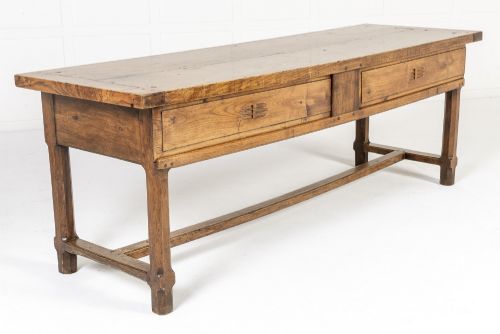
The form typically manifests as a long, narrow table equipped with functional additions such as single or multiple drawers, lower pot-shelves, and substantial trestle or four-leg supports. You will frequently encounter scrub-topped pine or bleached oak variations alongside painted pine surfaces intended for utilitarian service.
Makers designed these items for heavy tasks including bread preparation, charcuterie work, and textile folding, which accounts for their robust construction and practical dimensions. Their primary roles today lean toward hallway consoles, serving surfaces, and kitchen islands.
Materials and Construction
Construction relies heavily on durable timbers such as pine, oak, fruitwood, and cherry wood, chosen for their resilience under heavy daily use and moisture exposure. Master joiners utilised solid timber boards for table tops, joining them to sturdy frames with traditional pegged mortise and tenon joints.
Many surfaces feature inset white marble or stone tops designed for pastry and meat preparation, paired with iron or brass structural elements on specialised baker and patisserie tables. Painted finishes, often found on pine carcasses, display layers of historic pigment that reflect generations of working life.
The underframes frequently incorporate pot-shelves or deep drawers fitted with dovetail joinery, designed to store provisions and utensils within easy reach of the working surface.
Listings span the eighteenth, nineteenth, and early twentieth centuries, featuring pine, oak, cherry wood, marble, and iron across console, prep, and drapers table formats.
Assessing Quality
Quality rests principally in the integrity of the timber and the honesty of the wear accumulated across centuries of practical service. Top-tier examples retain their original scrubbed or painted surfaces without extensive modern timber replacement, displaying deep patination born of genuine utility.
Structural heft separates superior tables from lighter domestic variants, with substantial oak framing and thick marble or stone inserts commanding particular attention. The presence of original working drawers, complete with hand-cut dovetails and period hardware, elevates the standing of any console.
The French Country Prep Console Glossary
- Drapers table
- A long, narrow table historically used in fabric shops for measuring and cutting cloth, typically featuring multiple drawers beneath the top. These pieces are prized today for their slender proportions and extensive surface area.
- Scrub-top
- A wooden table top left bare and repeatedly scrubbed with water and sand to maintain hygiene, resulting in a pale, textured surface. This finish shows the natural grain and age of the pine or oak underneath.
- Patisserie table
- A specialised preparation table featuring an inset marble or stone slab designed for rolling pastry and keeping ingredients cool. They often incorporate iron or sturdy wooden bases to support the heavy stone top.
- Potboard
- A slatted or solid lower shelf fitted between the legs of a table, traditionally used for storing pots, pans, and heavy kitchen utensils. It provides essential structural stability while offering practical lower storage.
- Trestle table
- A table construction where the top is supported by two or more upright frames connected by a horizontal beam or stretcher. This design allows for maximum legroom and exceptional stability on uneven floors.
French Country Prep Console: Frequently Asked Questions
How were these tables originally used?
These tables served as heavy-duty workstations in domestic kitchens, bakeries, and textile shops across France. They were built to handle physical tasks such as kneading dough, cutting fabrics, and preparing meats.
Over time, their sturdy construction and practical proportions made them indispensable furniture for domestic life, moving from back-of-house utility to prominent spaces in the home.
How do I care for a scrubbed timber top?
Scrubbed wood benefits from minimal interference, requiring only dry wiping or occasional cleaning with a damp cloth and mild soap. Avoid harsh chemical cleaners that strip the dry, weathered character from the pine or oak.
Applying a clear beeswax can protect the timber from stubborn stains while preserving the pale, historic finish built up through decades of active service.
Are marble top consoles difficult to maintain?
Marble and stone inserts are naturally porous and sensitive to acidic substances like lemon juice or wine, which can etch the polished surface. Wipe spills promptly with a soft cloth and warm water to prevent permanent marking.
Using placemats and coasters will protect the stone while allowing you to enjoy the cool, smooth surface as a serving area or display console.
How can I tell an eighteenth-century table apart from a nineteenth-century one?
Earlier tables from the eighteenth century typically exhibit hand-carved joinery, pegged joints without modern fixings, and denser timbers such as native French oak. Tool marks left by adzes and hand saws are more pronounced on these older surfaces.
Nineteenth-century examples often display greater uniformity in milling while retaining the hand-applied paint, scrubbed patinas, and practical drawer configurations characteristic of working French country furniture.