

French Country Painting
French country painting brings pastoral landscapes and rustic charm into interiors through oil on canvas and decorative mirrors.
French Country Painting
French country painting encompasses pastoral oil paintings, landscapes, and rural scenes set within rustic or provincial frameworks. Buyers searching for french country painting will find canvases depicting farmyards, village squares, and coastal routes alongside decorative trumeau mirrors incorporating oil panels.
The objects span from the eighteenth century through to the early twentieth century, reflecting provincial life and academic landscape traditions such as the Barbizon School. Most examples present executed works on canvas or wood panels, often housed in original painted wooden frames or integrated into architectural mirrors.
Materials and Technique
These works utilise oil paint applied to canvas or wood panels, capturing light and rural scenery with visible brushwork. Frames and associated furniture pieces are constructed from pine, fruitwood, and other solid timbers, frequently finished with painted or parcel-gilt surfaces.
The construction relies on traditional joinery methods suited to provincial workshops, paired with hand-mixed oil pigments characteristic of nineteenth and early twentieth-century studios. Surfaces often retain original paint layers, showing natural patination from age and regional use.
French Country Painting Retail Price Guide 2026
Typical asking prices for french country painting among the pieces listed under this phrase on Sellingantiques today, from the lower quarter to the upper quarter. They describe what is for sale here now, not the wider market.
Some nineteenth-century landscapes still bear the faint scent of old linseed oil and French farmhouse attics.
Assessing Quality
Quality rests in the draughtsmanship, composition, and the handling of light by the artist, distinguishing spirited academic output from simpler decorative works. The survival of original paint surfaces on associated frames and panels heavily influences the character of each piece.
Depth of perspective and the fidelity of regional detail separate superior canvases from mass-produced decorative items. The harmony between the painting and its original setting, such as a carved trumeau frame, completes the measure of the piece.
Fourmaintraux-Courquin·Arthur Gué·Rene Levrel
The French Country Painting Glossary
- Trumeau mirror
- A wall mirror featuring an integrated oil painting or decorative panel set above the glass plate. These architectural pieces originated in eighteenth-century French interiors.
- Barbizon School
- A nineteenth-century French art movement dedicated to naturalistic landscape painting. Artists painted directly from nature, focusing on rural farmyards and forests.
- Oil painting
- A work created using pigments suspended in a drying oil medium, typically applied to stretched canvas or wooden panels. It allows for rich colour blending and textured brushwork.
- Parcel gilt
- A surface decoration technique where specific carved details or highlights are covered in thin gold leaf while the surrounding areas remain painted or unadorned.
French Country Painting: Frequently Asked Questions
What defines a trumeau mirror?
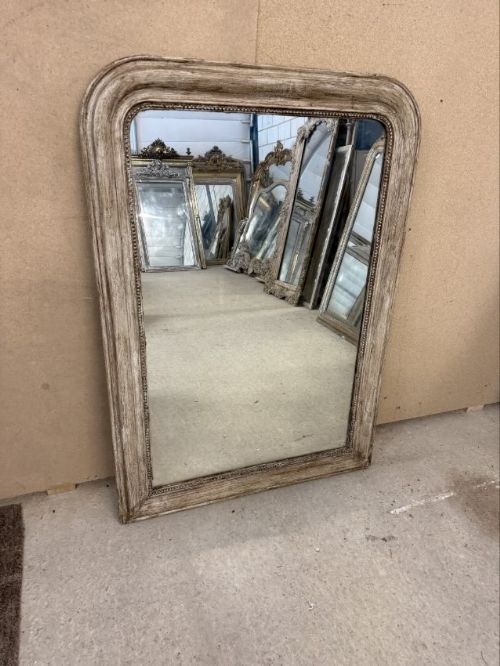
A trumeau mirror combines a vertical looking glass with an upper panel containing an oil painting or decorative carving. They were designed to hang between windows in traditional French rooms.
These pieces bring both reflected light and pastoral artwork into a space, functioning as combined architectural and artistic focal points.
How do I identify Barbizon School works?
Barbizon School paintings focus on rural landscapes, farmyards, and unidealised natural scenery. The brushwork is often loose and atmospheric, capturing changing light outdoors.
These nineteenth-century works reflect a shift towards painting directly from nature rather than producing formal studio compositions.
Are original paint surfaces important?
Original paint on frames and furniture provides historical integrity and a distinct textural quality that later modern coatings lack. It shows the genuine ageing process of the piece.
Collectors look for untouched surfaces that display natural wear, subtle fading, and the original colour palette chosen by the maker.
Where should I hang these paintings?
These pastoral works suit living spaces, hallways, or dining rooms where natural light enhances the oil pigments and canvas texture. They pair well with rustic furniture and muted walls.
Ensure paintings are kept away from direct sunlight and excessive moisture to preserve the canvas and original paint over time.