

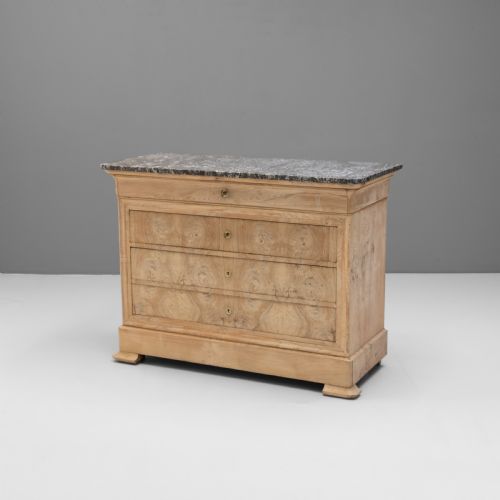
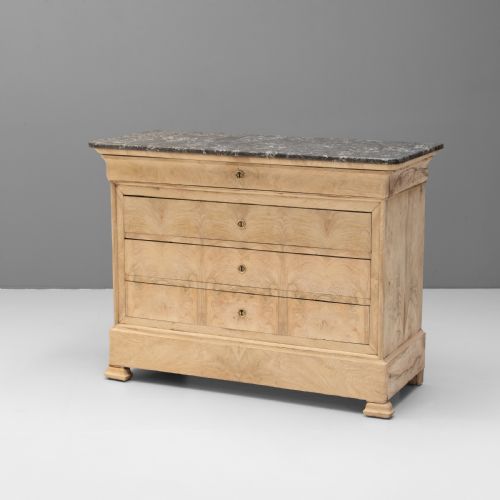
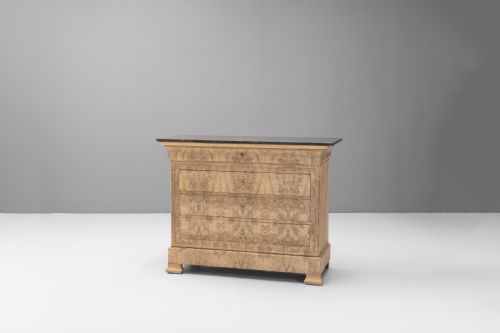
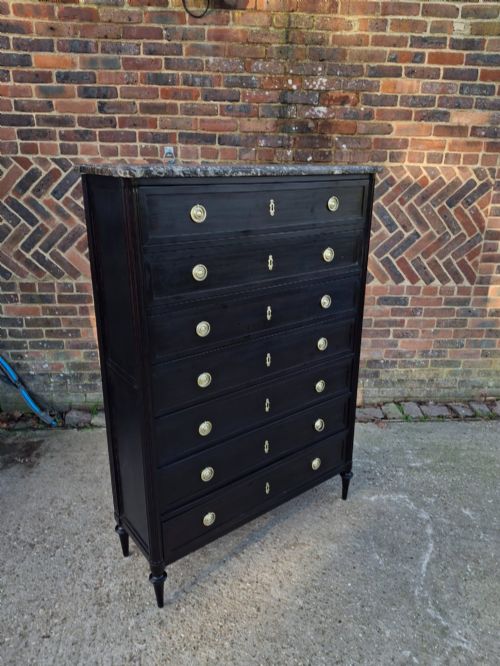
French Commode with Marble Top
A French commode with marble top brings substantial storage and stone surface to a room, uniting timber framing with polished mineral slabs.
French Commode with Marble Top
A french commode with marble top is a low chest of drawers or cabinet fitted with a stone surface, appearing in various provincial and revival designs across the eighteenth, nineteenth, and early twentieth centuries. These pieces function as decorative storage furniture in bedrooms, living spaces, and hallways.
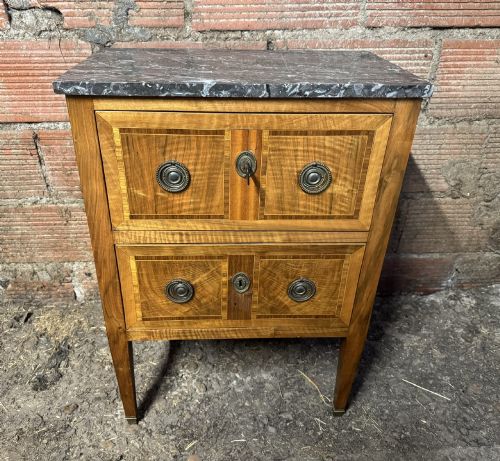
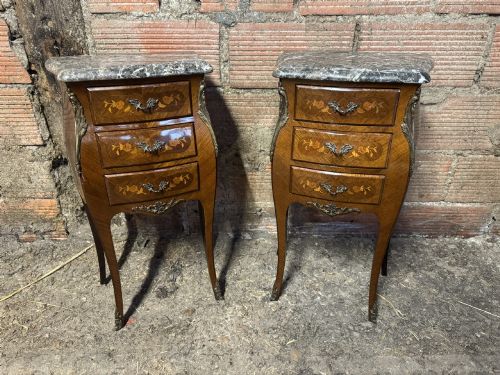
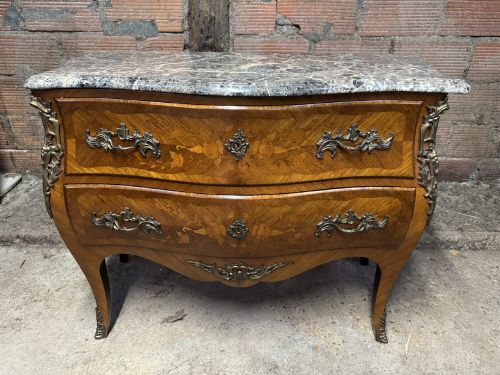
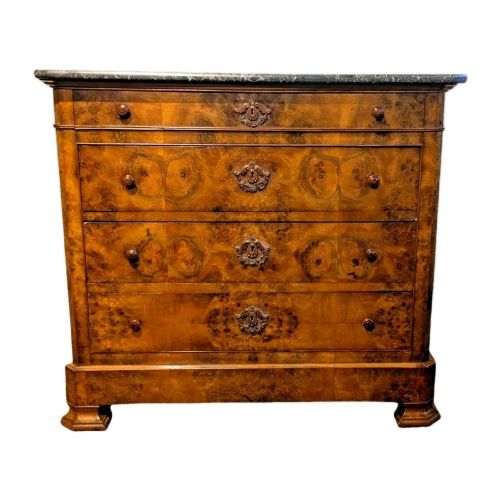
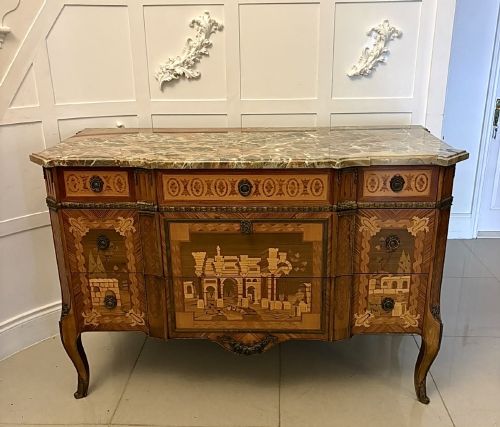
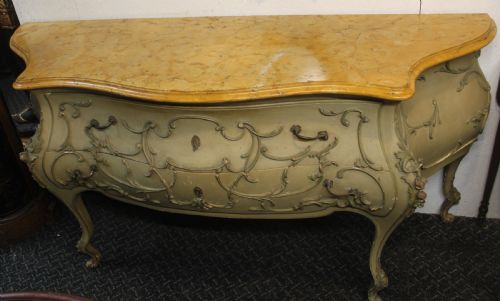
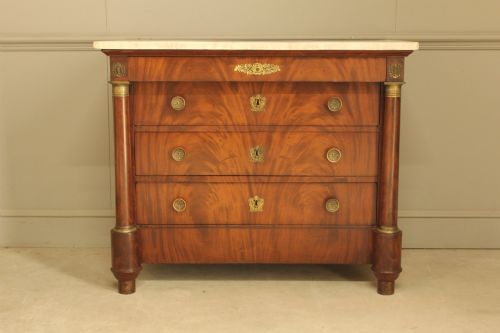
The selection on this page ranges from serpentine eighteenth-century examples to later revival pieces and twentieth-century bedside cabinets. Walnut, mahogany, oak, and exotic veneers form the primary carcass structures beneath the marble slabs.
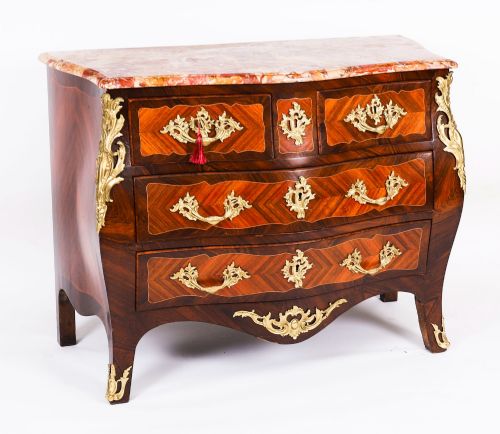
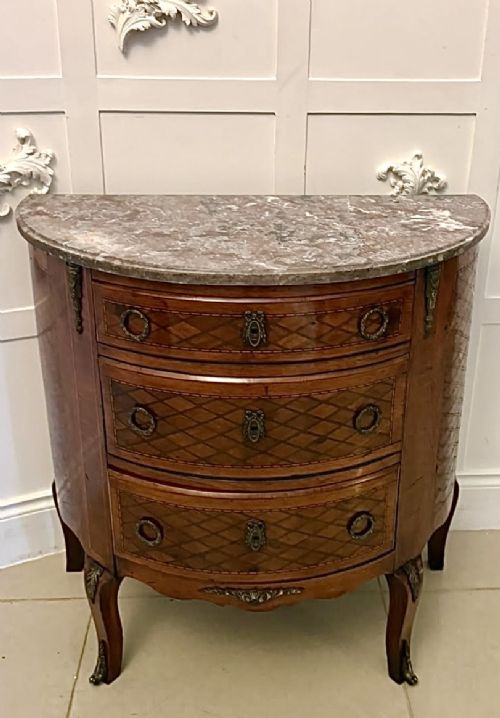
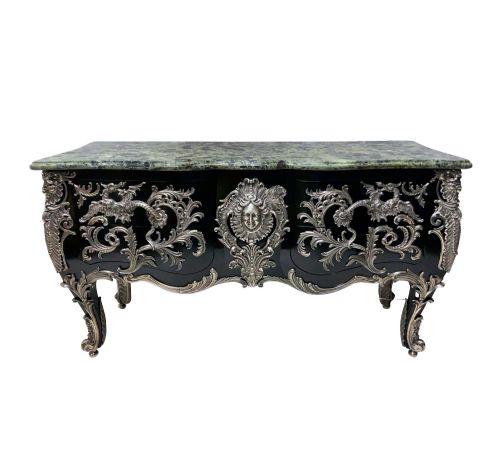
Makers and cabinetmakers built these storage units in styles spanning Louis XV, Louis XVI, Empire, and Art Deco. Formats vary from straight-front chests to bombé profiles, demi-lune shapes, and breakfront designs.
How they were made
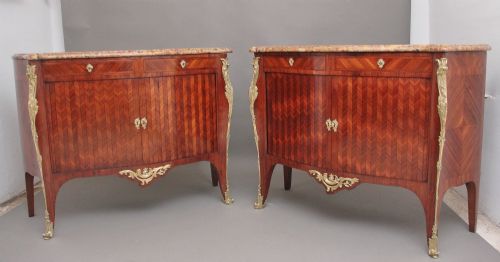
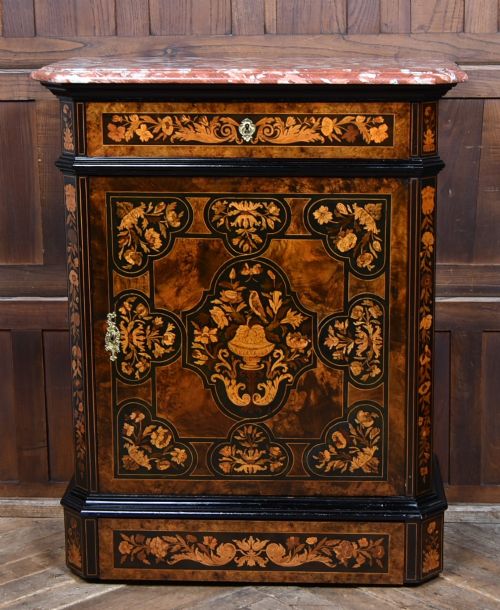
Carpenters constructed the carcasses using native and exotic timbers such as walnut, mahogany, oak, kingwood, tulipwood, and fruitwood, often applying intricate parquetry, marquetry, or floral inlay. Ormolu, brass, and gilt bronze mounts decorate the corners, handles, and aprons of the finer iterations.
The fitted stone surfaces consist of various marbles, including rouge, breccia, breche d'alep, Carrara, grey, and fossil varieties, shaped to follow the contours of the timber tops below.
French Commode with Marble Top Retail Price Guide 2026
Typical asking prices for french commode with marble top among the pieces listed under this phrase on Sellingantiques today, from the lower quarter to the upper quarter. They describe what is for sale here now, not the wider market.
Some nineteenth-century chests swapped real mineral for deception, offering faux marble tops alongside genuine breccia and Carrara stone slabs.
What varies in quality
Quality reveals itself in the harmony between the timber carcass and the fitted stone top, particularly where serpentine or breakfront profiles require exact manual cutting of the marble. The crispness of the gilt bronze or ormolu mounts and the precision of the parquetry or marquetry inlay distinguish finer workshops from standard production.
The presence of original stone slabs fitted to the period structure carries more weight than later replacements. Carcass timber selection, from plain fruitwood and oak up to figured walnut and kingwood veneers, dictates the standing of each piece.
The French Commode with Marble Top Glossary
- Bombe
- A bulging, convex shape swelling outward on the front and sides of a chest of drawers. This curved profile requires specialised woodworking techniques.
- Ormolu
- Gilt bronze mounts applied to furniture for decorative accent. These metal elements enhance the corners and drawer surrounds.
- Marquetry
- Decorative patterns formed by fitting small pieces of wood veneer into a background panel. Floral motifs frequently appear in this technique.
- Breccia
- A type of marble composed of broken rock fragments embedded in a fine-grained matrix. This stone provides varied, multicoloured surface patterns on commode tops.
- Parquetry
- Geometric patterns constructed from wood veneer pieces laid down in strict alignment. Floors and furniture tops often display this arrangement.
French Commode with Marble Top: Frequently Asked Questions
How do I style a marble top commode?
Place the commode against a primary wall in a living room, hallway, or bedroom where the stone surface remains accessible and visible. Balance the heavy mineral top with lamps, ceramics, or mirrors mounted above.
Keep items on the stone sparse to let the grain and colour of the marble remain the visual focus of the furniture piece.
Are these commodes suitable for everyday storage?
The deep drawers and cabinet compartments provide practical storage for clothing, linens, or household items. Their robust wooden construction handles daily use while maintaining stability.
Ensure items placed inside do not overload the historical drawer runners, preserving the internal framework of the cabinet.
How do I tell Louis XV and Louis XVI styles apart?
Louis XV pieces rely on asymmetrical curves, serpentine fronts, and flowing rococo bronze mounts. The overall silhouette appears organic and rounded.
Louis XVI furniture shifts toward neoclassical symmetry, straight fluted legs, and geometric panel alignments, reflecting a return to classical proportions.
How should I clean the marble top?
Wipe the stone surface using a soft, damp cloth with neutral soap to remove dust and debris. Avoid acidic cleaners or vinegar, which etch polished marble surfaces.
Dry the stone thoroughly after washing to prevent water spots from settling into the mineral grain.