

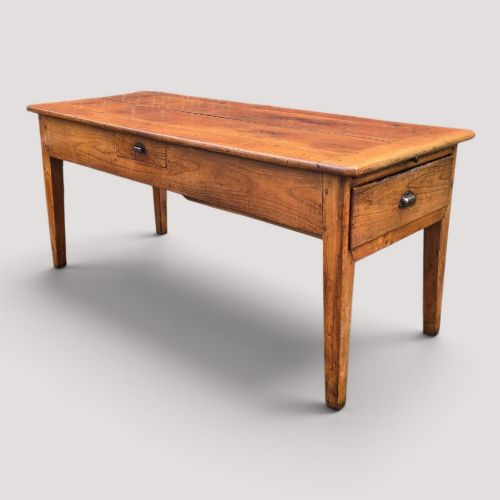
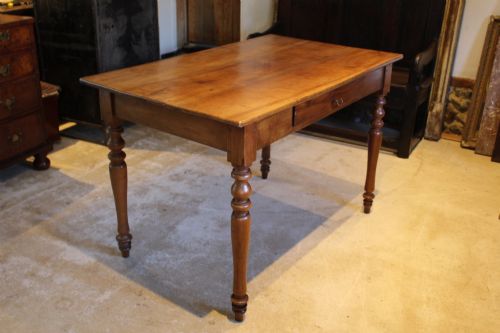

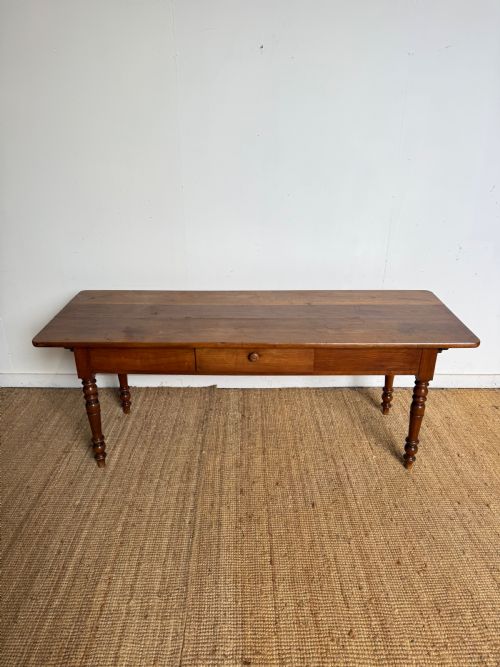

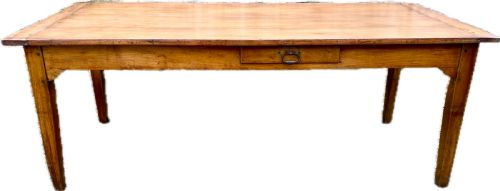


French Cherry Wood Farmhouse Table
A French cherry wood farmhouse table brings warmth and honest regional character to a room, built to serve generations of daily family life.
French Cherry Wood Farmhouse Table
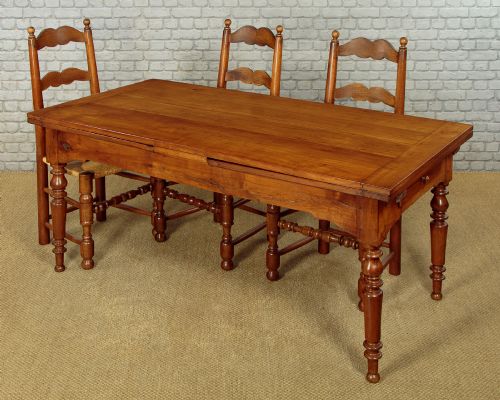
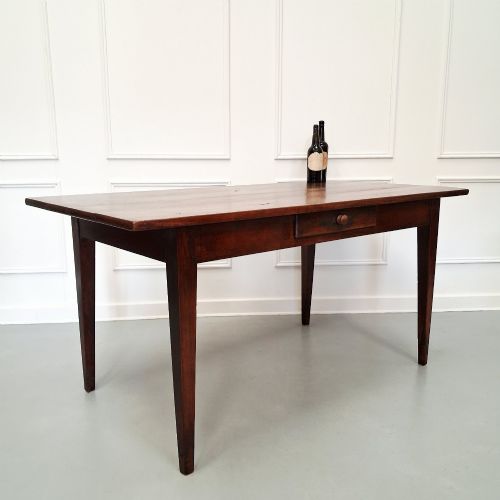
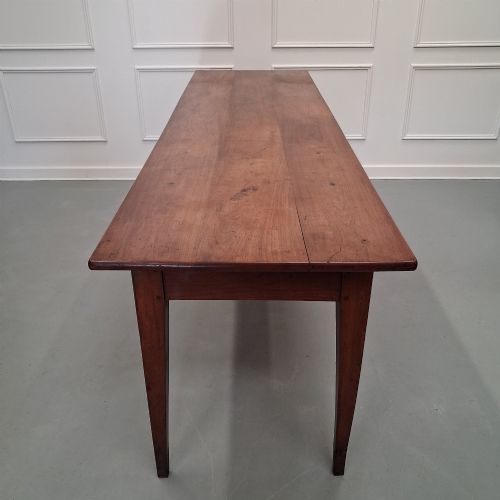
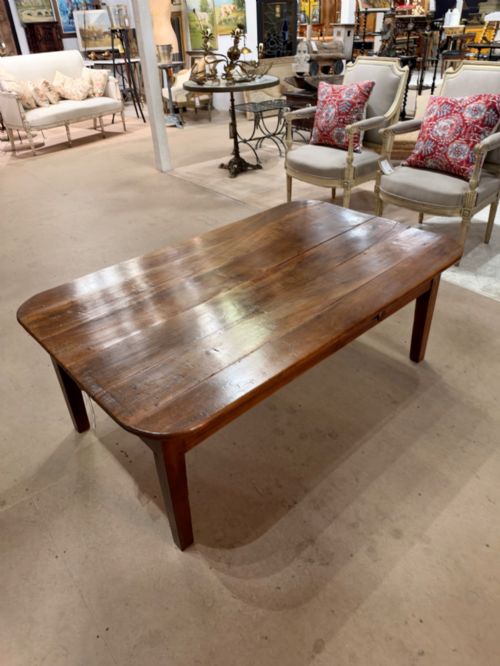
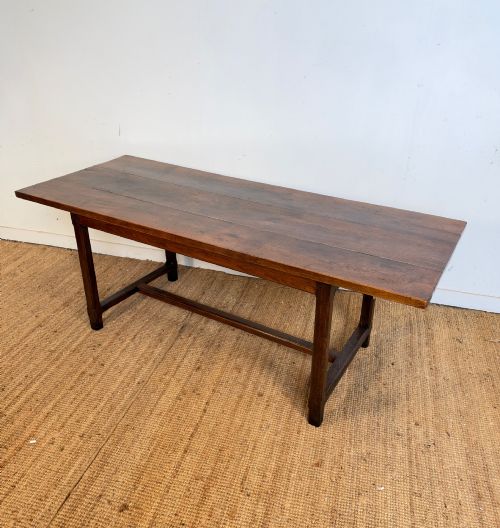
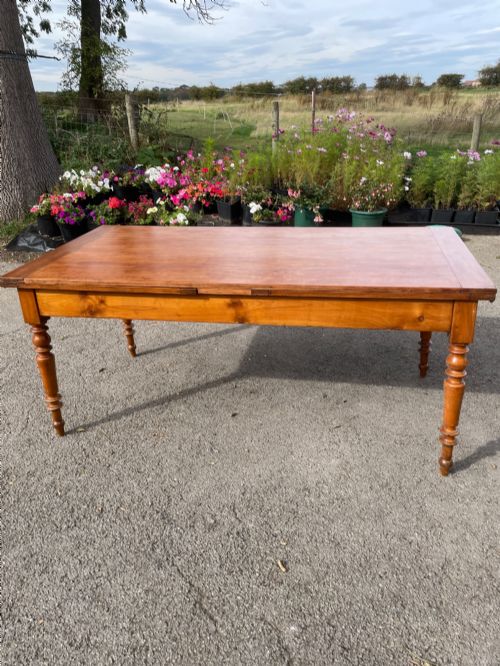
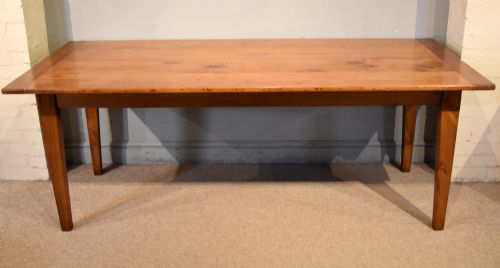
A French cherry wood farmhouse table is a sturdy utilitarian dining or kitchen surface originating from provincial France. The selections span dining tables, refectory tables, kitchen tables, console tables, and occasional coffee tables.
Most examples date from the nineteenth century, including specific years such as 1800, 1840, 1860, 1870, 1880, and 1895, alongside broader eighteenth-century pieces. These items embody styles such as French Provincial, French Country, and Rustic Farmhouse.
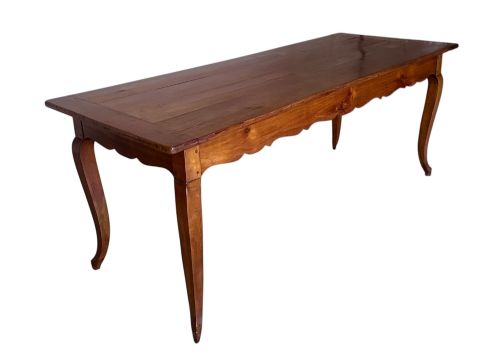
Buyers will encounter standard dining formats alongside extending versions, pieces featuring a drawer or a sliding bread board, and occasional tables with cabriolet legs. Origins range widely across the French countryside, including regional variations like Bresse.
How they were made
Makers constructed these tables primarily using cherry wood, cherrywood, or fruitwood timber, valued for its fine grain and rich warmth. Metal elements such as iron and brass occasionally appear in structural braces, mechanisms, or hardware fittings.
Joinery techniques focused on utilitarian strength, utilising solid timber planks for tops and sturdy stretchers for base stability. Many examples incorporate practical additions like single drawers or sliding bread boards directly into the apron construction.
French Cherry Wood Farmhouse Table Retail Price Guide 2026
Typical asking prices for french cherry wood farmhouse table among the pieces listed under this phrase on Sellingantiques today, from the lower quarter to the upper quarter. They describe what is for sale here now, not the wider market.
Several tables retain sliding bread boards, offering a charming reminder of domestic baking routines from the French countryside.
What varies in quality
Quality rests in the selection of the timber and the integrity of the original construction. Tables fashioned from thick, well-figured cherry planks display a superior depth of colour compared to simpler fruitwood variants.
Proportion and regional detailing set apart the finer pieces, such as those with slender cabriolet legs or well-integrated drawers. Evidence of honest wear and a faded, patinated surface indicate a long history of domestic use.
The French Cherry Wood Farmhouse Table Glossary
- Cherry wood
- A dense hardwood native to temperate regions, prized for its smooth grain and warm reddish-brown hue that deepens with age. It forms the primary structural material for these provincial tables.
- Refectory table
- A long, narrow dining table historically designed for communal dining halls and large kitchens. These versions offer generous proportions suited to modern gatherings.
- Cabriolet leg
- A curved table leg featuring a convex upper sweep and a concave lower sweep terminating in a simple foot. This decorative form appears on select refined regional pieces.
- Bread board
- A pull-out wooden board integrated beneath the table top, traditionally used for slicing dough. Surviving examples retain this clever mechanism.
- Fruitwood
- A collective term for timber harvested from fruit-bearing trees such as cherry, pear, or apple. It provides a durable and fine-grained surface for rural cabinetry.
French Cherry Wood Farmhouse Table: Frequently Asked Questions
How do I clean a cherry wood table?
Wipe the surface with a soft, dry cloth to remove dust and daily debris. Avoid harsh chemical cleaners that strip the historic finish.
Apply a natural beeswax periodically to nourish the timber and maintain the soft sheen of the aged cherry wood.
Can I use a farmhouse table daily?
These tables were originally built for heavy kitchen and dining use, making them exceptionally durable for everyday life. The dense cherry timber handles regular activity well.
Use protective mats under hot dishes and drinks to prevent marking the historic surface while enjoying the table fully.
What is a refectory dining table?
A refectory table is a long, narrow format designed to seat many people comfortably along both sides. They often feature strong stretcher bases to support the extended span.
This specific proportion makes them practical for modern dining rooms and spacious kitchen spaces.
How do I identify a nineteenth-century piece?
Examine the timber boards for hand-planed tool marks, uneven thicknesses, and structural peg joinery. Nineteenth-century examples often display a distinct faded patina acquired over decades.
Hardware details and secondary woods used in drawers also help indicate the period of construction.