


French Chateau Nightstands
French chateau nightstands bring elegant bedside storage to a room, offering classic French styling and practical surfaces.
French Chateau Nightstands
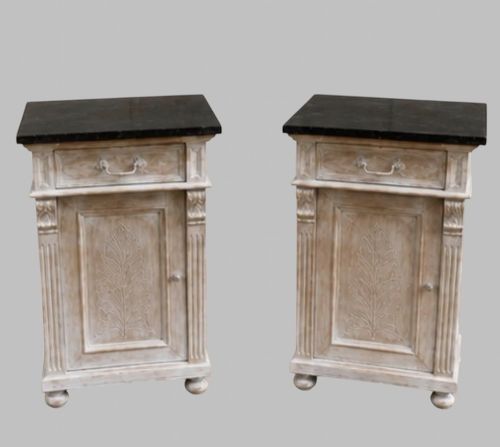
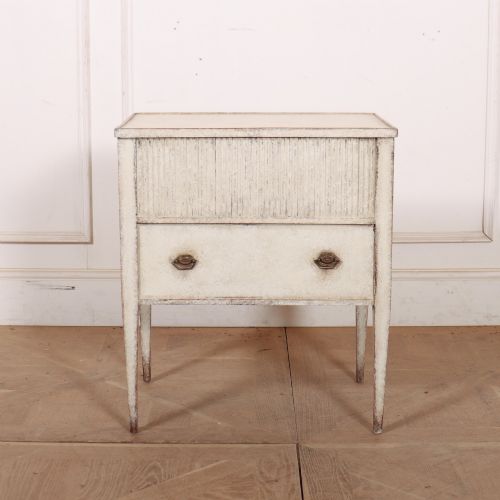
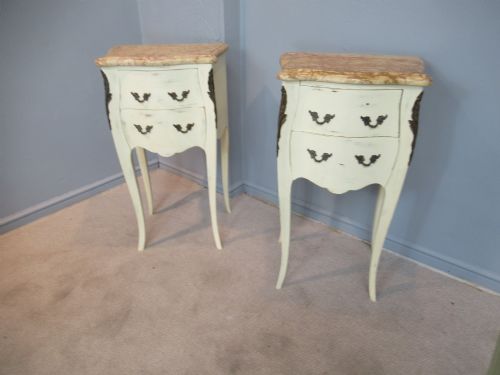
When searching for French chateau nightstands, buyers encounter bedside tables, bedside cabinets, side tables, and bedside chests shaped by periods spanning the nineteenth century through the 1930s. The selection on this page shows a strong presence of matched pairs alongside single pieces, often grouped with matching bedsteads.
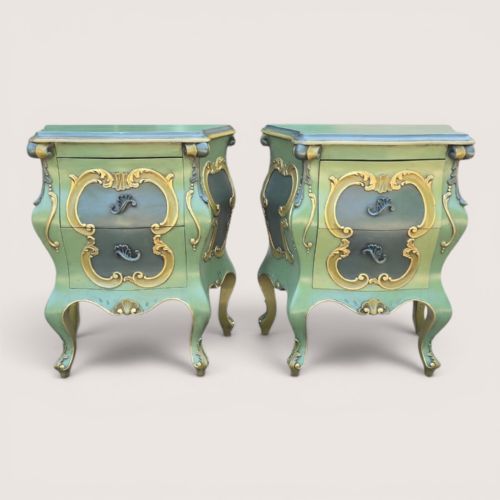
The prevailing styles draw heavily upon French Provincial, Louis XV Revival, Louis XVI, and French Rococo traditions, alongside Neoclassical influences. These forms range from simple painted occasional lamp tables to decorative chests finished in specialist paint colours.
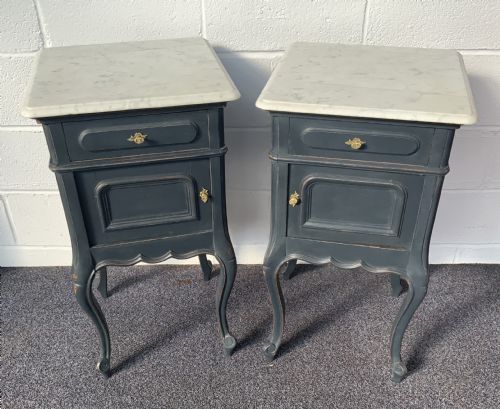
Origins and periods represented extend from the late nineteenth century into the Edwardian era and the interwar decades of the 1920s and 1930s. Buyers are most likely to meet painted wood variants and marble topped cabinets designed to match larger bedroom suites.
Indicators of Quality
Quality in these bedside pieces rests on the choice of timber and the execution of decorative details such as hand-carved elements and gilt moulding. Pieces incorporating genuine marble tops and cast ormolu mounts demonstrate a higher standard of manufacture than simpler painted items.
The integrity of the painted finish and the precision of the joinery distinguish finer examples from standard production. Matched pairs carrying consistent wear and original hardware hold a distinct position within the range.
French Chateau Nightstands Retail Price Guide 2026
Typical asking prices for french chateau nightstands among the pieces listed under this phrase on Sellingantiques today, from the lower quarter to the upper quarter. They describe what is for sale here now, not the wider market.
One set of bedside cabinets arrived painted in modern Railings grey, proving even chateau pieces enjoy a contemporary coat.
The French Chateau Nightstands Glossary
- Louis XV Revival
- A nineteenth-century style that emulates the curved lines, asymmetry, and rocaille ornamentation of the mid-eighteenth-century French court. This style often employs cabriole legs and floral carvings.
- Ormolu
- Gilt bronze mounts applied to furniture for decorative effect. This technique was widely utilised on finer French cabinets and tables during the nineteenth century.
- Marble Top
- A stone slab fitted to the upper surface of a bedside cabinet or table. It offers a cool, heat-resistant surface that protects the wood below.
French Chateau Nightstands: Frequently Asked Questions
What are French chateau nightstands?
These pieces are bedside tables, cabinets, and chests originating from or styled after traditional French furniture forms. They provide convenient surfaces and storage beside a bed.
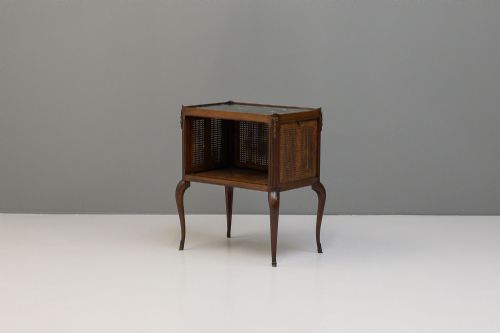
They appear in various finishes including painted wood, polished mahogany, and marble-topped designs reflecting periods from the nineteenth century to the 1930s.
How were these nightstands used historically?
Historically, bedside cabinets and tables served to hold chamber candlesticks, night lights, and personal items within reach of the bed. Enclosed cupboards kept chamber pots or night essentials out of sight.
In larger bedrooms, matching pairs flanked grand beds to create a symmetrical and unified room arrangement.
Are most of these nightstands sold in pairs?
The inventory frequently includes matched pairs of bedside cabinets and tables, alongside occasional single items. Pairs are particularly common when associated with matching bedsteads and bedroom suites.
Buyers searching for symmetrical bedside arrangements will find multiple options spanning different revival styles and decades.
What materials are commonly found on these pieces?
Wood is the primary material, featuring timbers such as walnut and mahogany alongside painted softwood. Many pieces incorporate decorative paint finishes in various colours.
Additional materials include marble for table tops and brass, metal, or ormolu for mounts, handles, and structural detailing.
How do I identify the period of a nightstand?
Dating relies on observing construction methods, timber choices, and stylistic markers associated with specific decades like the Edwardian period or the 1920s. Revival styles often borrow freely from eighteenth-century motifs while retaining the manufacturing techniques of their actual period of creation.
Examining the type of paint, hardware, and secondary woods helps clarify the age of the piece.