
French Carved Bedroom Chairs
French carved bedroom chairs bring elegance to a dressing room or boudoir through distinctive period forms and decorative woodwork.
French Carved Bedroom Chairs
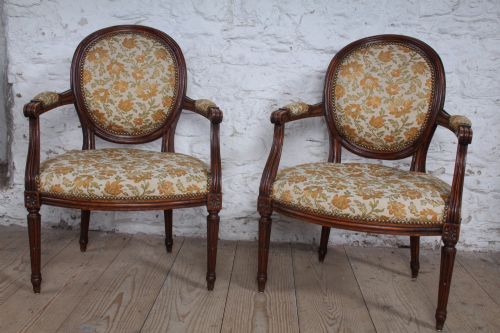
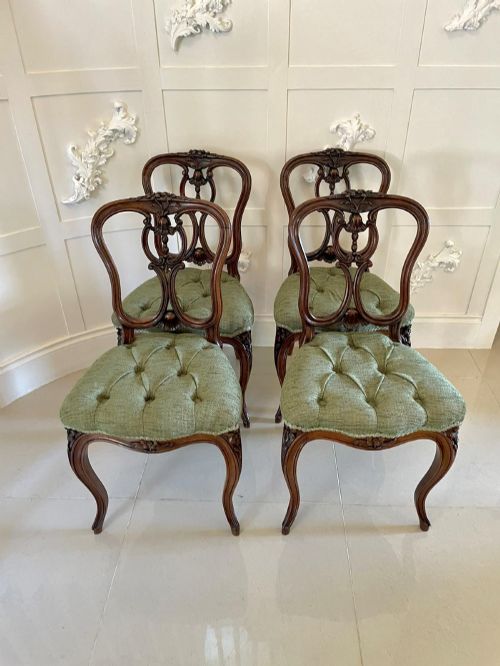
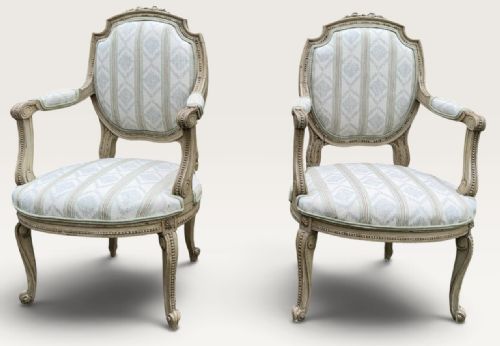
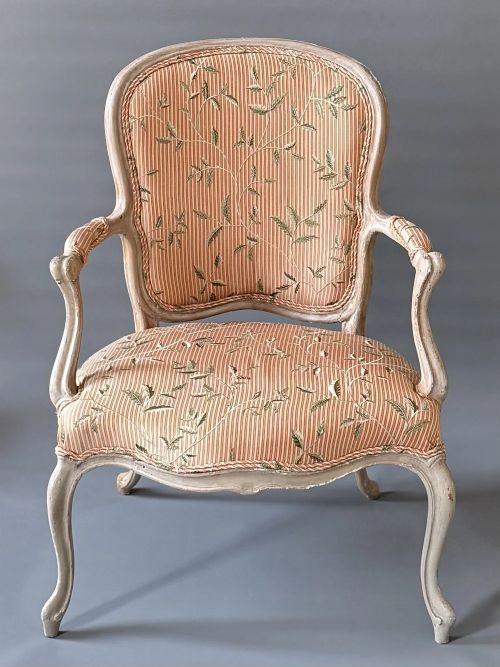
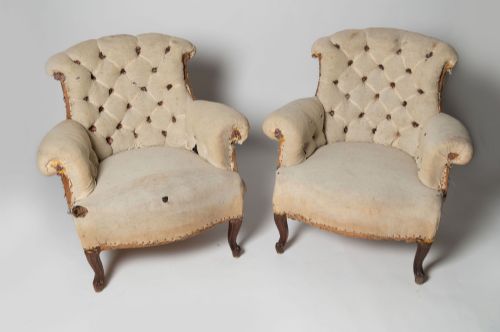
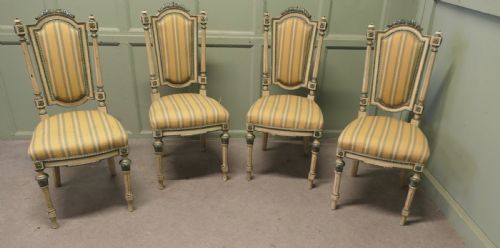
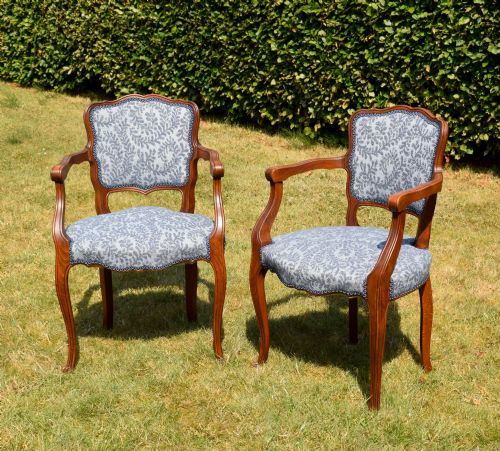
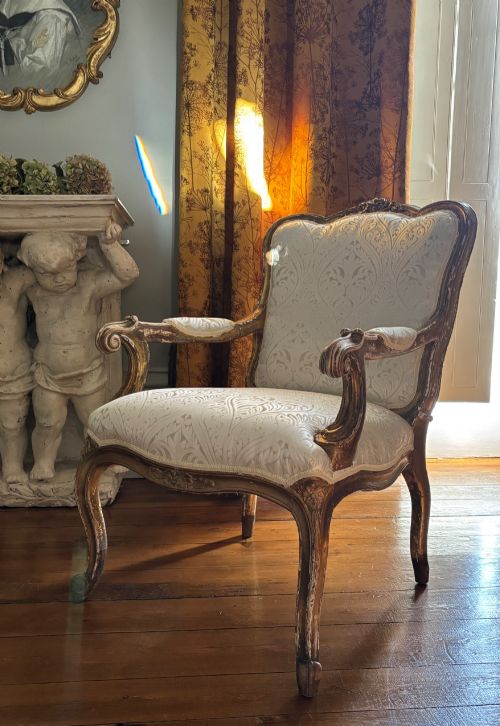
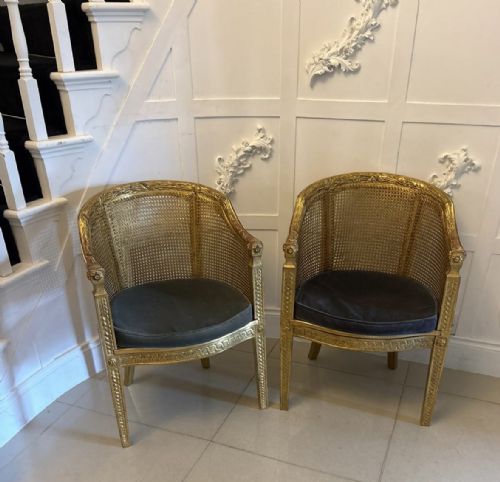
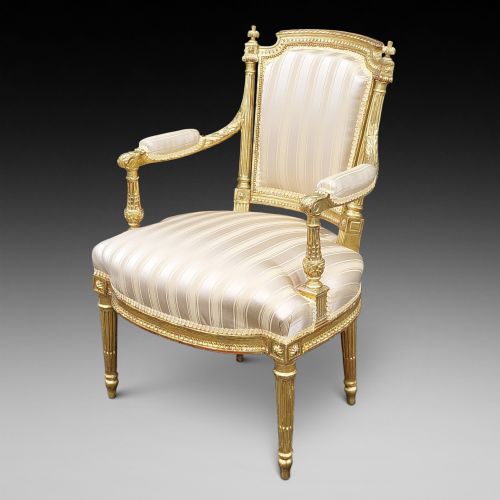
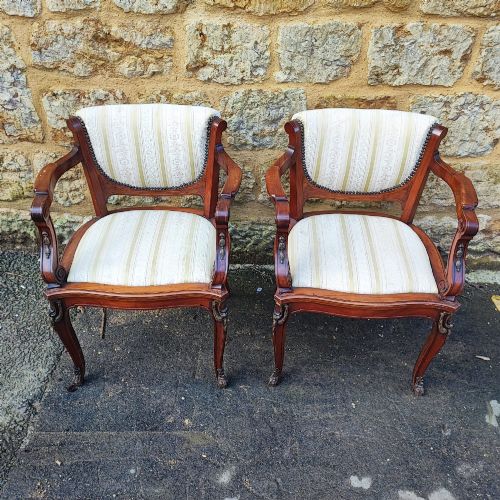
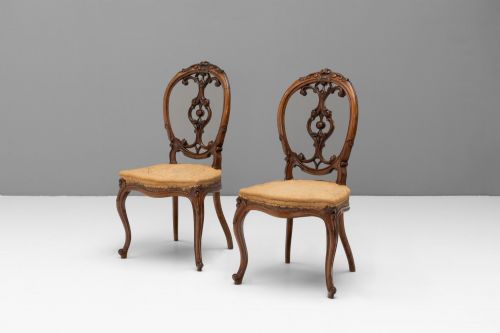
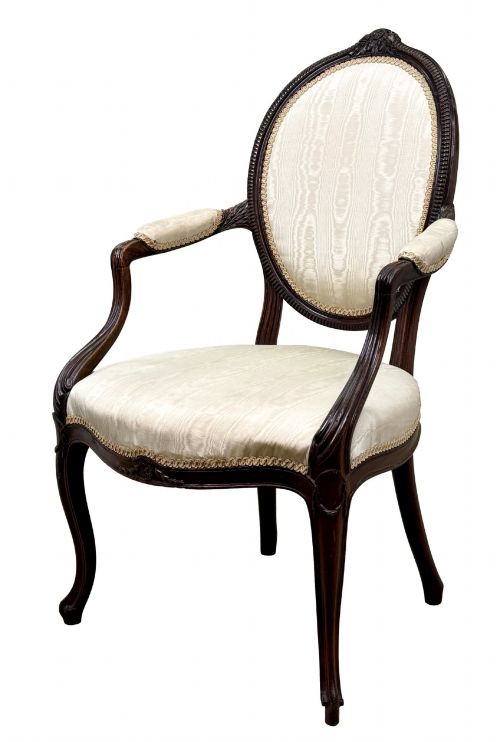
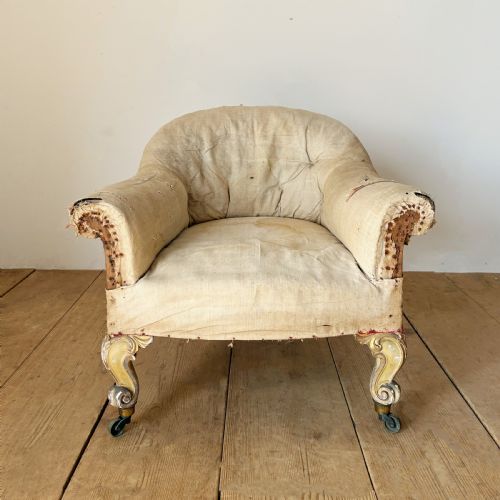
When seeking french carved bedroom chairs, buyers encounter a variety of forms including side chairs, salon chairs, slipper chairs, and nursing chairs originating from the eighteenth century onwards. These seating options often reflect historical design influences such as the Louis XV and Louis XVI styles, alongside Victorian interpretations.
The selection ranges from single occasional seats to matched pairs and larger sets, spanning epochs from the eighteen hundreds to the early twentieth century. Walnut, beech, and giltwood frames predominate, frequently paired with upholstered elements in velvet, fabric, or needlepoint.
Smaller proportions distinguish these pieces from grander parlour seating, suiting more intimate domestic spaces while retaining decorative carved detail. Buyers find both painted finishes and exposed timber frames reflecting Continental craftsmanship.
Materials and Construction
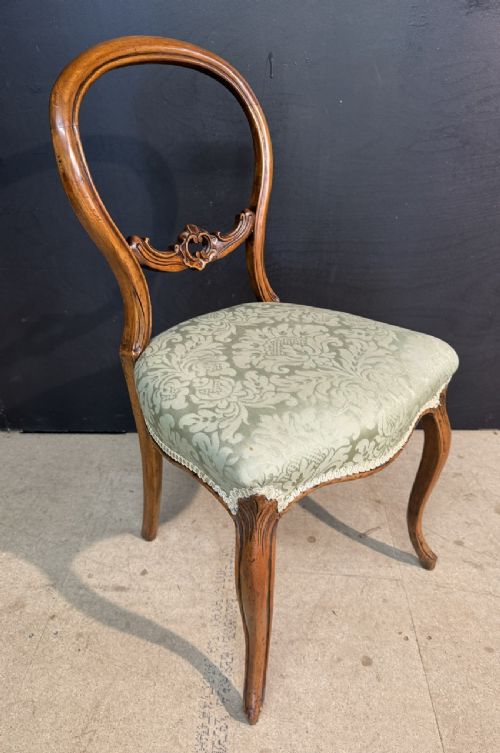
Cabinetmakers utilised hardwoods such as walnut and beech to shape the structural frames, carving cabriole legs and decorative motifs directly into the timber. Giltwood finishes and layered paint applications provided a decorative surface layer over the carved wood.
Upholstery techniques incorporated traditional stuffing and springs covered in textiles, velvet, or needlepoint panels, secured with brass detailing where appropriate.
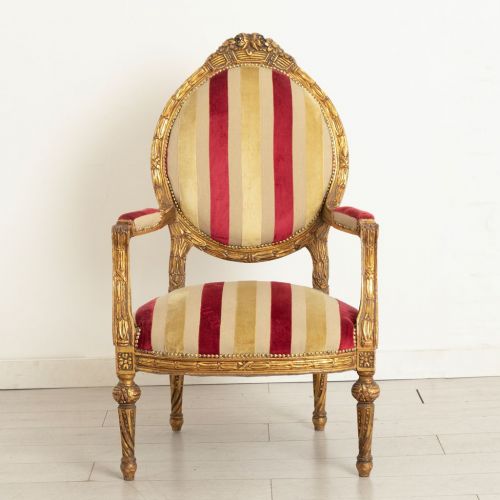
Children also needed proper posture, as evidenced by miniature gilded salon chairs designed specifically for the smallest family members.
Assessing Quality and Craftsmanship
The crispness and depth of the wood carving distinguish finer examples from simpler production, particularly where floral or scroll motifs adorn the crest rails and cabriole legs. Original surface treatments, whether period paint or authentic gilding, carry greater visual integrity than later refinishing.
Structural robustness in the joints and the retention of original upholstery foundations or sympathetic re-upholstery dictate how well a chair withstands daily use while maintaining its historical character.
Blaise Maucuy
The French Carved Bedroom Chairs Glossary
- Bergere
- An enclosed upholstered armchair with wooden sides, often featuring cane work or padded upholstery.
- Cabriole leg
- A furniture leg that curves out and then narrows inward, typically ending in a pad or scroll foot.
- Fauteuil
- An open-framed armchair with upholstered back and armrests, exposing wooden sides.
- Giltwood
- Timber coated with a thin layer of gold leaf or gold paint for decorative effect.
- Slipper chair
- A low-seated upholstered chair originally designed for use in a bedroom or dressing room.
French Carved Bedroom Chairs: Frequently Asked Questions
What is a French slipper chair?
A slipper chair is a low-seated, upholstered chair designed for comfort in a bedroom or dressing space. It typically sits closer to the floor than standard seating.
These chairs often feature decorative woodwork or carved frames reflecting period French styles, making them suitable for domestic placement.
How do I identify a Louis XVI style chair?
Louis XVI style chairs are characterised by straight, tapered legs, often fluted, and geometric or oval backrests. This neoclassical approach contrasts with earlier curved rococo designs.
Carved details tend to incorporate classical motifs like ribands, acanthus leaves, and beaded moulding on walnut or giltwood frames.
Where should I place a salon chair?
Salon chairs work well as occasional seating in bedrooms, dressing rooms, or drawing rooms where space is measured. Their decorative carved backs provide visual interest when viewed from behind.
Pairing them with a matching vanity or desk creates a cohesive decorative scheme within a private interior.
Are these chairs suitable for daily use?
Many of these chairs remain structurally sound for regular sitting, provided the wooden frame and joints are stable. Upholstered versions may require periodic checks of the internal webbing and padding.
Lighter frames, such as gilded or painted salon chairs, benefit from placement in lower-traffic areas to preserve their historic finishes.