

French Cameo Vase
A french cameo vase brings layered glass and botanical colour into a room, forged during the height of Art Nouveau and Art Deco design.
French Cameo Vase
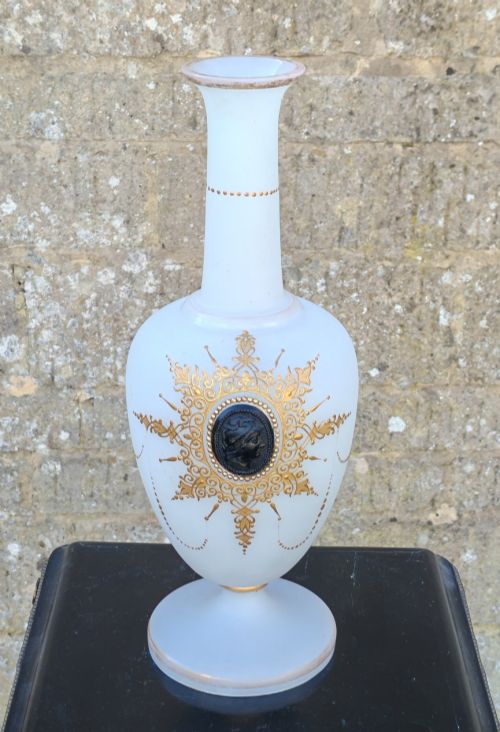
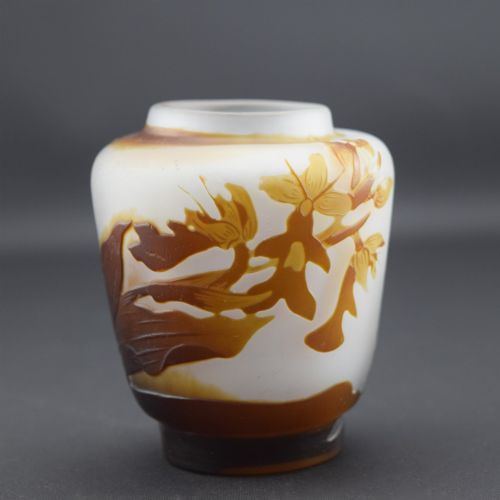
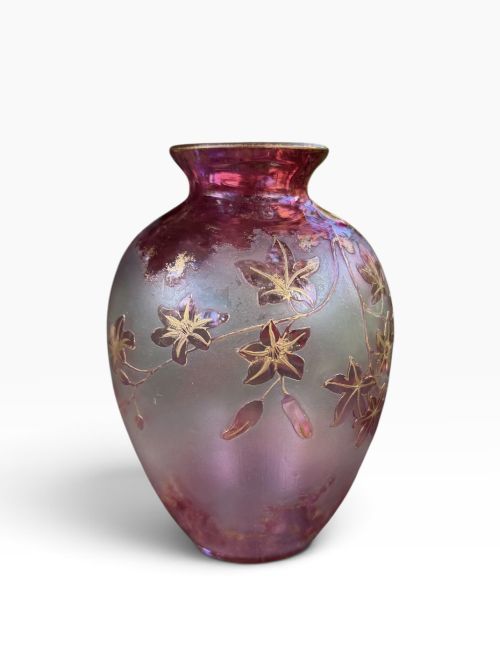
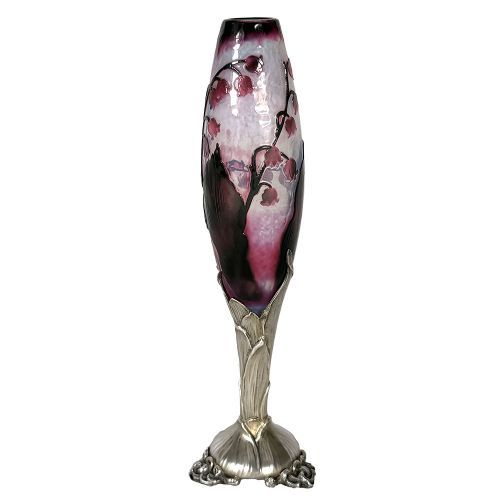
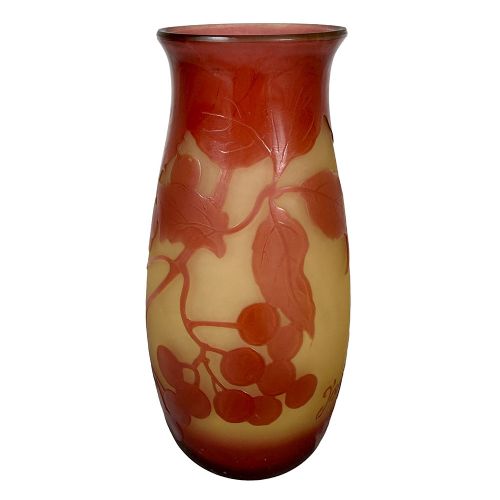
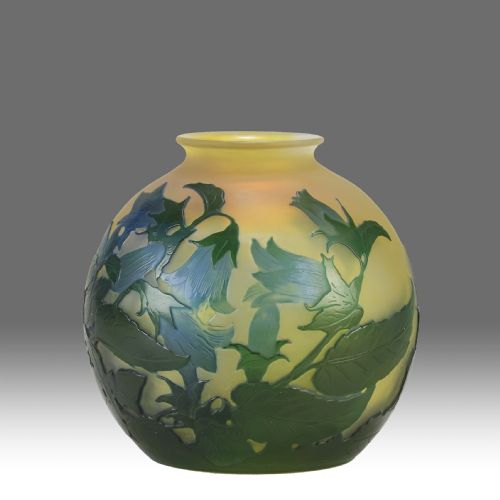
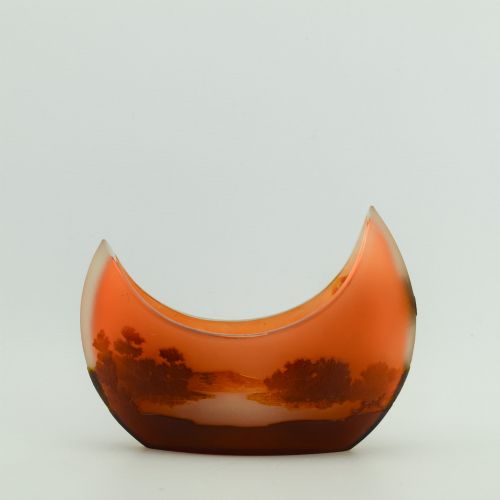
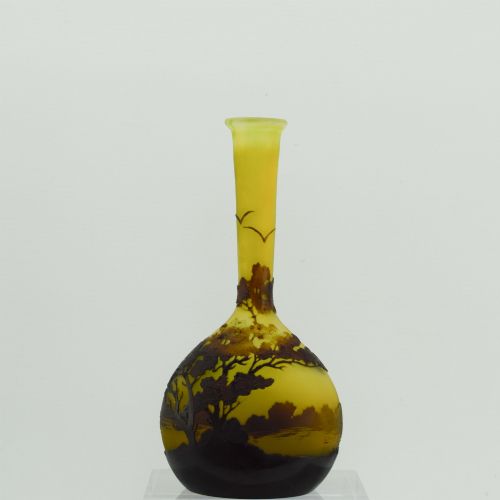
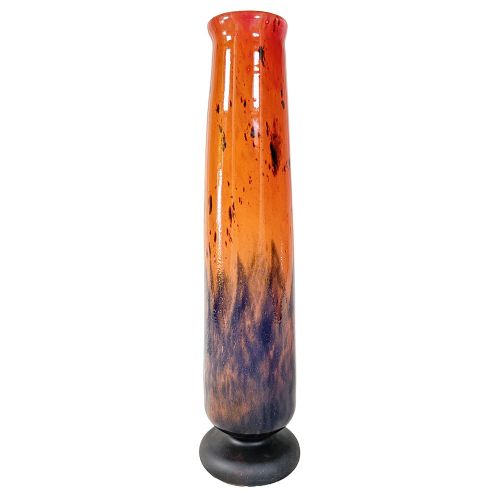
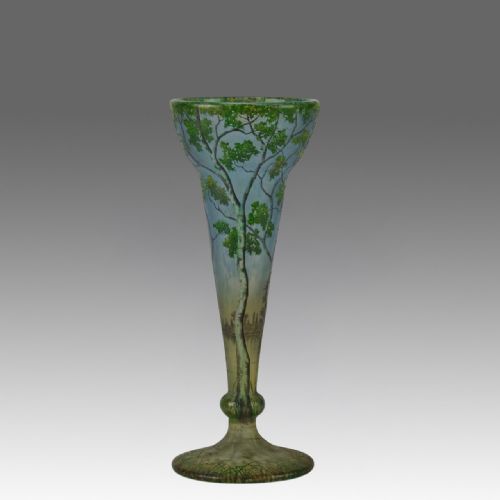
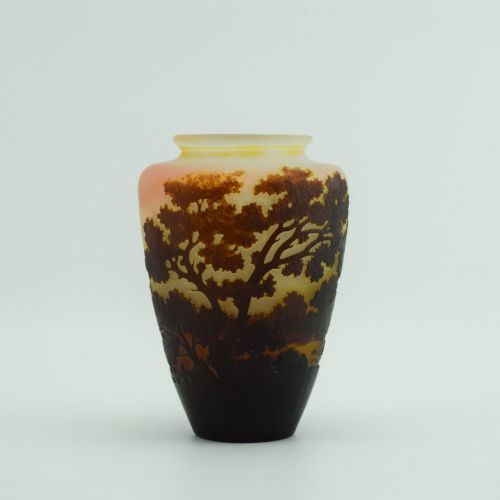
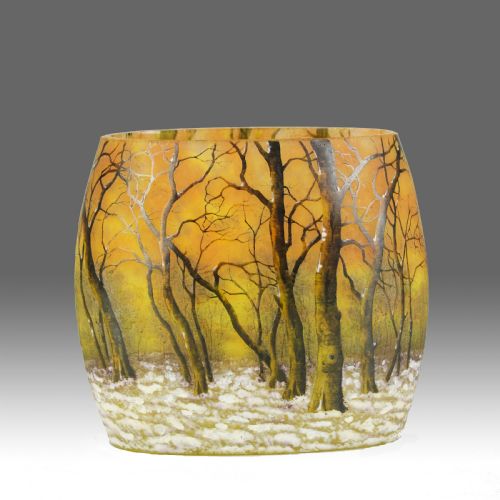
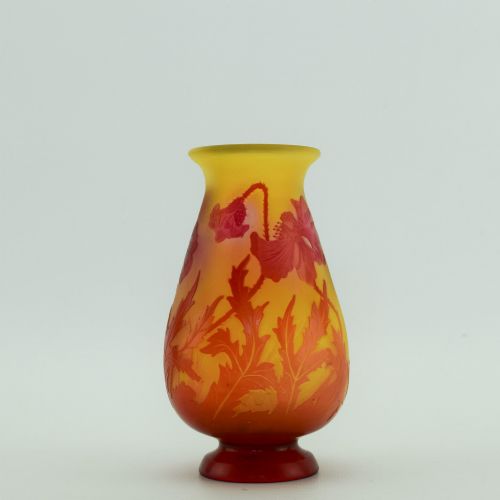
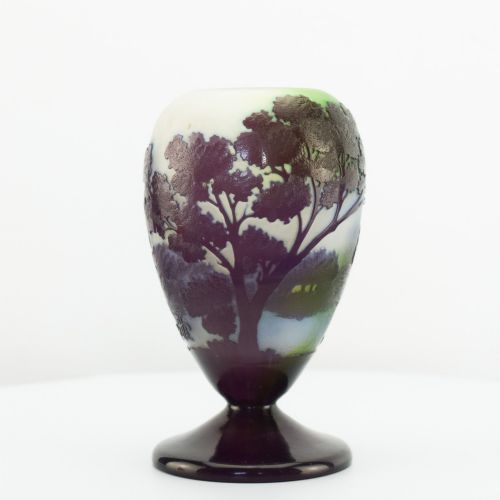
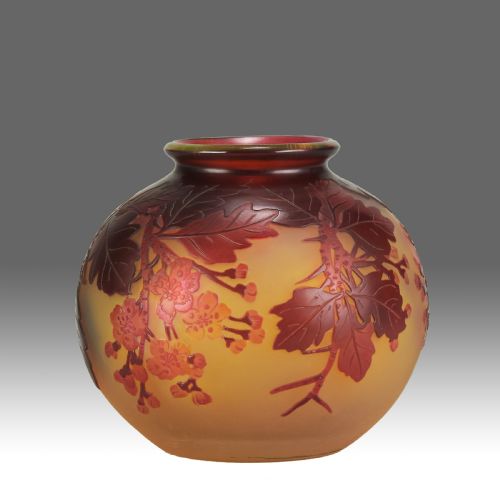
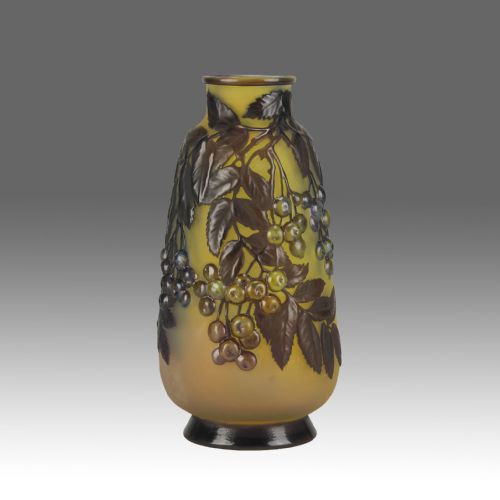
A french cameo vase is a vessel formed from multiple layers of coloured glass, carved or etched to reveal contrasting background scenes. These pieces emerge predominantly from the periods spanning eighteen ninety to nineteen thirty, capturing the stylistic shifts from organic naturalism to geometric symmetry. The forms range from miniature vessels and slender banjo shapes to large oviform and footed profiles.
Visitors browsing this selection will encounter numerous examples attributed to prominent glasshouses, featuring landscape, floral, and aquatic motifs. Botanical studies such as iris, cornflowers, and water lilies appear frequently alongside winter scenery and sunset vistas. Art Nouveau curves dominate the earlier output, while later pieces adopt cleaner Art Deco lines.
How they were made
Makers utilised blown glass techniques to fuse multiple coloured layers together into a single blank vessel. Workers then applied acid-etching, wheel carving, or enamel detailing to cut away the outer layers and define the relief design.
Occasional additions such as gold leaf or silver mountings provide structural contrast to the glass body. Frosted glass backgrounds are frequently employed to highlight the opaque, contrasting colours of the foreground cameo decoration.
French Cameo Vase Retail Price Guide 2026
Typical asking prices for french cameo vase among the pieces listed under this phrase on Sellingantiques today, from the lower quarter to the upper quarter. They describe what is for sale here now, not the wider market.
The listings span five distinct decades from eighteen ninety to nineteen thirty, covering the rise of both Art Nouveau and Art Deco glassmaking.
What varies in quality
The distinction between tiers rests upon the depth of the carving and the complexity of the glass layering. Pieces with multiple distinct strata of colour require intricate hand manipulation during the acid-etching and wheel-carving stages.
Compositional balance and clarity in the depiction of natural motifs determine the visual strength of a vessel. The integration of enamel work or precious metal mounts further separates standard production runs from exceptional studio output.
Emile Galle·Daum Freres·Baccarat·Legras·Schneider·D Argental·Georg Adam Scheid
The French Cameo Vase Glossary
- Cameo Glass
- Glass vessels formed with two or more distinct layers of colour where the outer layer is carved down to expose the background. This technique creates a raised relief effect resembling classical carved stone.
- Acid-Etched Glass
- Glass decorated by submerging the vessel in acid to eat away exposed surfaces. Makers protected desired areas with a resist material to preserve the raised design.
- Wheel Carved
- A method where artisans hold the glass vessel against a rotating abrasive wheel to cut away material. This process allows for precise depth and sharp detail in the carved motif.
- Soufflé
- A technique where glass is blown into a metal cage or mould to expand the body into an irregular, textured shape. It is also known as blow-out glass.
- Enamel
- Opaque glass paints applied to the surface of the vessel and subsequently fired in a kiln to fuse permanently. This adds fine linear detail and supplementary colour to the cameo decoration.
French Cameo Vase: Frequently Asked Questions
How do I identify a Galle vase?
Authentic pieces by this maker typically bear an etched or enamelled signature within the cameo design itself. The lettering style evolved over time, shifting from distinct signatures to simpler stamped variations.
Subject matter also offers guidance, as floral studies and Vosges landscapes recur across the production periods. Examining the depth of the glass layers helps confirm the standard of execution associated with the workshop.
What is the difference between Art Nouveau and Art Deco styles?
Art Nouveau designs embrace asymmetrical plant motifs, curving stems, and fluid natural forms inspired by botanical growth. These pieces dominate the output around nineteen hundred.
Art Deco examples emerge closer to nineteen twenty, favouring geometric order, stylised patterns, and more rigid architectural silhouettes. The glass chemistry and cameo carving techniques remain sophisticated across both stylistic phases.
Where were these glass pieces made?
Production concentrated primarily in the eastern regions of France, specifically around Nancy and Paris. Master glassmakers and major studios established workshops that utilised local mineral resources and skilled artisans.
Cities like Nancy became renowned centres for glass artistry during the late nineteenth and early twentieth centuries. Regional competition drove rapid innovation in acid-etching and layered glass techniques.
How should I display cameo glass at home?
Placement near a natural light source allows illumination to pass through the translucent glass layers. Positioning vessels on plain surfaces enhances the contrast of the carved foreground motifs against the background.
Keeping pieces away from direct heat prevents thermal stress to the antique glass body. Stable shelving protects the delicate blown structures from accidental knocks.