





French Burr Walnut Commode
These french burr walnut commode pieces bring warmth and rich grain to a bedroom or drawing room.
French Burr Walnut Commode
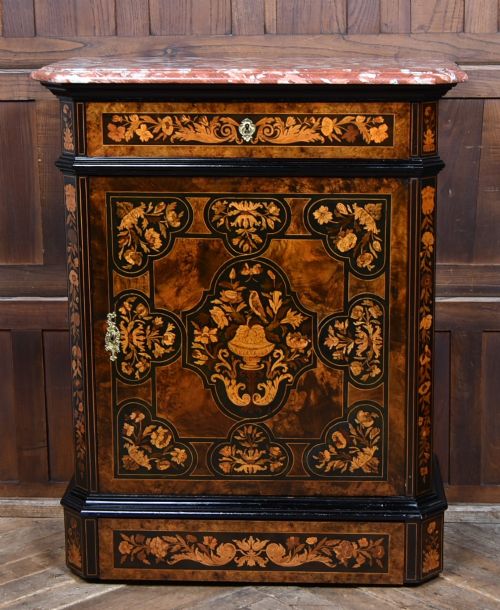
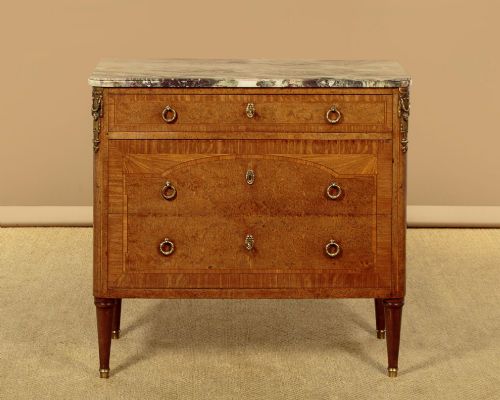
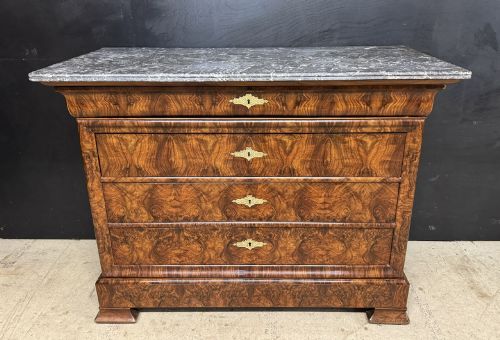
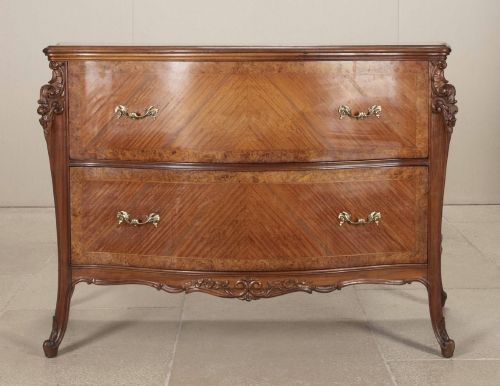
A french burr walnut commode provides deep, figured timber surfaces designed for formal rooms and intimate spaces alike. Most examples on this page date from the nineteenth century, taking the form of low chests of drawers or side cabinets.
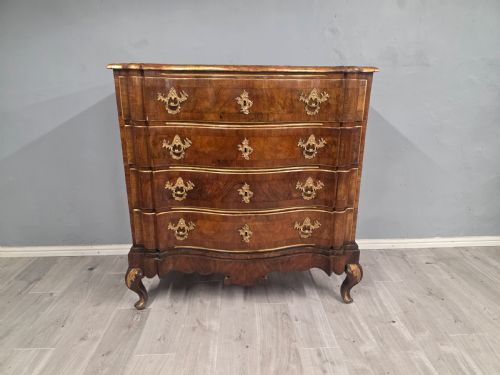
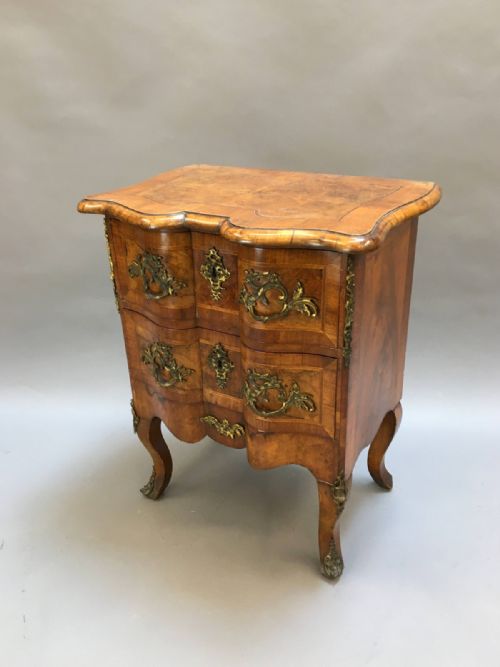
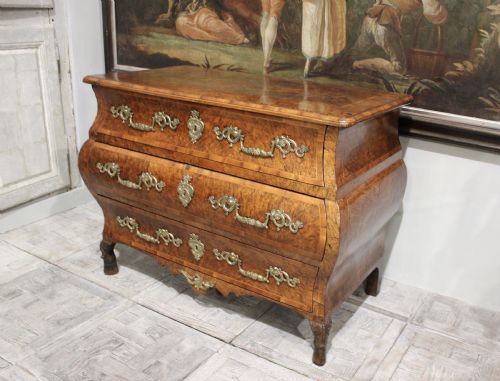
The nineteenth-century pieces range from restrained Louis Philippe designs to elaborate revival styles adorned with marble tops and metallic mounts. Eighteenth-century examples appear occasionally, offering serpentine fronts and deeper patination.
How they were made
Cabinetmakers applied burr walnut veneer over solid timber foundations to display swirling grain patterns across the front and sides. Marble slabs, sourced for durability and colour contrast, fitted neatly onto the upper surfaces.
Cast brass and ormolu mounts were secured to corners and drawer pulls to accentuate the architectural lines of the commode. Inlaid details in satinwood sometimes added contrasting geometric or floral motifs to the primary walnut body.
French Burr Walnut Commode Retail Price Guide 2026
Typical asking prices for french burr walnut commode among the pieces listed under this phrase on Sellingantiques today, from the lower quarter to the upper quarter. They describe what is for sale here now, not the wider market.
Burr walnut forms from tree growths, meaning cabinetmakers hunted for botanical lumps to create those swirling patterns.
What varies in quality
The selection of the burr veneer dictates the visual impact of the piece, with tightly clustered swirls commanding greater attention than plain timber. Smooth execution of curved drawer fronts and tight joints mark the work of skilled workshops.
The quality of the marble top and the crispness of the cast ormolu mounts separate standard production from exceptional pieces. Heavier hardware and substantial carcase construction indicate superior manufacture.
Epstein
The French Burr Walnut Commode Glossary
- Burr walnut
- A veneer taken from the warted growths of walnut trees, yielding intricate and swirling grain patterns. It creates a highly decorative surface on cabinet furniture.
- Ormolu
- Gilded bronze mounts applied to the corners, feet, and aprons of furniture. This technique adds metallic highlights to wood-heavy designs.
- Louis Philippe
- A mid-nineteenth-century French style known for clean architectural lines and subdued ornamentation. It prioritises practicality over excessive carving.
- Serpentine
- A curved front shape that undulates outward and inward in a gentle wave. This contour requires precise woodworking to ensure drawers operate smoothly.
French Burr Walnut Commode: Frequently Asked Questions
What is a french burr walnut commode?
A french burr walnut commode is a decorative chest of drawers or low cabinet surfaced in highly figured walnut veneer. Originating in France, these pieces served as both storage furniture and decorative centrepieces.
They typically feature multiple drawers and often incorporate marble tops or metal mounts. Their distinctive timber grain makes them prominent additions to traditional interiors.
How do I date a commode?
Dating relies on examining the construction methods, hardware, and stylistic details of the cabinet. Nineteenth-century pieces often reflect revival styles like Louis Philippe or Rococo.
Earlier examples from the eighteenth century show different carcase assembly and more organic serpentine contours. Comparing the veneer work and mount styling clarifies the period.
Are marble tops original?
Marble tops on these cabinets were generally fitted during the original manufacture to provide a durable and luxurious surface. They rest on top of the wooden carcase and vary in thickness and colour.
White and grey marble slabs are common, matching the tone of the walnut body. Inspecting the underside helps determine if the stone matches the age of the base.
How should I clean burr walnut?
Burr walnut requires gentle dusting with a soft, dry cloth to prevent the buildup of grit in the veneer grain. Avoid using modern silicone sprays or abrasive household cleaners.
Occasional application of quality furniture wax preserves the lustre of the timber. Keeping the piece away from direct sunlight protects the finish from fading.