



French Buffet Enfilade
A french buffet enfilade is a long, low storage piece built for dining rooms, offering substantial surface space and deep cupboard capacity.
French Buffet Enfilade
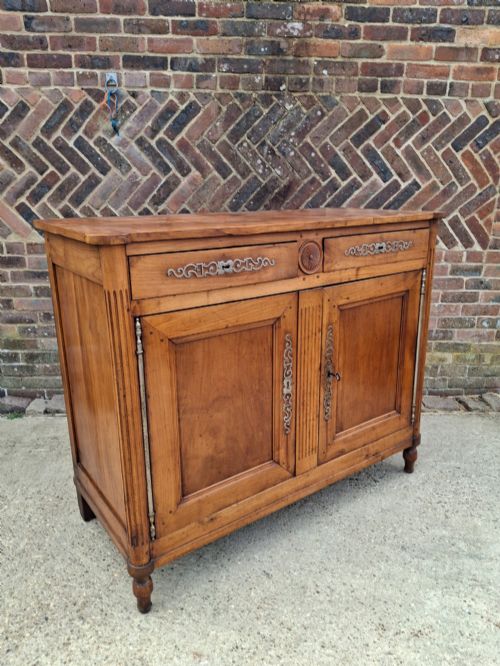
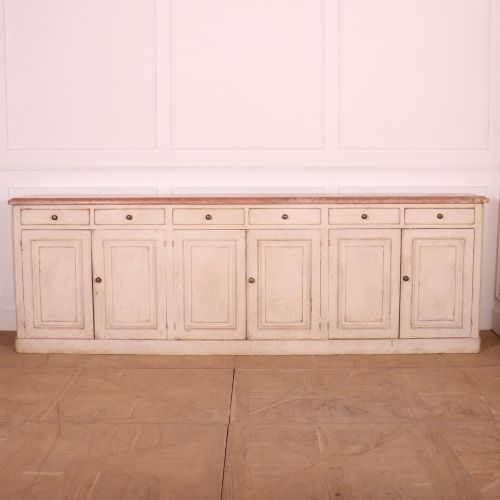
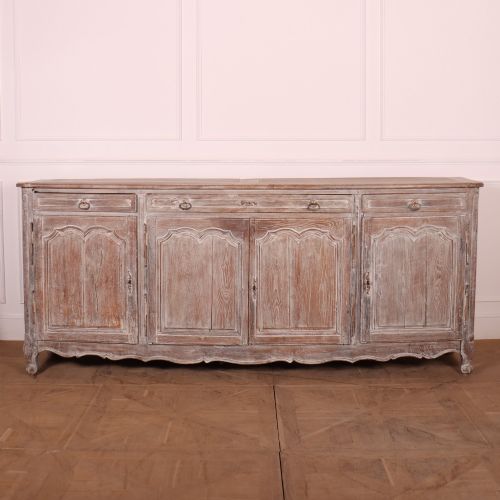
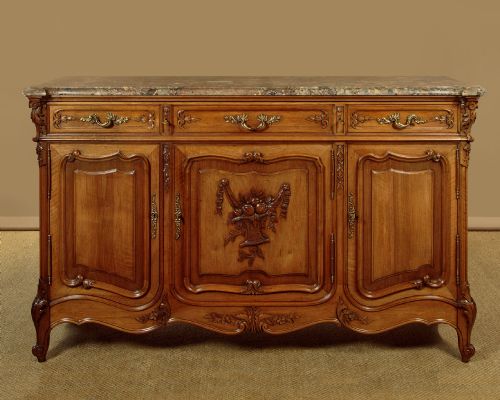
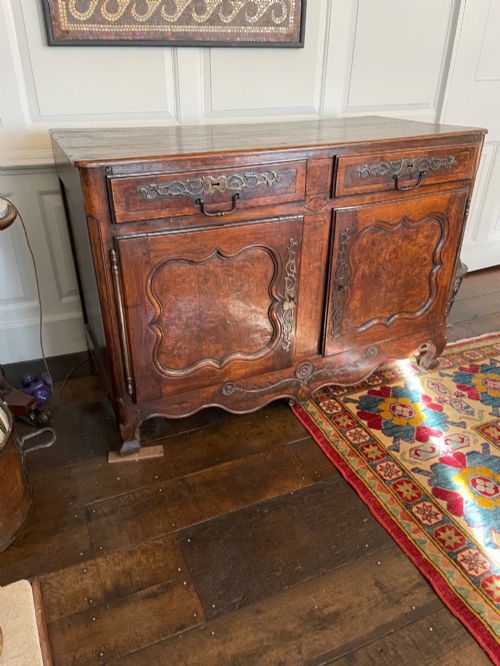
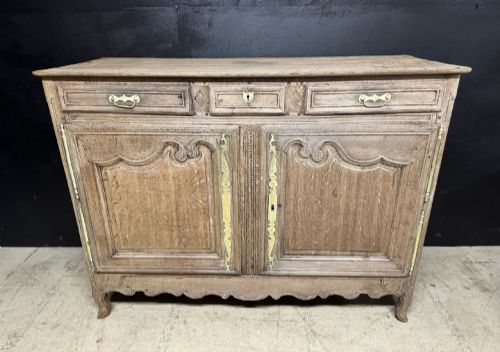
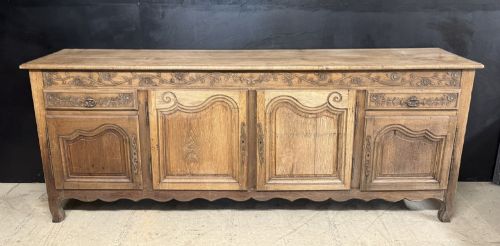
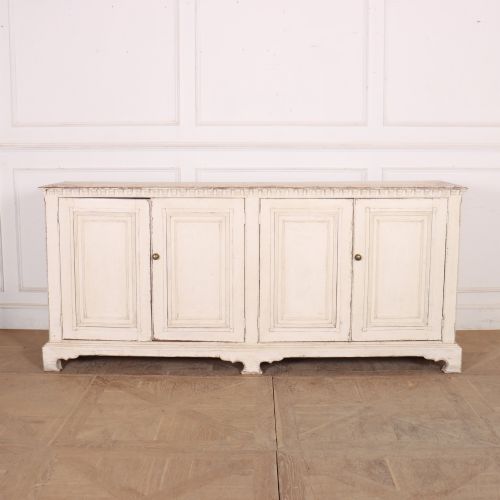
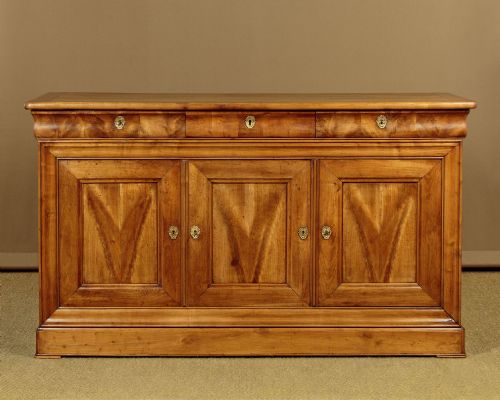
A french buffet enfilade takes the form of a long sideboard or low cabinet, designed traditionally for serving food and storing dining ware in the dining room or kitchen. These pieces stretch horizontally along a wall, featuring multiple doors and interior shelving behind timber panels.
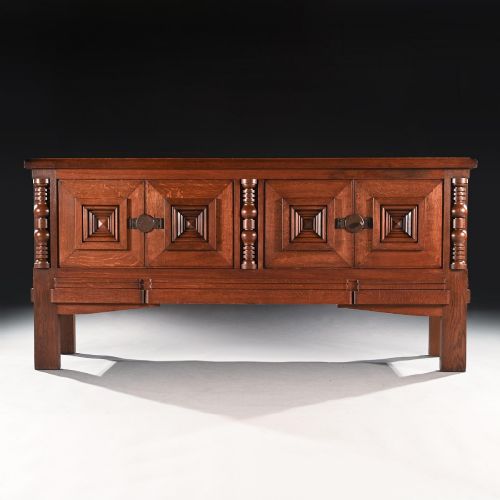
The versions most common here span from eighteenth-century provincial pieces in oak and walnut to later twentieth-century interpretations, including art deco designs in exotic hardwoods. Many examples stand on short legs or plinth bases, presenting carved panels, parquetry tops, or inset marble slabs.
Materials and Construction
Cabinetmakers built these low sideboards predominantly using native European timbers such as oak, walnut, cherrywood, and chestnut, often selecting burr ash or maple for decorative veneers. Joinery relied on traditional pegged mortise and tenon construction for the structural frames and heavy panel doors.
Surface ornamentation involved hand-carving, inlaid marquetry, and parquetry patterns arranged on the top surfaces, accompanied by brass hardware, iron hinges, and occasionally fitted marble tops to handle heavy use.
French Buffet Enfilade Retail Price Guide 2026
Typical asking prices for french buffet enfilade among the pieces listed under this phrase on Sellingantiques today, from the lower quarter to the upper quarter. They describe what is for sale here now, not the wider market.
Listings feature regional French styles including Louis XV revival and Art Deco alongside eighteenth-century provincial oak, walnut, and cherrywood enfilades.
Understanding Quality
Quality rests in the selection of timber and the precision of the joinery, distinguishing heavy structural stability from lighter, purely decorative builds. Fine examples display well-figured grain in the walnut, oak, or cherrywood, alongside crisp, hand-cut relief carving on the doors and rails.
The sophistication of the secondary details, such as matched parquetry work on the top surface, original brass or iron hardware, and well-fitted interior shelving, marks the difference between standard workshop production and superior cabinetmaking.
Charles Dudouyt
The French Buffet Enfilade Glossary
- Enfilade
- A suite of rooms aligned formally with doorways, or in furniture terms, a long cabinet featuring three or more doors in a continuous line. This layout provides exceptional internal storage capacity behind a unified facade.
- Parquetry
- A geometric mosaic of wood pieces used for decorative surfaces, frequently seen on table and cabinet tops. Artisans arrange contrasting timber grains to create geometric patterns.
- Marquetry
- The art of applying pieces of veneer to a structure to form decorative patterns and pictorial designs. Cabinetmakers utilise various coloured woods to achieve intricate surface imagery.
- Serpentine
- A curved furniture front shaped in a continuous wave, curving outward at the centre and inward at the sides. This contour requires skilled carpentry to execute smoothly.
- Provincial
- Relates to styles originating from regions outside the capital, characterised by robust local timbers and practical, sturdy construction.
French Buffet Enfilade: Frequently Asked Questions
What is a french buffet enfilade used for?
These long cabinets serve primarily as dining room sideboards, providing expansive surface space for serving food and deep interior cupboards for storing heavy ceramics, glassware, and table linen.
Their elongated low profile allows them to sit comfortably beneath large paintings or mirrors while anchoring a dining space with substantial wooden texture.
How do I distinguish eighteenth-century pieces?
Eighteenth-century examples typically show deep patination on native oak, walnut, or chestnut, accompanied by hand-carved panels shaped with gouges and chisels rather than machine tooling. The interior construction reveals hand-sawn board widths and pegged joinery unique to period workshops.
Later nineteenth and twentieth-century interpretations often incorporate sawn veneers, marble slabs, or machine-cut mouldings alongside distinct art deco geometries.
How do I care for marble top enfilades?
Marble surfaces require regular wiping with a damp cloth and mild, neutral soap to prevent staining from acidic liquids like wine or citrus juice. Avoid abrasive cleaners that dull the polish of the stone.
Applying a specialist stone sealer periodically helps protect the porous surface against accidental spills during dining use.
Will these fit in modern dining rooms?
Their low height makes them exceptionally practical for modern ceiling heights, offering large internal volume without dominating the visual space of a room. The long top surface provides an ideal platform for lamps, books, or serving dishes during gatherings.
Measure the available wall length carefully, as these cabinets are substantially longer than standard sideboards.