



French Buffet Commode
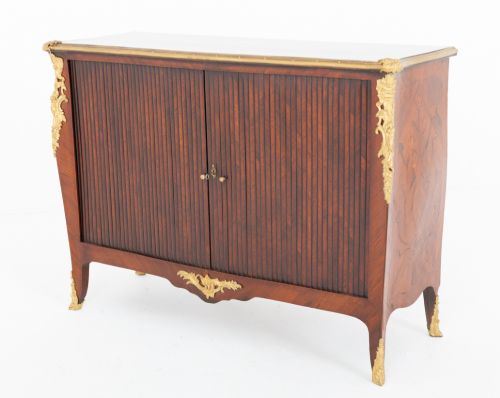
These french buffet commode pieces combine storage and display, offering grand timber surfaces and marble tops that anchor a room.
French Buffet Commode
When searching for a french buffet commode, buyers encounter a mix of sideboards, side cabinets, and chests of drawers originating from the nineteenth and early twentieth centuries. These forms bridge the gap between traditional dining room storage and decorative display pieces for reception rooms.
The most common examples on this page reflect regional French provincial craftsmanship alongside revivalist movements like Louis XV and Louis XVI styles. They often incorporate timber carcases topped with fitted marble slabs and mounted hardware.
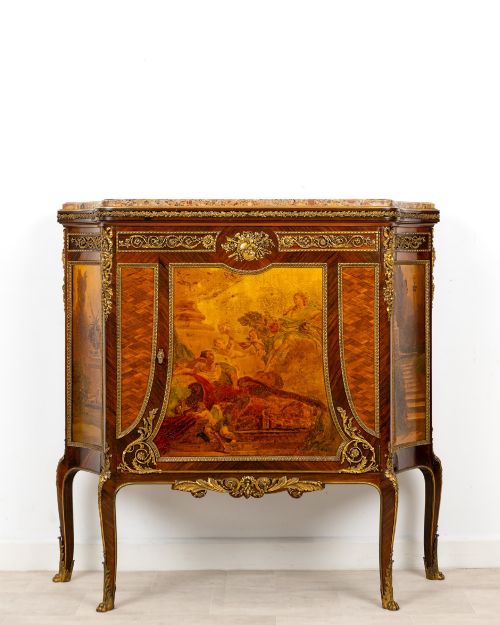
Makers and workshops utilised specific decorative vocabularies, including marquetry, parquetry, and Ormolu mounts, defining the visual character of these hybrid furniture types. The resulting objects function equally well as serving surfaces or low storage cabinets.
Materials and construction
Carpenters constructed the primary carcases using hardwoods such as walnut, oak, and flame mahogany, often applying decorative veneers like kingwood and burr walnut over the surfaces. Marquetry and parquetry patterns add geometric or floral complexity to the exterior panels.
Heavy marble slabs form the upper surfaces of many pieces, providing a durable and cool counterpoint to the timber bodies below. Gilt-bronze and ormolu mounts, along with brass handles and key escutbrellas, accent the corners and framing edges.
French Buffet Commode Retail Price Guide 2026
Typical asking prices for french buffet commode among the pieces listed under this phrase on Sellingantiques today, from the lower quarter to the upper quarter. They describe what is for sale here now, not the wider market.
Period styles span the nineteenth century into the 1930s, including Louis Philippe, Louis XVI, and French Provincial.
Distinguishing quality
The refinement of the surface marquetry and the crispness of the bronze or ormolu mounts set finer examples apart from simpler workshop production. Superior pieces display seamless veneer matching and substantial, well-cast metal ornamentation that integrates cleanly with the timber.
The integration and thickness of the marble top also indicate grade, with superior slabs showing careful bevelling and natural figuring that complements the cabinet proportions. Joinery standards inside the drawers and behind the doors reveal the underlying competency of the maker.
François Linke
The French Buffet Commode Glossary
- Ormolu
- Gilded bronze mounts applied to furniture for decorative accent. This technique was widely utilised in French cabinet making during revival periods.
- Marquetry
- Inlaid wood veneers arranged to create pictorial or decorative patterns on cabinet doors and drawer fronts. Craftsmen selected contrasting timbers to achieve tonal depth.
- Parquetry
- Geometric wood inlay patterns forming repetitive designs such as cubes or chequers. It differs from marquetry by relying on regular geometric repetition.
- Demi-lune
- A half-moon shape characteristic of certain side cabinets designed to sit flat against a wall. This profile softens the rectangular geometry of a room.
- Vernis Martin
- A type of decorative lacquer finish developed in France, mimicking Asian styles. It appears on high-end cabinet work from major makers.
French Buffet Commode: Frequently Asked Questions
What is a french buffet commode?
A french buffet commode is a hybrid storage piece that combines the low profile of a chest or commode with the utility of a sideboard or cabinet. These items typically feature timber construction paired with a stone top and decorative metal mounts.
Such furniture served multiple domestic purposes in nineteenth-century interiors, acting as a serving surface, a sideboard, or a prominent display cabinet in principal rooms.
Where should I place one?
These cabinets suit dining rooms, hallways, or living spaces where surface display and concealed storage are both required. The marble top provides a resilient surface for lamps, ceramics, or serving items.
Because many examples feature finished backs or sides intended for prominent placement, they work well against principal walls rather than tucked into corners.
How do I identify the style?
Style identification relies on examining the decorative vocabulary, such as the curved legs and asymmetrical mounts of Rococo revival pieces or the straight lines of Louis XVI designs. Timber choices and inlay patterns also point toward specific periods.
Provincial items display simpler regional characteristics, whereas pieces associated with named makers show higher levels of ornamentation and refined bronze casting.
How do I care for the marble top?
Marble tops require regular dusting and prompt cleaning of spills to prevent staining, particularly from acidic liquids like wine or citrus. Gentle soap and water suffice for routine maintenance.
Avoid abrasive cleaners or harsh scouring pads that can dull the polished stone surface over time.