



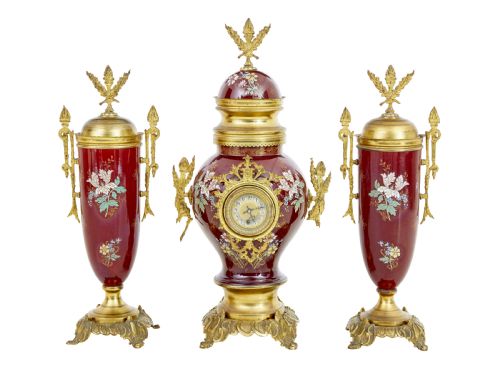

French Bronze Mantelpiece Set
A french bronze mantelpiece set brings sculptural elegance and precise timekeeping to a room, combining a central clock with matching garnitures.
French Bronze Mantelpiece Set
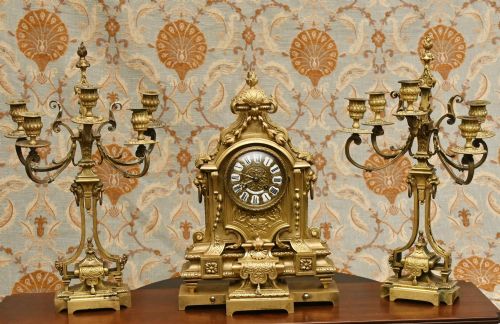
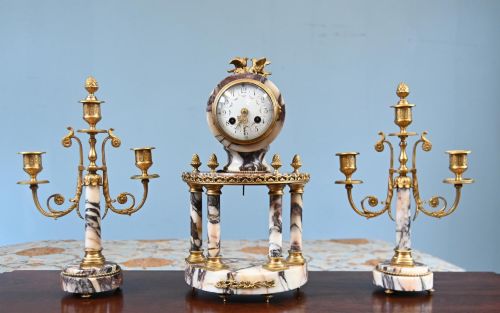
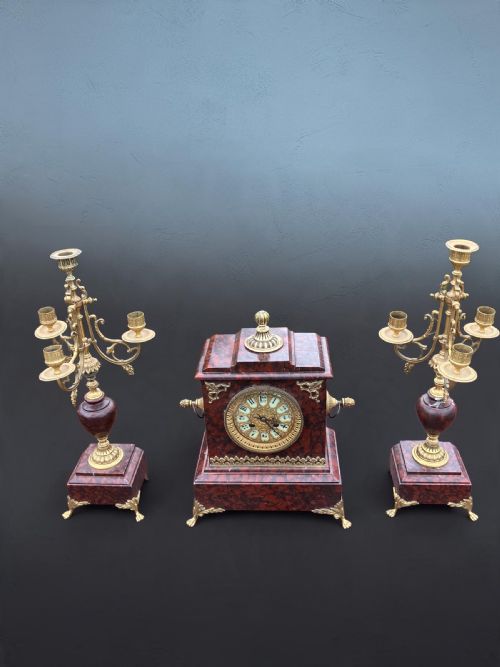
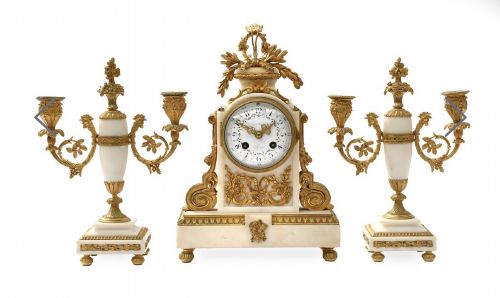
A french bronze mantelpiece set comprises a central clock accompanied by matching side pieces such as candelabras, urns or vases designed to sit together on a fireplace. These decorative groups emerge predominantly from the nineteenth century, including Victorian periods, through to the Art Deco era of the early twentieth century.
The most common configurations found here pair a striking mantel clock with matching candelabras or side vases, often mounted on contrasting stone bases. Styles range heavily from ornate Louis XV and Louis XVI revivals to restrained Neo-Classical and geometric Art Deco designs.
Buyers encounter forms that incorporate figurative elements like cherubs alongside classical architectural motifs. These ensembles transform a plain mantel into a balanced focal point by utilising matching materials across every component.
Materials and construction
These garnitures rely on cast metal frameworks utilising gilt bronze, ormolu, and brass, which provide the structural heft and decorative surface detail. Artisans fire porcelain panels or enamel dials to add colourful visual accents to the metallic bodies.
Foundational elements frequently incorporate white marble, onyx, or standard marble to anchor the heavy metal sculptures and clocks. Glass covers protect delicate clock faces while toleware or cloisonne techniques introduce varied surface textures.
French Bronze Mantelpiece Set Retail Price Guide 2026
Typical asking prices for french bronze mantelpiece set among the pieces listed under this phrase on Sellingantiques today, from the lower quarter to the upper quarter. They describe what is for sale here now, not the wider market.
Materials appearing across these sets include gilt bronze, white marble, onyx, enamel, and Sevres style porcelain.
Distinctions in quality
The choice and integration of secondary materials dictate the tier of a piece, with solid marbles and hand-painted porcelain panels outperforming simpler brass and plain stone mounts. Clock movements signed by known makers or featuring visible pendulums elevate the overall standard of the set.
Finnigan Manchester·Japy Freres
The French Bronze Mantelpiece Set Glossary
- Garniture
- A set of ornamental objects designed to match and display together on a mantelpiece or sideboard. Typically consists of a central clock flanked by two matching vases or candelabras.
- Ormolu
- Application of finely ground high-carat gold to a bronze object using mercury amalgamation. This technique produces a rich golden finish characteristic of luxury French metalwork.
- Cloisonne
- An ancient technique for decorating metalwork objects with coloured material held in place by thin metal strips welded to the base. Often found on clock dials and decorative panels.
- Toleware
- Enamelled and painted sheet metal objects created to imitate Japanese and Chinese lacquerware. Nineteenth-century French makers adapted this method for decorative garniture sets.
- Spelter
- A zinc alloy commonly utilised as a substitute for bronze in sculptural figures. It accepts patination and metallic paint finishes to resemble heavier metals.
French Bronze Mantelpiece Set: Frequently Asked Questions
How do I clean the gilt bronze?
Dust the surfaces gently with a soft, dry brush to remove settled particles without disturbing the metallic finish.
Avoid using water, abrasive cloths, or chemical polishes, as these substances strip away delicate gilding and ormolu layers permanently.
Where should I place a garniture set?
These ensembles suit wide mantelpieces, large sideboards, or console tables where the central clock and side pieces can sit in balanced arrangement.
Ensure the supporting surface remains level and strong enough to bear the substantial weight of marble and bronze components.
Can I mix pieces from different sets?
Garnitures are manufactured as unified groups sharing identical materials, patinas, and stylistic vocabularies.
Mixing components from separate origins disrupts the visual harmony intended by the original maker.