



French Bronze Dog Art
French bronze dog art captures canine movement through Art Deco sculpture, table lamps, and clocks mounted on marble bases.
French Bronze Dog Art
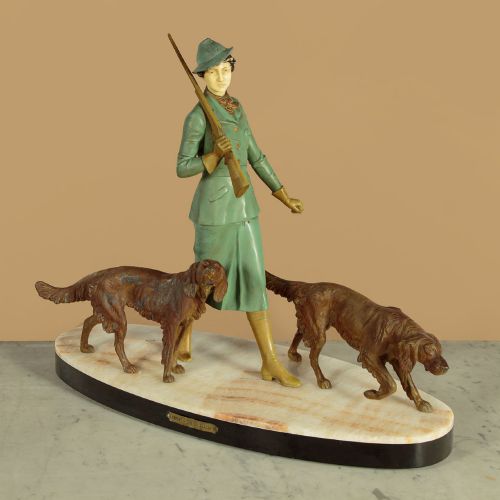
French bronze dog art encompasses figures, bookends, night lights, and clock sets dating from the nineteen twenties and nineteen thirties. These works typically depict hounds, whippets, greyhounds, spaniels, and alsatians captured in characteristic poses alongside human figures or alone.
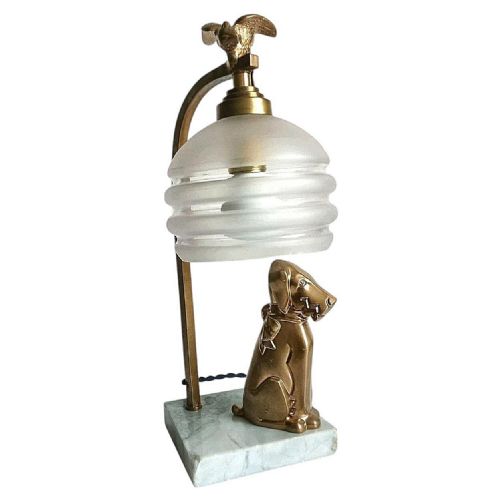
The objects take many forms, functioning as sculptural groups, novelty table lamps, mantel clocks, and heavy bookends. The majority of pieces belong to the Art Deco movement, pairing animal subjects with geometric or architectural mounts.
Marble and onyx bases frequently anchor these metal sculptures, sometimes incorporating lighting elements to create glowing night lights. Buyers encounter both solid bronze castings and alternative metal versions across the selection.
Materials and construction
Foundries cast these figures in bronze or spelter, applying patinated finishes to define the metal surfaces. Spelter served as a common alternative to bronze during the period, offering a lighter base metal for sculptural casting.
Sculptors mounted metal figures onto shaped stone plinths using marble, onyx, alabaster, or brass components. Glass elements appear in lighting pieces, providing shades and glowing panels alongside the metal and stone structures.
French Bronze Dog Art Retail Price Guide 2026
Typical asking prices for french bronze dog art among the pieces listed under this phrase on Sellingantiques today, from the lower quarter to the upper quarter. They describe what is for sale here now, not the wider market.
Dogs share the spotlight with parrots and teddy bears, proving that Art Deco canines occasionally enjoyed the company of very eclectic friends.
Judging quality and execution
Quality reveals itself in the crispness of the casting and the depth of the metal patina. Finer examples display meticulous anatomical detail in the dogs and sharp definition in the accompanying human figures.
The choice of base material influences the character of the piece, with dense marbles and rich onyx slabs providing stability and visual weight. Integrated lighting components and signed casts demonstrate higher standards of period craftsmanship.
C Masson·Alexandre Kelety·Geo Maxim·H Bal
The French Bronze Dog Art Glossary
- Spelter
- A zinc-based alloy frequently used as a cost-effective substitute for bronze in decorative figures. It accepts patinated finishes well to resemble heavier metals.
- Patina
- The surface coloration and sheen acquired by metal over time or applied intentionally during production. This finish accentuates the sculptural contours of the animal forms.
- Figural group
- A composition featuring more than one subject, such as a child with dogs or multiple hounds together. These arrangements tell a narrative story within the sculpture.
- Night light
- A decorative lamp designed to emit a low glow, often featuring translucent panels behind or beneath the bronze and spelter figures.
- Onyx
- A banded stone variety used for bases and clock surrounds. Its natural grain provides a polished decorative foundation for the metal sculptures.
French Bronze Dog Art: Frequently Asked Questions
How do these pieces function in a room?
These items serve multiple decorative and practical purposes as standalone sculptures, bookends, or timepieces. Mantel clocks and table lamps integrate utility directly into the sculptural artwork.
Night lights cast a warm glow through glass elements positioned behind the metal dogs. Bookends provide functional weight while displaying the canine forms on shelves.
Which dog breeds appear most often?
Greyhounds and whippets dominate the sculptural compositions, reflecting the sleek aesthetic of the era. Spaniels and alsatians also feature prominently in groups and bookend pairs.
Sculptors favoured athletic breeds that lent themselves to dynamic postures and elongated lines. These dogs appear alone or alongside children and figures.
How can I identify the Art Deco style?
Art Deco pieces display clean geometric lines, stylised animal anatomy, and streamlined forms. The combination of metal figures with rectangular marble or onyx bases is a hallmark of the period.
Lighting and clock designs incorporate architectural symmetry and novel material pairings. The overall aesthetic prioritises modern movement and decorative impact over literal realism.