


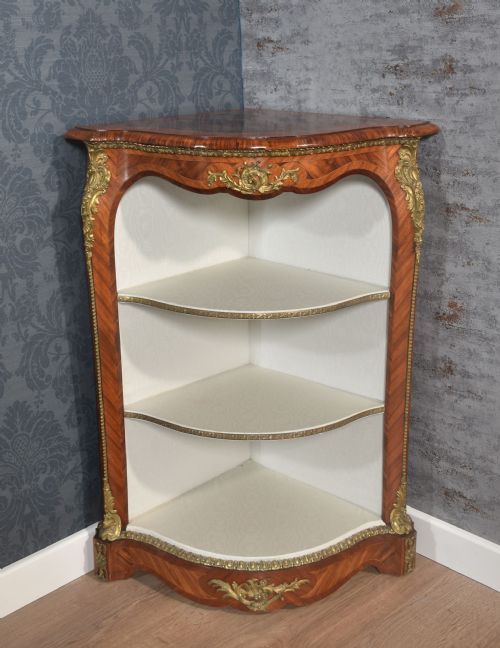


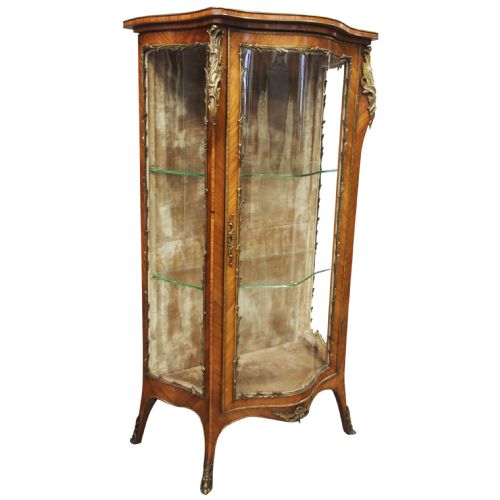


French Bronze Display Shelf
These french bronze display shelf pieces bring decorative bronze mounts and glass tiers together to hold small treasures in style.
French Bronze Display Shelf
A french bronze display shelf unites metal mounts and glass or timber tiers to exhibit small objects in a drawing room or boudoir. These furnishings range from open etageres and hanging wall cabinets to enclosed vitrines and corner cupboards.
The pieces appearing on this page span the nineteenth century, the Edwardian era, and the nineteen-twenties, drawing on Louis XV revival, French Empire, and Japonisme aesthetics. Makers and workshops from London and France shaped these forms from timber and metal.
Most items you encounter combine display shelving with cabinetwork, such as music cabinets, bookcases with vitrine tops, and two-tier etageres. Ormolu and gilt bronze mounts define the character of these display pieces across varied periods.
How they were made
Cabinetmakers constructed the carcases using mahogany, walnut, kingwood, and rosewood, often applying intricate marquetry patterns to the timber surfaces. Veneers were laid carefully over solid frames to create decorative grain movement.
Gilt bronze and ormolu mounts were cast and chased by hand before being fixed to corners, cornices, and feet. Glass panels and mirrored backs were fitted into doors and sides to bounce light through the display space.
Period styles appearing in this category span Victorian, Edwardian, Louis XV revival, and Japonisme design influences.
What varies in quality
The crispness of the bronze chasing separates standard mounts from exceptional ones, where individual leaf and scroll details remain sharp and deep. Heavier gauge metalwork sits more securely and holds its gilding longer.
Timber selection and marquetry precision dictate the level of craftsmanship in the cabinetwork. Fine examples feature matched veneers and tight joints that withstand decades of use without warping.
Gabriel Viardot·Thomas Justice And Sons·Town And Emanuel
The French Bronze Display Shelf Glossary
- Ormolu
- Gilt bronze ornaments applied to furniture and clocks. The technique involves a mercury amalgam applied to copper or brass.
- Etagere
- An open piece of furniture with multiple shelves for displaying small objects or ornaments. It typically stands on slender legs.
- Vitrine
- A glass-fronted cabinet designed for displaying porcelain, silver, or curiosities. It protects delicate items from dust.
- Marquetry
- Inlaid wood pieces arranged to form decorative patterns or pictures on a surface. Different timber species provide natural colour contrast.
- Japonisme
- The influence of Japanese art on Western design during the late nineteenth century. It appears in asymmetrical forms and natural motifs.
French Bronze Display Shelf: Frequently Asked Questions
How do I clean a bronze display shelf?
Dust timber and glass surfaces regularly with a soft, dry cloth to prevent buildup. Avoid harsh chemical cleaners that can damage the bronze mounts or strip the polish from the wood.
Keep ormolu mounts free of moisture and polish them only with a clean microfibre cloth. Professional intervention is wise if the metalwork requires deeper cleaning.
What is an etagere used for?
An etagere serves as an open display stand for small decorative objects, porcelain figures, and books. Its multiple tiers allow items to be seen from various angles.
These pieces were traditionally placed in drawing rooms or boudoirs to showcase a collector's prized possessions. They add vertical interest to a room without blocking light.
How do I date a French bronze display shelf?
Examine the construction methods, timber choice, and fastening hardware to determine the period of manufacture. Nineteenth-century pieces often feature hand-cut dovetails and heavy cast ormolu mounts.
Stylistic cues such as Louis XV revival curves or Edwardian marquetry provide further clues. Makers' stamps or signatures on the timber or bronze can confirm the origin.
Where should I place a vitrine cabinet?
Position a vitrine away from direct sunlight to protect delicate contents and wood finishes from fading. A stable indoor environment prevents fluctuations in humidity from affecting the timber carcase.
Place the cabinet where interior lighting or natural light can pass through the glass panels. This highlights the displayed objects and enhances the room's proportions.