








French Bronze Desk Inkwell
A French bronze desk inkwell brings the weight of the nineteenth century and classical design to a desktop, offering practical writing utility through sculptural bronze and marble form.
French Bronze Desk Inkwell
A French bronze desk inkwell represents the high standards of nineteenth-century desk accessories, combining metalwork with heavy stone bases. These pieces include single inkwells, double inkwells, and complete desk sets featuring candlestands or clocks.
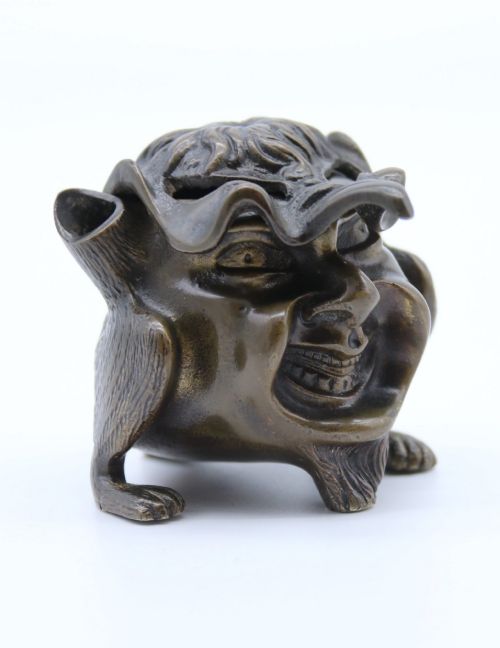
Buyers will encounter variants styled after French Empire, Neoclassical, and Art Nouveau movements. Forms range from simple architectural marble blocks with ormolu mounts to figural subjects depicting animals, clowns, and mythological creatures.
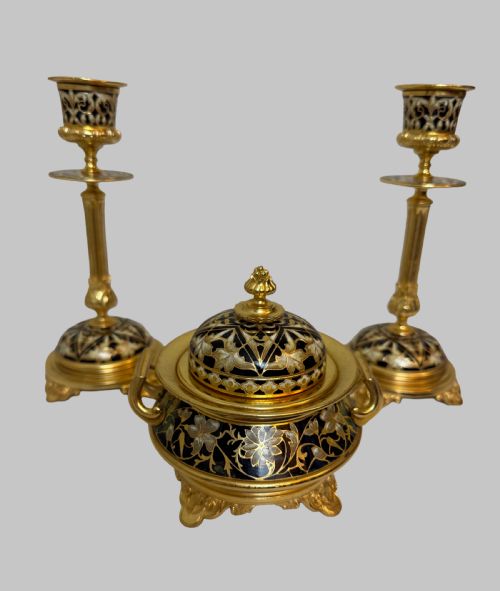
Origins trace directly to French workshops and Paris makers utilising patinated bronze, gilt bronze, and ormolu. The most frequent pieces combine dark patinated bronze or gleaming ormolu mounted upon Sienna, vert, or onyx marble.
Materials and Technique
Casting formed the structural body of these pieces, utilising bronze, patinated bronze, or gilded bronze alongside brass and spelter. Makers chased and finished the metal surfaces by hand to create sharp detail on figural subjects and decorative mounts.
Marble provided a solid foundation, cut into Sienna, vert, or onyx bases to anchor the heavy metal inkwells and desk sets. Ormolu mercury gilding or champlevé enamel often accented the bronze components, adding colour and textural contrast to the stonework.
French Bronze Desk Inkwell Retail Price Guide 2026
Typical asking prices for french bronze desk inkwell among the pieces listed under this phrase on Sellingantiques today, from the lower quarter to the upper quarter. They describe what is for sale here now, not the wider market.
Desk ornaments shaped as playing kittens or clowns remind us that nineteenth-century writers appreciated a touch of mischief while managing their correspondence.
Assessing Quality
Quality rests in the crispness of the bronze casting and the depth of the hand-chasing on figural details and mounts. Finer examples display meticulous definition in hair, feathers, and facial expressions, whereas lesser pieces show softer, blurred contours from worn moulds.
The choice and preparation of the marble base reveal the maker's ambition, with select pieces using richly variegated Sienna or onyx rather than plain stone. The integration between the heavy metal components and the stone reveals whether the desk stand was constructed with care.
Albert Marionnet·Jules Dalou·Maurice Dufrene·Ernest Louis Adnin·Lefebvre of Belgium
The French Bronze Desk Inkwell Glossary
- Ormolu
- Gilt bronze created by applying a mercury and gold amalgam to a bronze base and heating it. This technique produced a durable golden finish seen on nineteenth-century desk accessories.
- Encrier
- The French term for an inkstand or inkwell. These portable writing vessels often held one or more glass ink inserts alongside pen trays.
- Champlevé
- An enamelling technique where troughs are dug into a metal surface and filled with vitreous enamel before firing. It frequently decorates nineteenth-century desk sets and candlesticks.
- Grand Tour
- The cultural journey undertaken by wealthy young Europeans in the nineteenth century. Souvenirs from these travels included miniature bronzes and classical desk pieces.
- Patinated bronze
- Bronze treated with chemicals or heat to alter its surface colour. This process produced deep brown, green, or near-black tones on figural desk pieces.
French Bronze Desk Inkwell: Frequently Asked Questions
What is an encrier?
An encrier is the traditional French term for an inkstand or inkwell desk set. These pieces were designed to hold ink reservoirs and writing implements for correspondence.
Such vessels formed central fixtures on nineteenth-century writing desks and library tables.
How do I identify Art Nouveau pieces?
Art Nouveau examples date predominantly from around nineteen hundred and feature organic, flowing lines inspired by natural forms. These pieces often incorporate stylised plant motifs or dynamic figural subjects.
Makers such as Maurice Dufrene and Albert Marionnet utilised silvered or gilded bronze to capture this fluid aesthetic.
Were these inkwells used daily?
These desk accessories served practical writing functions in studies, offices, and drawing rooms throughout the nineteenth century. Dip pens required a steady ink source close at hand during correspondence.
Many retain their original glass or ceramic liners inside the bronze housing to hold the liquid ink safely.
What marble types are used?
Sienna marble, vert marble, and onyx appear frequently as heavy foundational bases for these inkstands. The stone provided stability and a contrasting colourful palette beneath the bronze mounts.
French workshops matched the marble tone to the specific metal finish, whether bright ormolu or dark patinated bronze.