

French Brass Shelf Clock
These French brass shelf clock pieces bring nineteenth-century precision and gilt metal elegance to any mantelpiece.
French Brass Shelf Clock
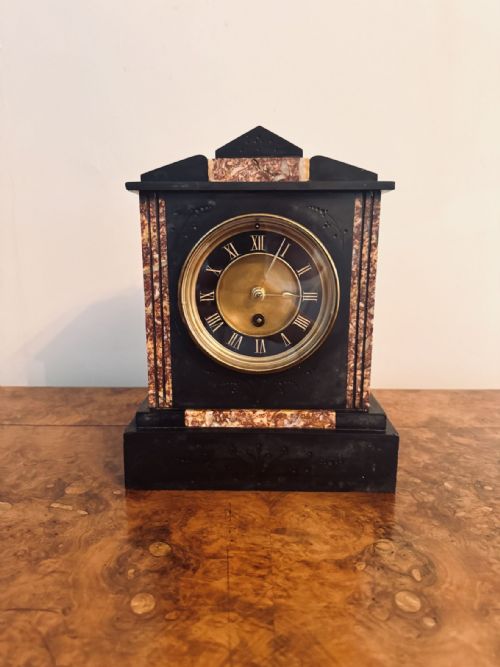
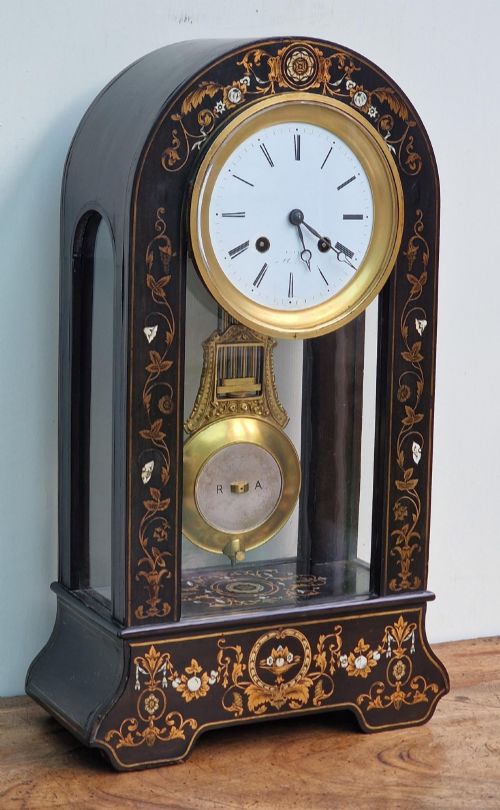
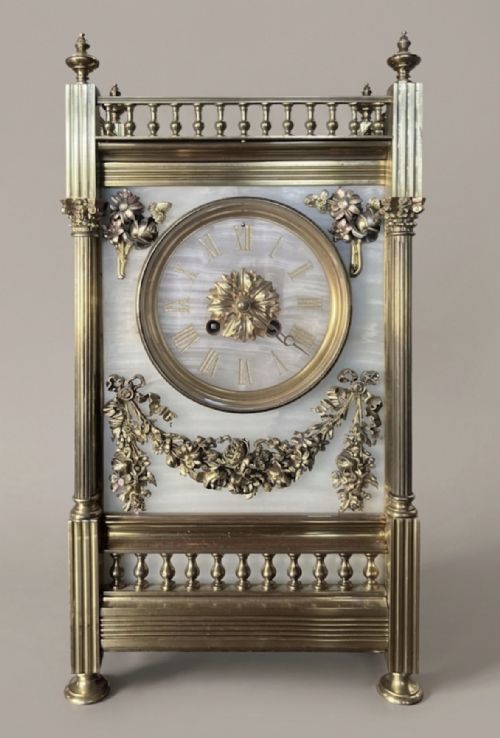
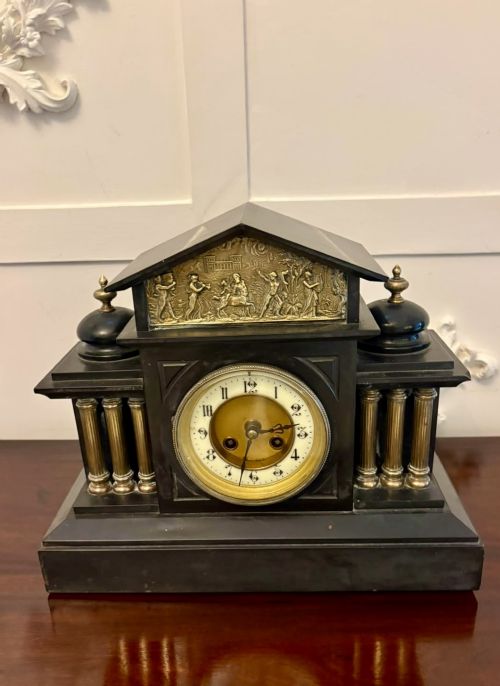
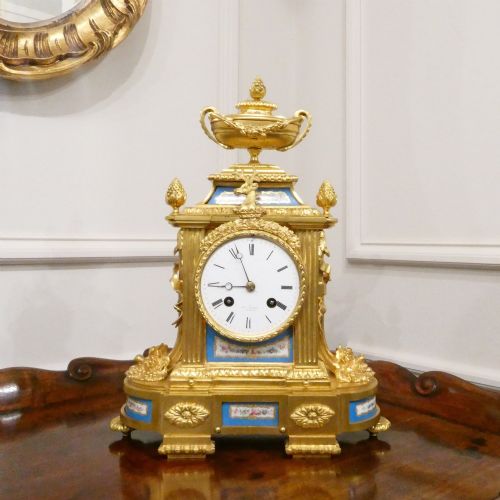
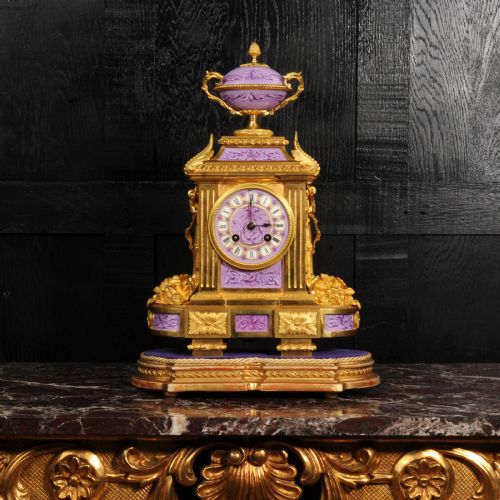
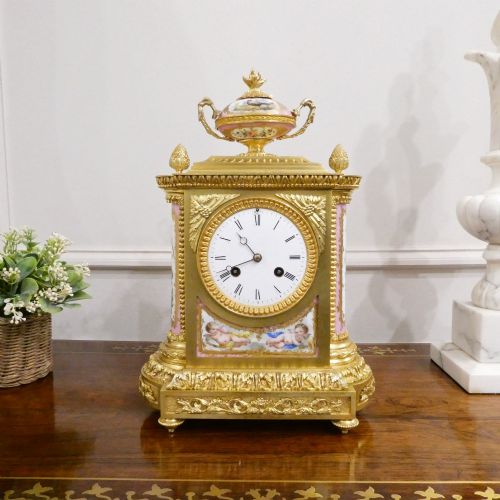
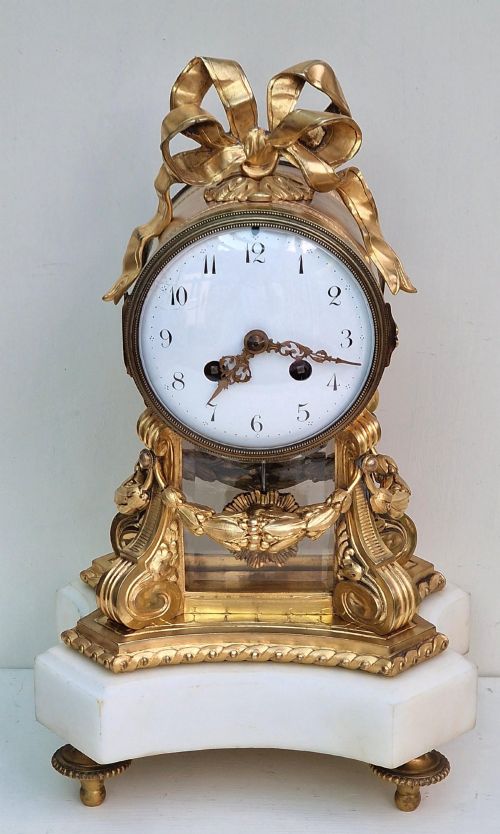
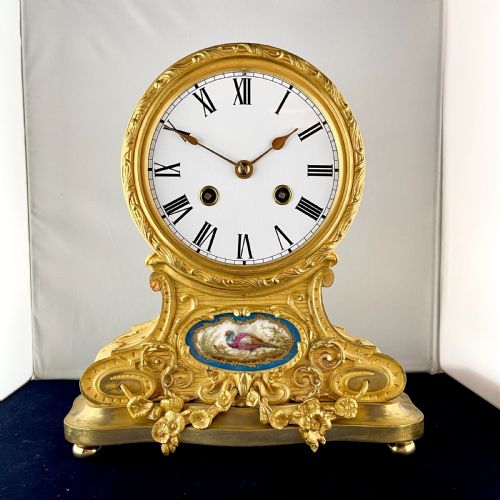
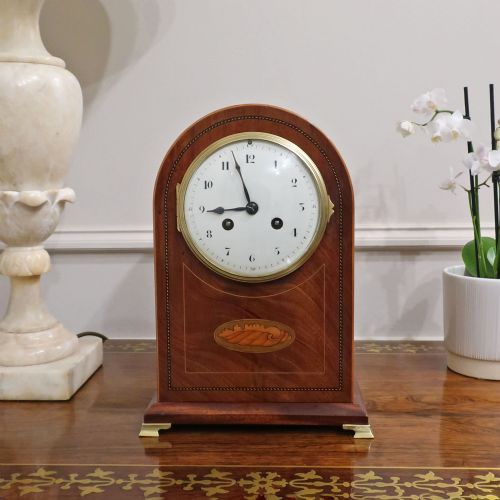
A french brass shelf clock sits on the mantelpiece, combining heavy cast metals with enamelled dials and intricate decorative styles. These objects span the nineteenth century, taking forms from simple architectural slate boxes to elaborate revival cases.
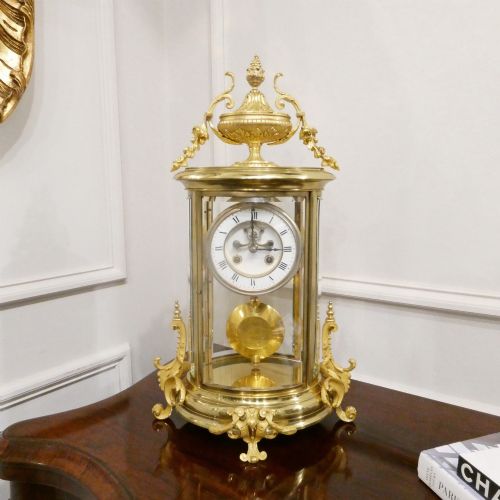
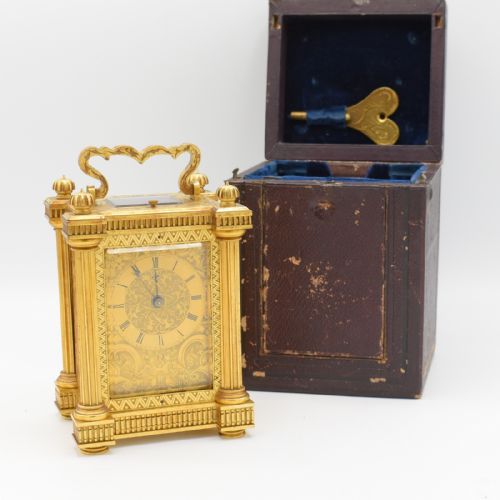
The selection here draws heavily on Victorian interpretations of Louis XV and Louis XVI aesthetics. Pieces range from four-glass salon models showing the oscillating pendulum to compact carriage designs meant for travel.
Makers and retailers stamped their movements with details of production, linking domestic timekeeping directly to Parisian and London workshops of the eighteen-eighties and eighteen-nineties.
How they were made
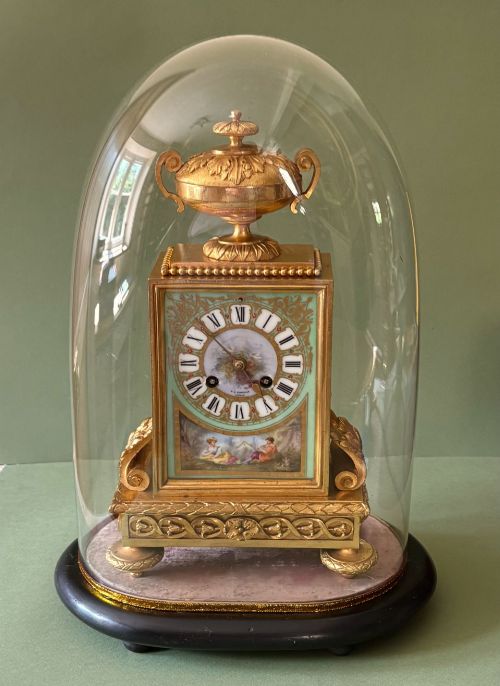
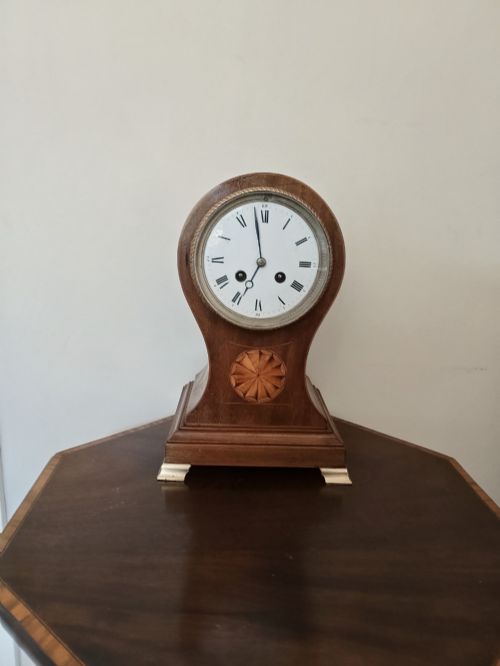
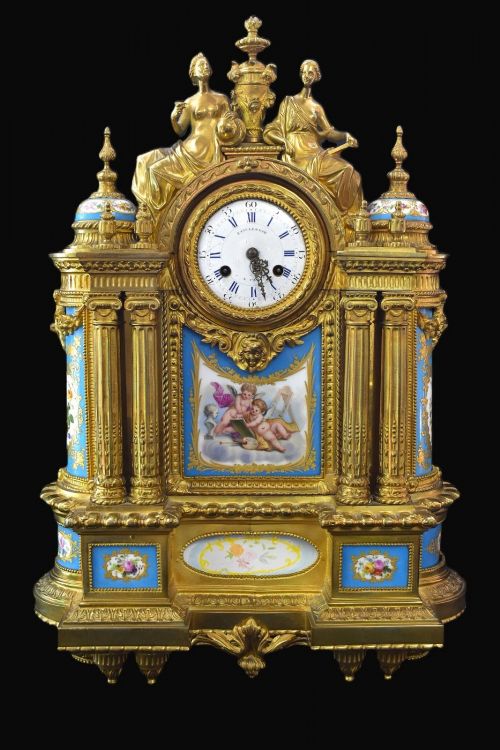
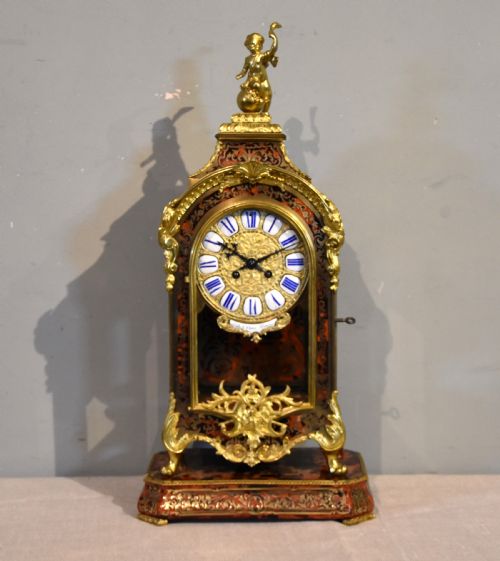
Foundries cast brass, bronze, and ormolu into ornate bezels, columns, and figural mounts, often applying mercury gilding or lacquer for a lasting sheen. Cases combine these metals with contrasting materials like black marble, Sienna marble, mahogany, and porcelain panels painted with floral scenes.
Interiors rely on mechanical brass gear trains, driven by springs or gravity pendulums, housed within heavy timber, slate, or glass housings. Enamel dials feature hand-painted roman numerals, matched with delicate steel hands behind bevelled glass panes.
French Brass Shelf Clock Retail Price Guide 2026
Typical asking prices for french brass shelf clock among the pieces listed under this phrase on Sellingantiques today, from the lower quarter to the upper quarter. They describe what is for sale here now, not the wider market.
Some nineteenth-century travellers relied on miniature carriage clocks so heavily they needed fitted leather travel cases just to survive bumpy stagecoach rides.
What varies in quality
The distinction between standard production and top-tier pieces rests on the crispness of the metal chasing and the depth of the casting. Heavily articulated ormolu mounts and finely champlevé enamelling separate workshop output from mass-market factory items.
Movement sophistication also divides the range, moving from simple time-only mechanisms up to striking trains with repeaters and makers' signatures engraved directly onto the backplate.
Jean-Baptiste Delettrez·Achille Brocot·Henry Marc·Samuel Marti·Etienne Lenoir·Philippes Paris
The French Brass Shelf Clock Glossary
- Ormolu
- Gilded bronze produced by applying a mercury and gold amalgam to a cast bronze base, then heating it to drive off the mercury. This technique yields a warm, durable finish seen on many nineteenth-century French clock cases.
- Champlevé
- An enamelling technique where troughs or cells are hollowed out of the metal surface and filled with vitreous paste before firing. It decorates the bezels and pillars of architectural shelf clocks.
- Four glass clock
- A mantel timepiece enclosed on all four vertical sides by bevelled glass panels, allowing a clear view of the mercury or mercury-compensated pendulum swinging inside.
- Carriage clock
- A small, portable spring-driven timepiece fitted with a folding handle and glass sides, originally designed for officers and travellers during the nineteenth century.
- Boulle
- A form of marquetry using brass inlaid into tortoiseshell or dark horn, named after the cabinetmaker André-Charles Boulle and revived during the Victorian period.
French Brass Shelf Clock: Frequently Asked Questions
How do I wind a mechanical shelf clock?
Insert the matching key into the winding arbor on the dial face and turn it gently until resistance stops you. Most nineteenth-century movements require a weekly wind to keep time accurately.
Take care not to overwind the mainspring, as forcing the key past the stop can snap the internal steel. Listen to the beat to ensure the pendulum remains in-beat after winding.
What is a repeater mechanism?
A repeater mechanism allows the clock to chime the last hour and quarter-hour on demand when a small lever or button is pressed. This feature was especially useful at night before electric lighting.
Carriage clocks and fine mantel models often included this complication alongside standard hourly strikes.
How do I tell if a clock is French or English?
French pieces of this era frequently utilise cast gilt bronze, champlevé enamel, and porcelain panels from Sèvres, often featuring barrel movements stamped by makers like Samuel Marti. English shelf clocks tend toward mahogany or walnut cases with fusee movements driven by chains or cords.
Examining the backplate of the brass movement usually reveals maker stamps, serial numbers, and country of origin indicators.
Where should I place my clock at home?
Set the clock on a stable, level mantelpiece or shelf away from direct sunlight, radiators, and draughts. Temperature fluctuations can affect the wood and metal expansion, altering the timekeeping.
A solid foundation ensures the pendulum swings evenly, keeping the tick steady and reliable throughout the day.