




French Brass Inlay Desk
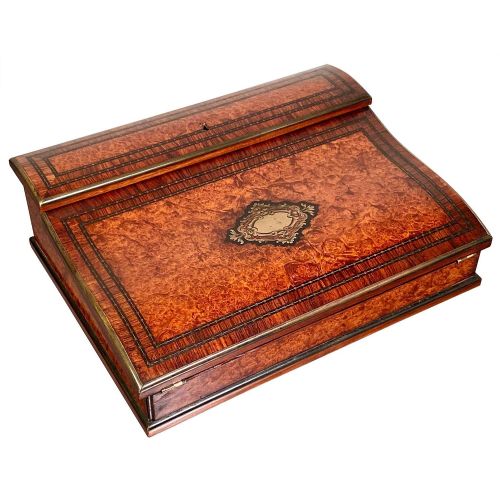
A french brass inlay desk brings nineteenth century elegance to a room through intricate tortoiseshell and brass work set into rich woods.
French Brass Inlay Desk
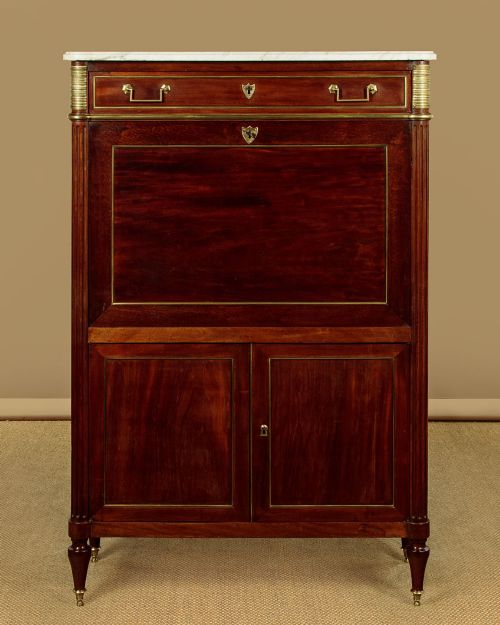
A french brass inlay desk encompasses writing tables, bureau plat forms, and bonheur-du-jour cabinets dating across the nineteenth century. Buyers encounter pieces from the Victorian and Napoleon III periods, often bearing Louis XV revival characteristics.
The selection ranges from compact campaign writing slopes to freestanding centre tables and writing desks fitted with brass details. Mahogany, walnut, and rosewood serve as the primary timbers for these writing surfaces.
Materials and Technique
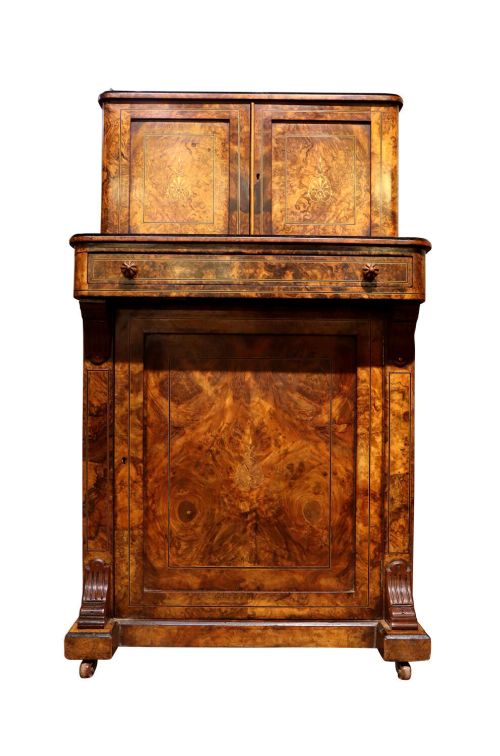
Maker workshops combined exotic timbers such as rosewood, kingwood, and burr walnut with polished brass inlay and ormolu mounts. Ebonised finishes and tortoiseshell veneer frequently appear alongside precise parquetry and marquetry patterns.
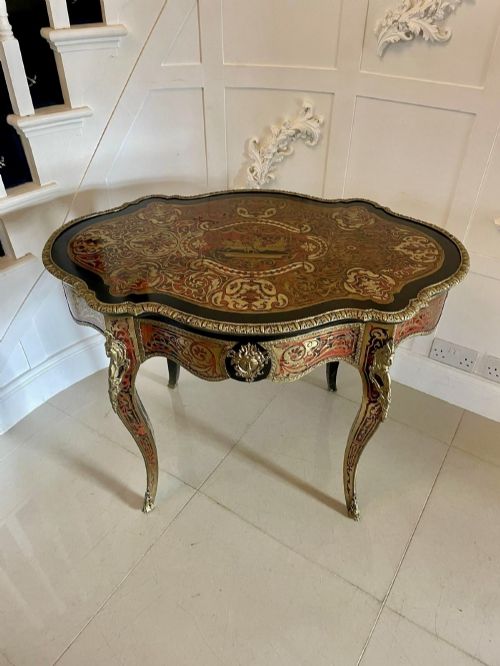
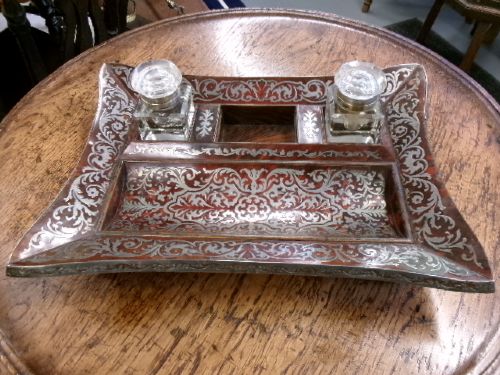
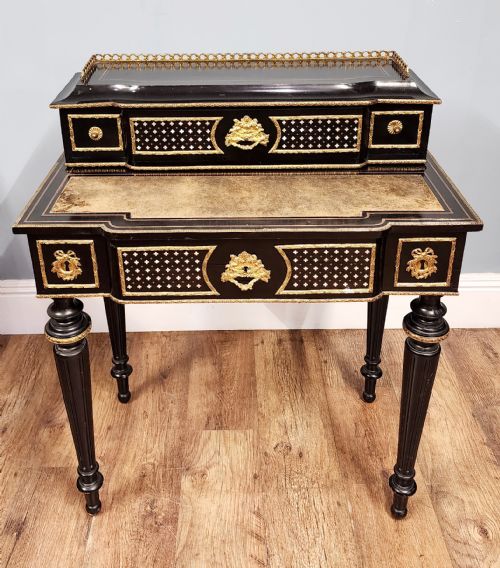
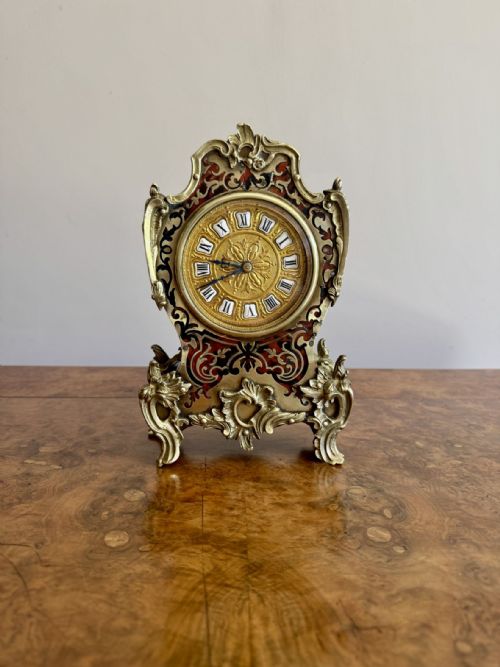
Brass is meticulously cut and embedded into the wooden substrate or tortoiseshell ground, a technique seen on boulle work desks and writing tables. Gilt bronze mounts and ormolu framing complete the structural enrichment of the pieces.
The listings span the nineteenth century, featuring Victorian, Napoleon III, and Edwardian eras alongside Louis XV revival styles.
Judging Quality
The standard of a french brass inlay desk rests on the precision of the metalwork and the depth of the timber grain. Finer examples display tight, seamless integration between the brass arabesques and the surrounding veneer.
Execution of the ormolu mounts and the crispness of the surface carving separate standard production from exceptional nineteenth-century workshop output. The retention of original patination on both wood and metal dictates the standing of each piece.
Edwards and Roberts·Maison Millet·Paul Garnier·Donald Ross·Baby and Jannings·Henry Marc
The French Brass Inlay Desk Glossary
- Boulle
- A form of marquetry using brass and tortoiseshell inlaid in contrasting patterns. Named after the French cabinetmaker André-Charles Boulle, it defines opulent nineteenth-century furniture.
- Bureau Plat
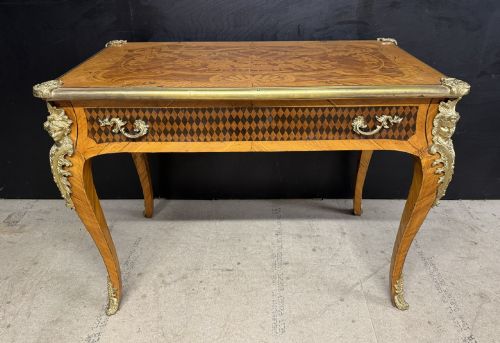
- A formal freestanding writing table with a flat top, usually lined with leather. These tables stand on cabriole or tapered legs adorned with ormolu mounts.
- Ormolu
- Gilt bronze applied to furniture mounts and clock cases. The technique involves treating brass with a mercury and gold amalgam to achieve a rich golden finish.
- Bonheur-du-Jour
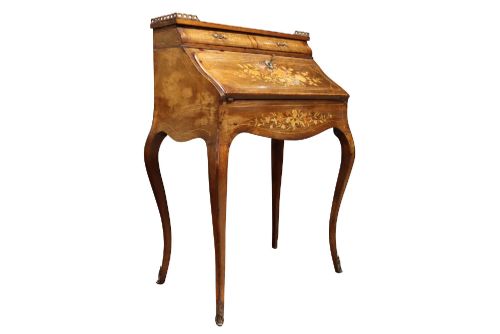
- A light lady's writing desk featuring a small cabinet or set of drawers on top of the writing surface. These desks emerged during the eighteenth century and remained popular through the Victorian revival eras.
- Parquetry
- Geometric wood mosaic work used for floors and furniture surfaces. Artisans arrange contrasting timber veneers in repeating patterns like squares and chequered grids.
French Brass Inlay Desk: Frequently Asked Questions
How do I date a french brass inlay desk?
Dating relies on timber choices, revival styles, and construction methods recorded across the nineteenth century. Pieces from the 1850s to 1880s frequently exhibit Napoleon III or Louis XV revival traits.
Examining secondary woods and the style of brass work helps narrow the decade of manufacture. Maker stamps, where present, provide definitive attribution.
Where were these desks placed originally?
These desks served in grand libraries, drawing rooms, and private boudoirs as functional writing furniture. Freestanding centre tables allowed placement in the middle of a room rather than against a wall.
Smaller bonheur-du-jour forms functioned as personal writing stations for correspondence and light administrative tasks.
How do I care for brass inlay and wood?
Maintenance requires stable room humidity and protection from direct sunlight to prevent timber shrinkage and veneer lifting. Gentle dusting with a dry cloth preserves the polished surface without abrasive cleaners.
Applying microcrystalline wax occasionally protects both the timber finish and the exposed brass elements from oxidation.
What is the difference between marquetry and parquetry?
Marquetry employs varied veneer woods, brass, and tortoiseshell to create pictorial scenes, floral motifs, or complex scrolling designs. Artisans cut these elements together to form elaborate surface pictures.
Parquetry restricts the design to geometric patterns such as cubes, diamonds, and squares. Both techniques decorate the tops and drawers of nineteenth-century writing furniture.