
French Brass Inlaid Table
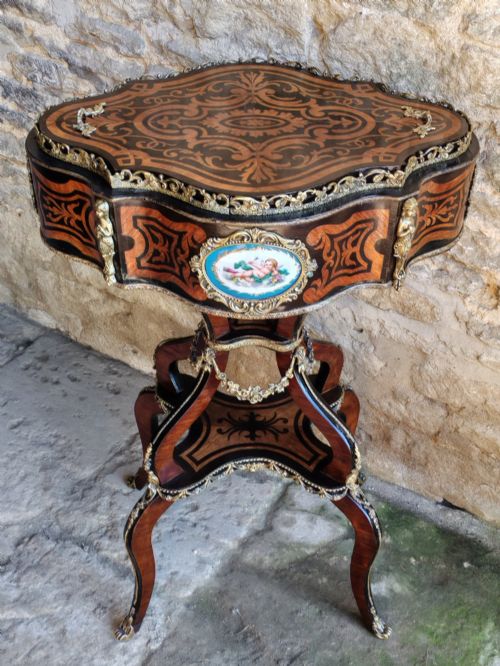
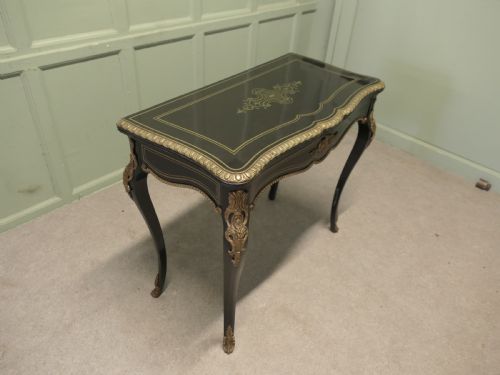
These french brass inlaid table examples bring nineteenth-century continental elegance into a room through precise metalwork and fine timber.
French Brass Inlaid Table
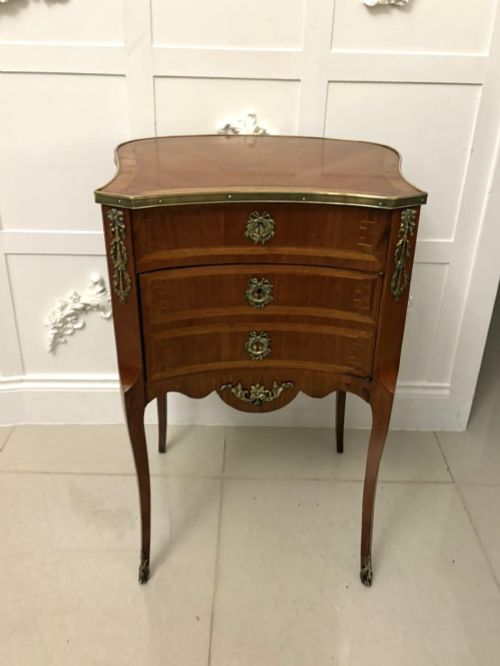
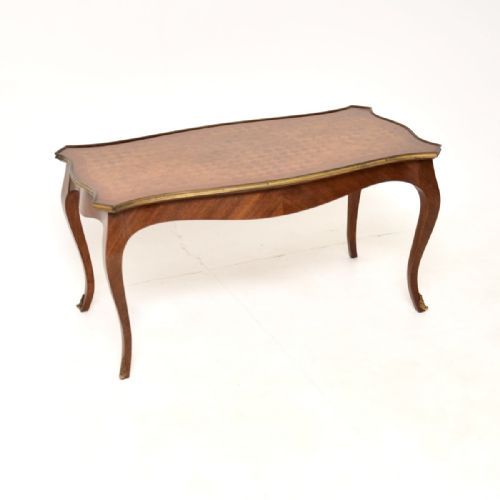
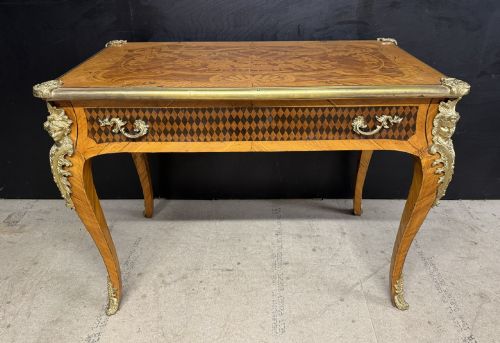
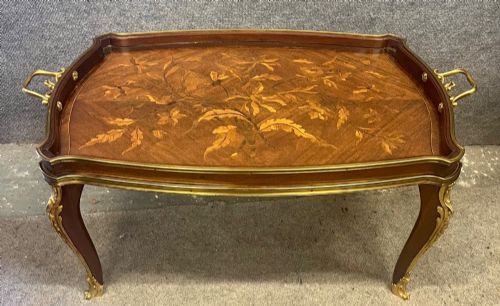
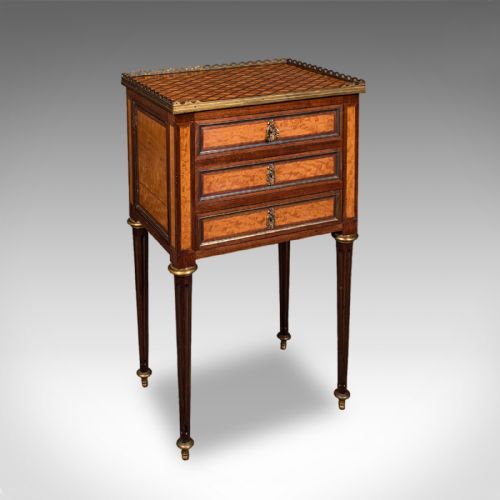
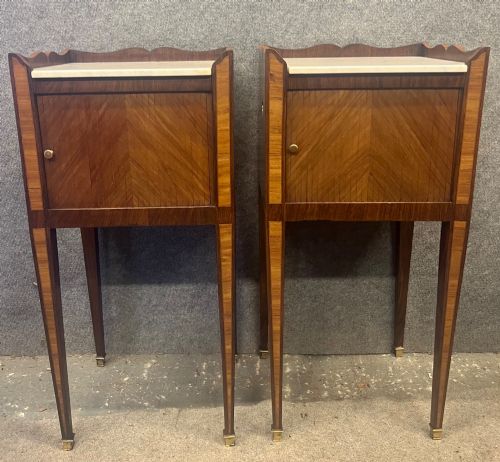
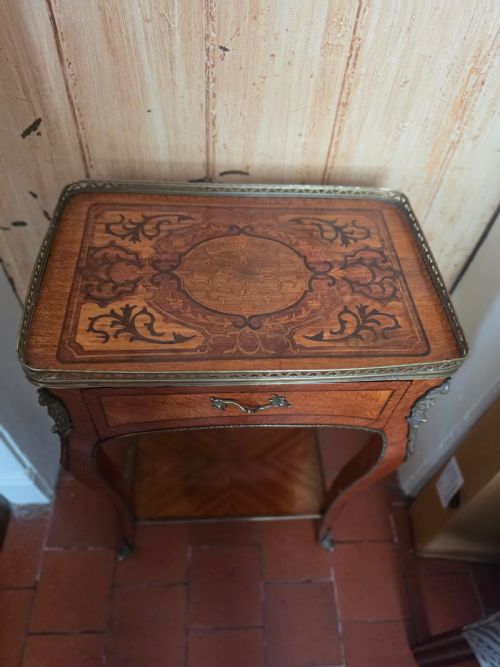
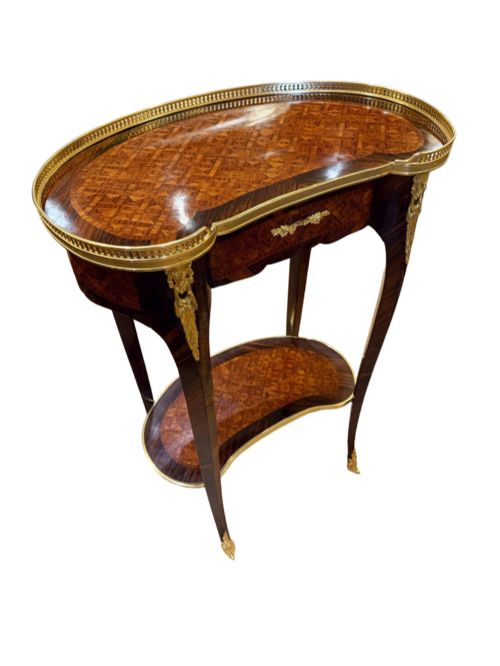
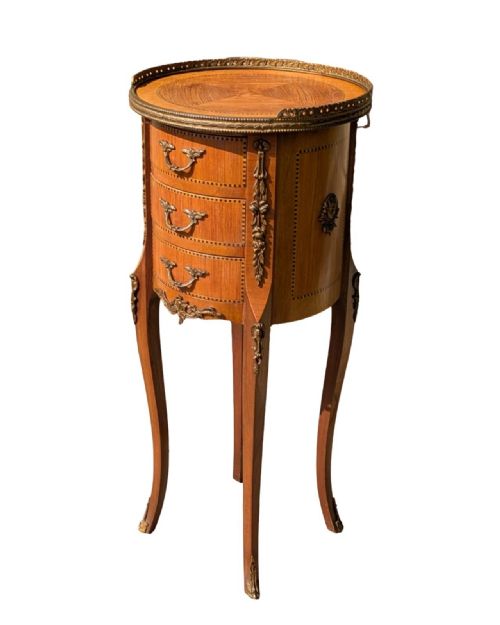
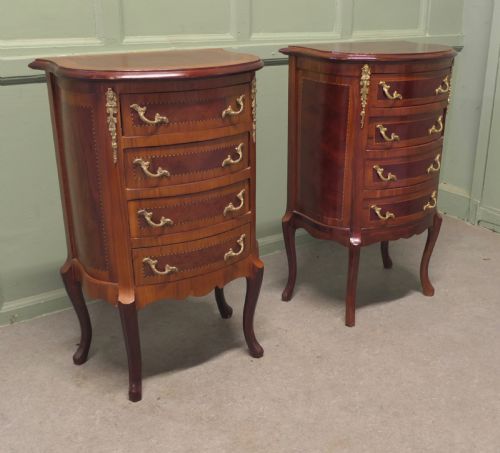
A french brass inlaid table encompasses various nineteenth-century and early twentieth-century forms, most frequently appearing as side tables, centre tables, and bedside cabinets.
The selections span stylistic revivals including Louis XV and Louis XVI alongside Napoleon III and Victorian periods, reflecting continental tastes imported or emulated across Europe.
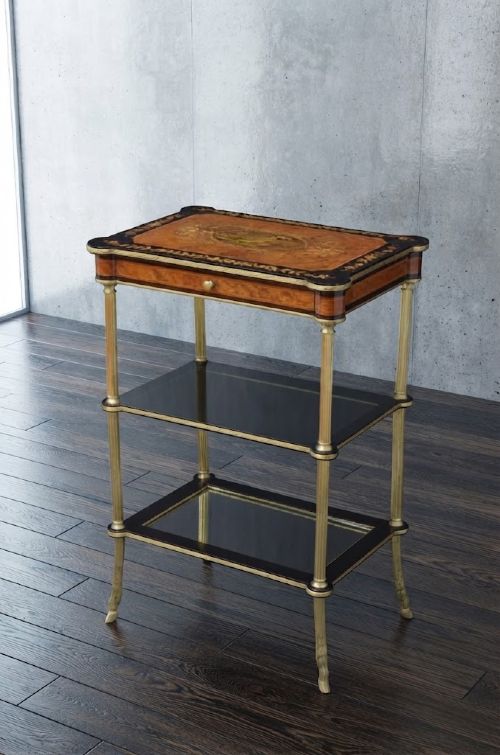
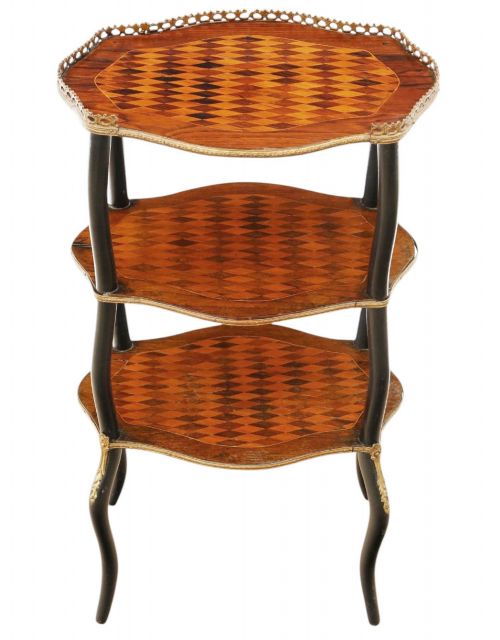
Beyond standard occasional pieces, the records show writing desks, games tables, and etageres sharing the same characteristic metal inlay.
Materials and Technique
Workshops utilised dense timbers such as rosewood, walnut, mahogany, kingwood, and ebonised wood to provide a dark, contrasting ground for metal decoration.
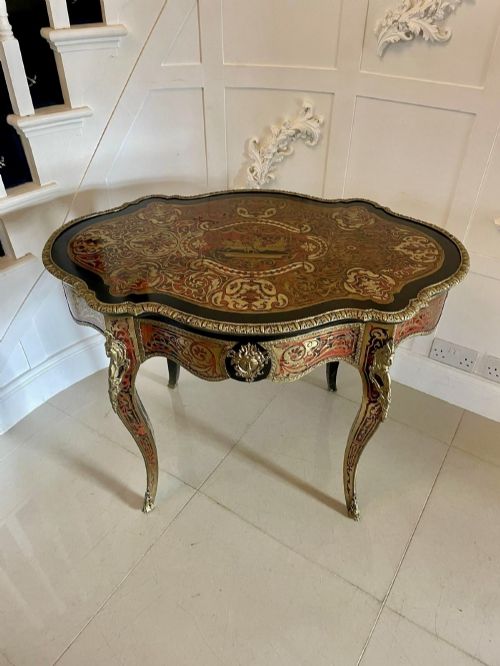
Brass wire and sheet metal were meticulously embedded into the wood surfaces alongside tortoiseshell in Boulle work, often supplemented by gilt bronze and ormolu mounts.
Some tables double as games surfaces, hiding chess or card layouts beneath their polished tops.
Judging Quality
Excellence lies in the crispness of the brass cutting and the precision with which the metal sits flush within the wooden channel without visible gaps.
The choice of secondary woods and the intricacy of underlying parquetry or marquetry patterns distinguish standard production from superior cabinet-making.
The French Brass Inlaid Table Glossary
- Boulle
- A form of marquetry utilising brass and tortoiseshell inlaid in contrasting patterns, developed in France during the seventeenth century and revived later.
- Ormolu
- Gilded bronze used for decorative mounts and feet on nineteenth-century furniture.
- Parquetry
- Geometric mosaic woodwork forming patterns like cubes or chequers on table tops.
- Etagere
- A set of open display shelves supported by columns or slender uprights.
- Bureau Plat
- A flat-topped freestanding writing desk typically fitted with drawers.
French Brass Inlaid Table: Frequently Asked Questions
How do I clean brass inlay?
Dust gently with a soft dry cloth to prevent accumulation in the grooves. Avoid harsh commercial liquid cleaners that might stain the surrounding wood.
Keep the timber nourished with appropriate wax, applying it sparingly around the metal lines rather than scrubbing directly over the brass.
Where should I place a centre table?
A centre table requires open floor space where its patterned top remains visible from all angles. It serves well as a focal point in a larger hallway or drawing room.
Ensure placement avoids direct sunlight to protect vulnerable rosewood and mahogany finishes from fading over time.
Are these tables sturdy enough for daily use?
Most occasional and side tables were built for light domestic service rather than heavy loads. Their slender legs and intricate joints require thoughtful handling.
Placing heavy lamps or stacking large collections of books upon them can strain the antique construction.
How can I tell the period of a table?
Examine the secondary woods inside drawers and the underside for tool marks and construction methods. The style of the brasswork often corresponds to specific nineteenth-century revivals.
Consulting the overarching design vocabulary, whether Louis XVI straight lines or Louis XV curves, helps narrow down the decades.