



French Brass Collectible
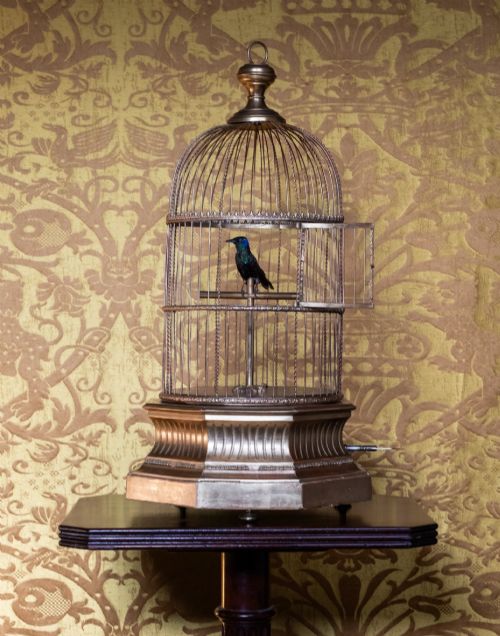
These french brass collectible pieces span carriage clocks and militaria from the eighteenth century to the Edwardian period.
French Brass Collectible
A french brass collectible brings together utilitarian objects and decorative works from the eighteenth, nineteenth and early twentieth centuries. Buyers seeking these pieces encounter items that served practical purposes in military, maritime and domestic spheres.
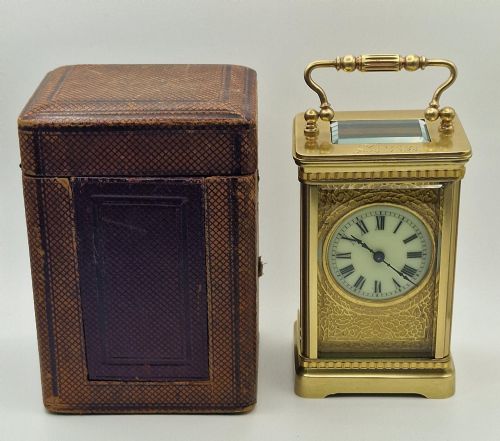
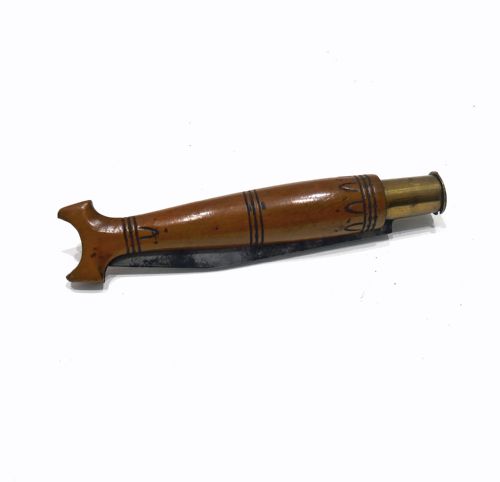
The selection on this page centres heavily on timepieces, particularly carriage clocks in various sizes and configurations. Alongside these horological works, the inventory includes pocket knives, walking sticks, signal cannons and scientific instruments.
Origins span standard nineteenth-century production as well as specific Victorian and Edwardian periods. Many pieces reflect French craftsmanship, combining metalwork with glass, enamel and wood elements.
Materials and construction
Construction relies predominantly on brass and bronze, often paired with structural components in steel, ebonised wood or fruitwood. Gilt finishes and enamel dials appear frequently on timepieces and decorative items, while leather and glass supplement functional pieces.
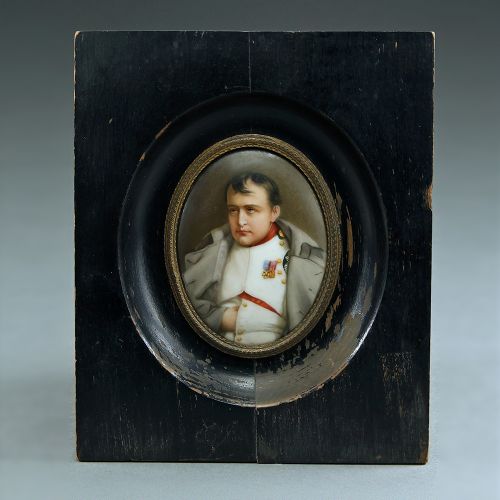
Makers utilised casting, forging and precision machining to create mechanical movements for clocks and intricate housings for scientific devices such as sunshine recorders. Surface decoration ranges from simple inscriptions to painted porcelain and miniature portraits.
French Brass Collectible Retail Price Guide 2026
Typical asking prices for french brass collectible among the pieces listed under this phrase on Sellingantiques today, from the lower quarter to the upper quarter. They describe what is for sale here now, not the wider market.
Materials documented across the inventory include brass, bronze, glass, enamel, steel, leather, fruitwood, and ebonised wood.
Assessing quality and execution
Quality in these works is defined by the precision of the mechanics and the integrity of the materials. Carriage clocks with striking mechanisms, repeaters and alarms represent superior execution compared to standard timepieces.
The refinement of the casting and the crispness of any engraved or inscribed details separate standard production from finer pieces. Inclusion of original fitted boxes and specialist complications also distinguish advanced examples.
Mappin and Webb·Jules Richard of Paris·Dalou
The French Brass Collectible Glossary
- Carriage clock
- A portable spring-driven timepiece designed for travelling during the nineteenth century. These clocks typically feature brass cases with bevelled glass panels.
- Signal cannon
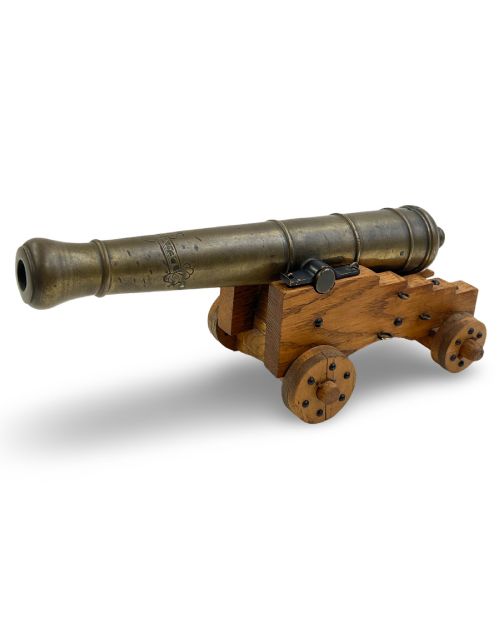
- A small ordnance piece used historically for firing salutes or giving signals rather than in combat. These items are frequently cast in bronze or brass.
- Carriage clock repeater
- A clock mechanism that chimes the hours and quarters on demand via a push button. This complication indicates a higher grade of horological work.
- Sunshine recorder
- A meteorological instrument that records the duration of bright sunshine using a glass sphere to focus sunlight. An example by Jules Richard illustrates this category.
- Flintlock musket measure
- A device used to gauge or dispense gunpowder for historical firearms. These practical items often incorporate brass and steel.
French Brass Collectible: Frequently Asked Questions
What is a carriage clock?
A carriage clock is a portable timepiece developed in the nineteenth century for travellers, housed in a brass frame with glass panels.
Most examples rely on a spring-driven movement and feature a folding handle on top for transport.
How do I date a French carriage clock?
Dating relies on stylistic shifts in the brass case, the shape of the escapement and the complexity of the dial.
Earlier nineteenth-century pieces often display heavier cast frames, while later Victorian and Edwardian examples show refined proportions and different escapement types.
What are signal cannons used for?
Historical signal cannons were used on ships or estates to fire blank charges for signaling, timekeeping or celebrations.
These small bronze or brass pieces were purely ceremonial or functional rather than offensive weapons.
What materials appear in these pieces?
Brass and bronze form the primary structural and decorative components across clocks, scientific instruments and militaria.
Other integrated materials include glass, enamel, steel, fruitwood and leather.