


French Art Glass Bottle
A french art glass bottle brings together the tactile weight of moulded glass and the distinct elegance of early twentieth century design.
French Art Glass Bottle
When you search for a french art glass bottle, you encounter a specialised vessel designed for scent, spirits, or display. These objects emerge primarily from the early decades of the twentieth century, bridging the transition from ornate floral motifs to geometric lines.
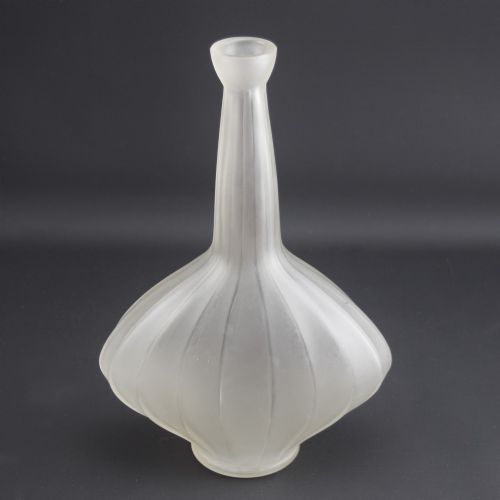
Perfume bottles, scent bottles, and atomisers dominate the selection, often accompanied by decanters and boudoir bottles. You are most likely to meet pieces cast in opalescent or frosted glass representing the Art Deco and Art Nouveau periods.
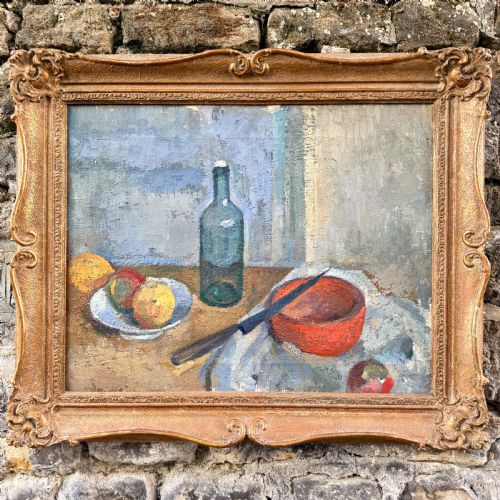
The category also encompasses occasional vases and jugs alongside paintings, though glass containers remain the definitive form. Their origins trace directly to French workshops and master makers operating between nineteen hundred and nineteen thirty.
How they were made
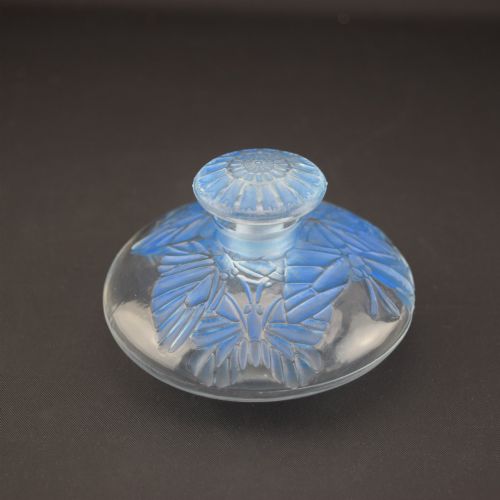
Makers utilised clear, frosted, and opalescent glass, often working molten material into intricate moulds to achieve high relief and sculptural depth. Relief details and raised patterns were frequently accentuated with dark or coloured staining to heighten contrast across the design.
Metalwork components such as sterling silver mounts, chrome fittings, and guilloche enamel details were integrated directly into the bottle necks and atomiser hardware. Paper labels, original stoppers, and fitted boxes occasionally survive to complete the construction of these vessels.
Listings feature periods spanning from nineteen hundred to nineteen thirty, encompassing Art Nouveau and Art Deco styles.
What varies in quality
The distinction between standard production and exceptional work rests on the crispness of the moulded relief and the handling of the opalescent or frosted finish. Superior examples display precise depth in the glasswork, where sculptural motifs like butterflies, flora, or geometric panels retain sharp contours.
The inclusion of original closures, such as matching stoppers or functional metal atomiser hardware, elevates the integrity of the piece. Signatures or factory marks etched into the glass further separate mass production from recognised studio output.
Rene Lalique·Sabino·Daum·Galle·Legras And Cie·Portieux Vallerysthal
The French Art Glass Bottle Glossary
- Opalescent Glass
- Glass that milky or translucent appearance which shifts in tone depending on the angle of light. This effect was especially favoured by French makers during the Art Deco period.
- Guilloche Enamel
- Decorative metalwork featuring precise, repetitive patterns engraved beneath a translucent layer of coloured enamel. It frequently appears on the caps and collars of scent bottles.
- Frosted Glass
- Glass treated to achieve a matte, non-reflective surface texture through acid etching or sandblasting. It provides a soft contrast to polished or clear details.
- Atomiser
- A perfume spray mechanism fitted to a bottle, typically comprising a bulb, metal collar, and internal tube. These functional mounts often incorporate chrome or silver plating.
- Cameo Glass
- Glass vessels created by layering different coloured glass and carving away the outer strata to form a raised design. This technique defines notable Art Nouveau pieces.
French Art Glass Bottle: Frequently Asked Questions
How do I identify Art Deco pieces?
Art Deco french art glass bottles feature stylised geometric motifs, clean vertical lines, and symmetrical patterns rather than flowing natural curves. The glass is often heavy, moulded, or opalescent with stepped or abstract designs.
Makers from the nineteen twenties and nineteen thirties embraced this modern aesthetic across perfume bottles, atomisers, and decanters. Look for streamlined shapes and mechanical precision in the metal collars and stoppers.
Were these bottles meant for perfume?
Many of these vessels were specifically manufactured to house luxury fragrances, often sold pre-filled by prominent perfumers of the era. Scent bottles, atomisers, and boudoir bottles sat on dressing tables as functional cosmetic accessories.
Other examples functioned as decanters for spirits or purely decorative cabinet objects. Their diverse forms reflect the varied luxury packaging standards of early twentieth century France.
How should I display them?
Display these glass objects in well-lit spaces where natural light can pass through the opalescent, frosted, or clear surfaces. Placing them on mirrored trays or glass shelves enhances their optical depth and colour play.
Keep them away from direct sunlight and edge hazards due to their delicate metal fittings and historical glass composition. Ensure any original paper labels or fabric boxes are kept in stable environmental conditions.
How do I spot a signature?
Signatures on these glass pieces are typically acid-etched, moulded into the base, or scratched directly into the surface by the maker. They often appear near the lower edge of the bottle or underneath the foot.
Not all authentic pieces carry a signature, as some relied on paper labels that have since worn away. Familiarity with specific factory lettering helps in verifying unsigned work.