





French Art Deco Cat
These french art deco cat figures bring sharp modernist lines and predatory grace into a room through bronze, marble, and carved wood.
French Art Deco Cat
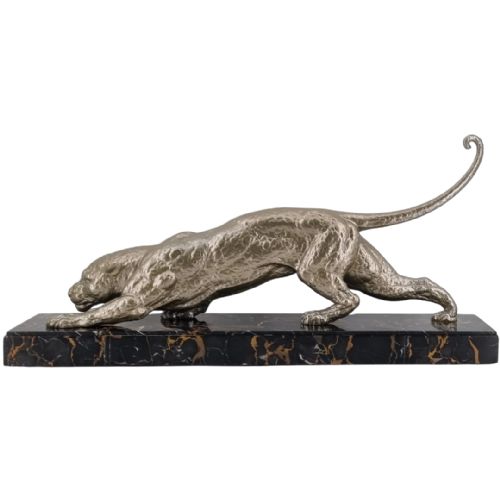
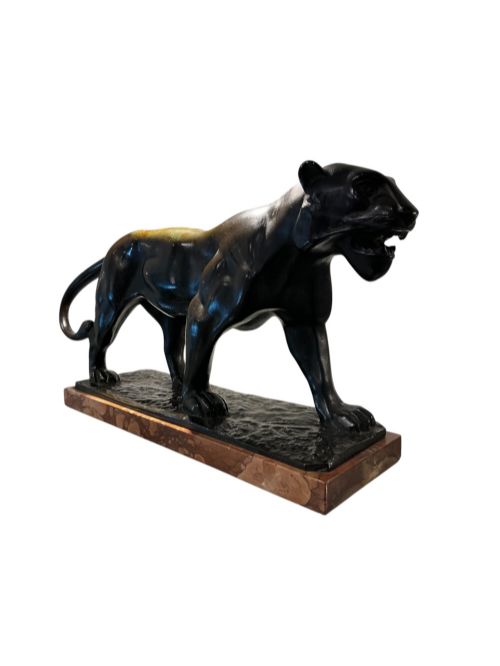
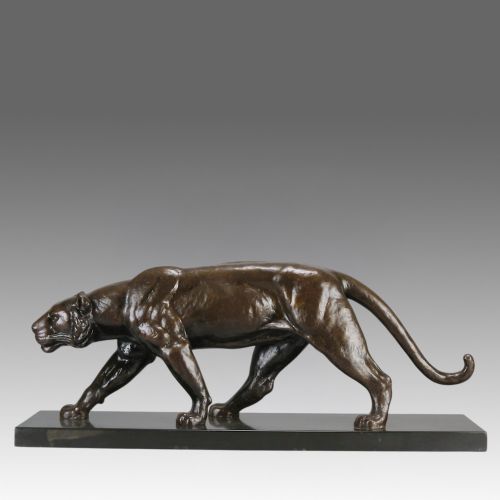
When you search for french art deco cat figures, you are looking at stylised representations of felines including panthers, lionesses, and domestic cats created during the modernist decades. These pieces capture the sleek, predatory movement and stylised geometry characteristic of the interwar period.
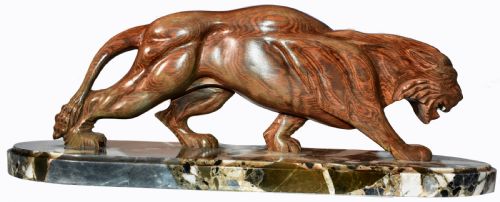
The versions you are most likely to meet on this page range from dynamic bronze panthers mounted on contrasting marble bases to spelter figures, carved wooden sculptures, glazed ceramics, and framed engravings dating from the 1920s, 1930s, and 1940s.
Materials and construction methods
Metal sculptures from this period were cast using either high-grade bronze or more affordable spelter, often finished with a dark patinated coating to accentuate the muscular contours of the animal. Many figures are permanently secured to heavy plinths of black or Portoro marble, providing both visual weight and physical stability.
Woodcarvings and ceramic pieces relied on skilled hand-shaping and detailed surface finishing, whilst works on paper utilised traditional printmaking techniques like etching to capture fine illustrative detail.
French Art Deco Cat Retail Price Guide 2026
Typical asking prices for french art deco cat among the pieces listed under this phrase on Sellingantiques today, from the lower quarter to the upper quarter. They describe what is for sale here now, not the wider market.
Materials documented across the collection include marble, bronze, glass, wood, spelter, and ceramics.
What separates the finest examples
The distinction between ordinary and exceptional pieces rests upon the crispness of the casting and the expressiveness of the animal's posture. Finer sculptures display sharply defined musculature, careful hand-chiselling on the metal surface, and tight integration with the supporting stone base.
Material selection also defines the tier of the piece, as genuine Portoro marble and heavy cast bronze command greater artistic respect than lighter spelter or composite substitutes.
D. H. Chiparus·Alexandre Ouline·Eugene Emile Borga·Michel Decoux·Albert Terry
The French Art Deco Cat Glossary
- Spelter
- A zinc alloy commonly used as a cost-effective alternative to bronze during the art deco period. It accepts patination well but is softer and lighter than copper-based metals.
- Portoro marble
- A distinctive black Italian limestone featuring natural golden-yellow veins. It was frequently utilised for high-end art deco sculpture bases.
- Patinated metal
- Metal treated with chemical solutions to produce a specific surface colour or aged finish. This technique highlights textural details on animal sculptures.
- Etching
- A printmaking method where lines are bitten into a metal plate with acid to hold ink. It produces fine, crisp graphical details on paper.
French Art Deco Cat: Frequently Asked Questions
What materials were used for these sculptures?
The pieces recorded here utilise a combination of cast bronze, spelter, patinated metal, glazed ceramic, and carved wood. Many of these figures are mounted directly onto solid marble plinths.
Heavier items frequently incorporate contrasting Portoro marble bases to ground the dynamic poses of the felines.
How do I identify a spelter cast from bronze?
Spelter is noticeably lighter than bronze and softer to the touch, often revealing a greyish or silvery metal underneath worn areas of patination. Bronze maintains a heavier, denser feel and a warmer tone beneath the surface finish.
Examining the underside of the sculpture or the mounting points usually clarifies the underlying metal.
How should I display a marble-based sculpture?
These heavy sculptures require sturdy, level surfaces such as strong sideboards, cabinets, or dedicated pedestals that can comfortably support the combined weight of the metal figure and stone base. Positioning them away from high-traffic edges protects both the piece and your furniture.
Keep them out of direct sunlight to preserve the patination on the metal and the polish on the stone.
What time period do these pieces date from?
The inventory spans the art deco era, with examples originating from the 1920s, 1930s, and into the 1940s. This period defined modernist design through stylised animal forms and sleek geometric presentation.
Objects from this timeline reflect the interwar fascination with speed, power, and exotic wildlife.