



French Stationery
French antique stationery comprises nineteenth century desk pieces and writing furniture crafted in timber, marble and ormolu for practical correspondence.
French Stationery
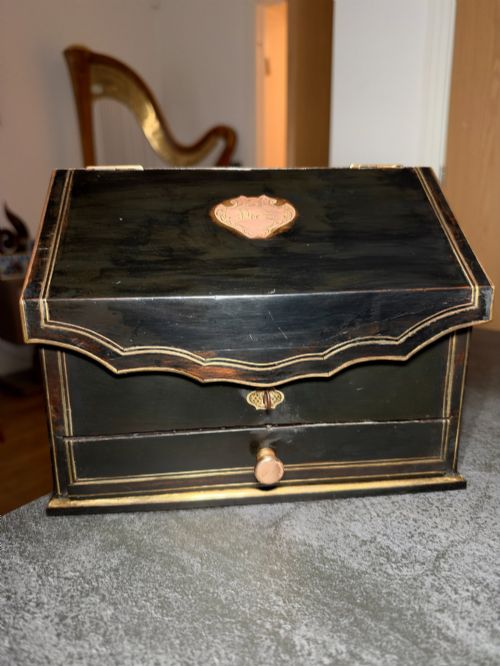
When buyers search for French antique stationery, they encounter desktop accessories and writing furniture designed for nineteenth century correspondence. The selection on this page centres on ink stands, desk sets, writing boxes and compact desks.
Most pieces date from the nineteenth century, including specific years like eighteen sixty, eighteen seventy, eighteen ninety, nineteen hundred and nineteen twenty. Styles span Victorian, French Second Empire, French Empire, Louis XV Revival, Napoleon III, Art Nouveau and Art Deco.
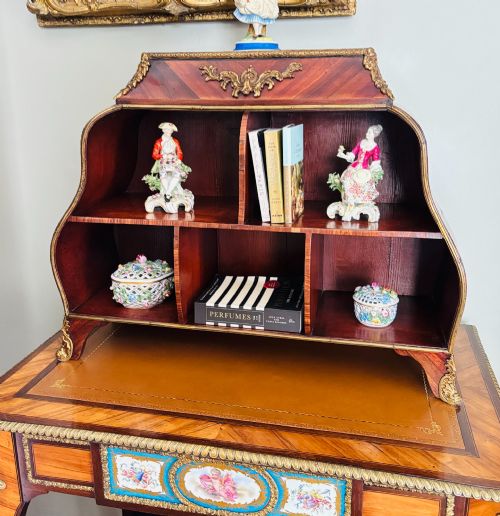
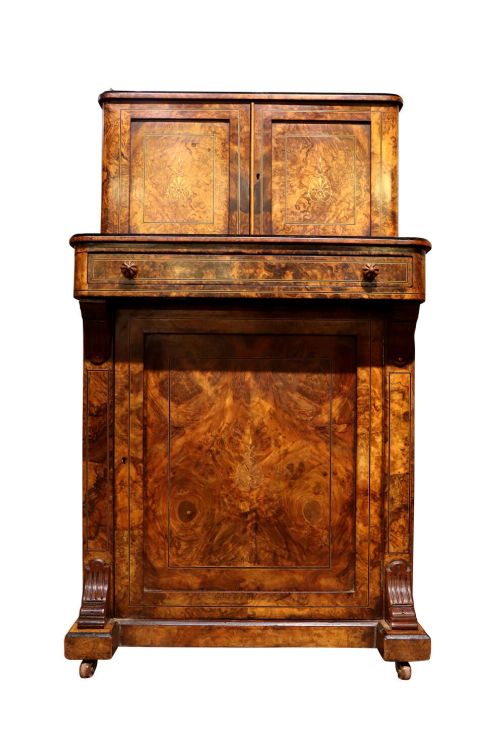
The assortment ranges from large three-piece desk sets with hand-painted porcelain to simpler writing boxes and brass inkwells. Forms include cartonnier filing cabinets, burr walnut bureaux de dame and walnut bonheur du jour tables.
How they were made
The objects are constructed from timbers such as rosewood, burr walnut, mahogany and general walnut, often enhanced with brass inlay or leather surfaces. Metalwork plays a major role, utilising ormolu, gilt bronze, brass, copper and cast brass mounts.
Decorative finishes incorporate vert marble, hand-painted porcelain insets and moulded glass elements like the René Lalique stationary blotter. Joinery and metal casting define the construction of these desktop furnishings and small cabinets.
French Stationery Retail Price Guide 2026
Typical asking prices for french stationery among the pieces listed under this phrase on Sellingantiques today, from the lower quarter to the upper quarter. They describe what is for sale here now, not the wider market.
Cats and kittens take permanent bronze form on one desk set, ensuring playful feline company for your daily correspondence.
What varies in quality
Quality differentiates through the execution of metal mounts and the choice of primary materials. Pieces featuring heavily chased ormolu, gilt bronze, or detailed hand-painted porcelain sit at a higher level than standard brass items.
The sophistication of the timber work, such as burr walnut veneers with precise brass inlay or structured cartonnier filing cabinets, determines the refinement of the piece. Integrated sets, such as complete three-piece desk arrangements, represent the more ambitious end of the range.
RENE LALIQUE
The French Stationery Glossary
- Cartonnier
- A desktop cabinet or filing piece designed with multiple horizontal compartments for papers and documents. These often feature ormolu mounts and timber construction.
- Bureau de Dame
- A ladies slope-front writing desk, frequently finished in burr walnut with inlaid details. Such furniture provides a compact surface for correspondence.
- Ormolu
- Gilt bronze mounts applied to furniture and desk accessories to provide decorative framing. This technique is prominent in French nineteenth century pieces.
- Bonheur du Day
- A light ladies writing table fitted with small drawers and shelves above the main writing surface. Walnut and rosewood examples appear frequently.
- Inkstand
- A desktop tray or stand holding one or more inkwells alongside pen rests. Materials range from vert marble and ormolu to copper and gilt bronze.
French Stationery: Frequently Asked Questions
What is a cartonnier used for?
A cartonnier provides structured storage for letters, documents and stationery on a desk. The compartments keep correspondence organised within reach.
These pieces range from desktop units to larger filing cabinets made from timber with ormolu mounts.
How do I identify nineteenth century desk sets?
Nineteenth century desk sets often combine materials like ormolu, vert marble, gilt bronze and hand-painted porcelain. Styles reflect Victorian, Napoleon III and revival aesthetics.
Look for cast metal mounts, fitted inkwells and matched components that indicate a unified desk accessory group.
What is a bonheur du jour?
A bonheur du jour is a small ladies writing table featuring an upper tier of compartments or drawers. It offers a compact writing surface for personal letters.
Examples from this period utilise walnut and incorporate refined details suitable for a parlour or boudoir.
How should I clean ormolu and brass?
Ormolu and brass require gentle dusting with a soft, dry cloth to preserve the surface finish. Avoid abrasive metal cleaners that can strip gilding or patination.
Keeping these metal elements free from moisture helps maintain the integrity of nineteenth century desk accessories.