







French Gold Necklace
A french antique gold necklace brings together refined metalwork, religious devotion and delicate enamel across eras from Georgian to mid-century.
French Gold Necklace
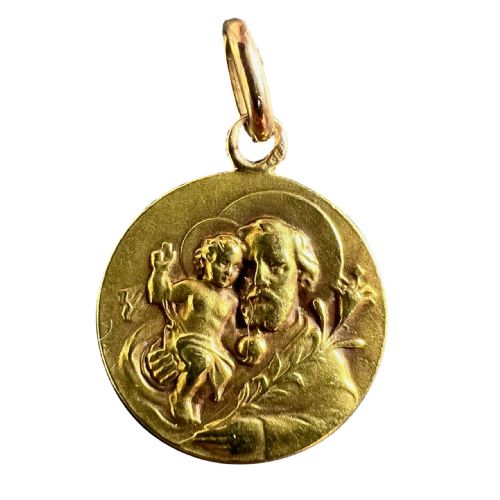
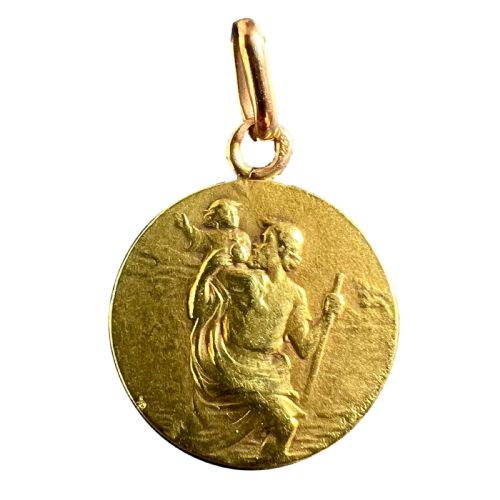
A french antique gold necklace encompasses a diverse array of pendants, lockets, and chains originating from periods such as the Georgian, Victorian, Edwardian, and Art Deco eras. Buyers searching this phrase most frequently encounter 18K yellow gold religious medals and charms, particularly depicting the Virgin Mary or saints.
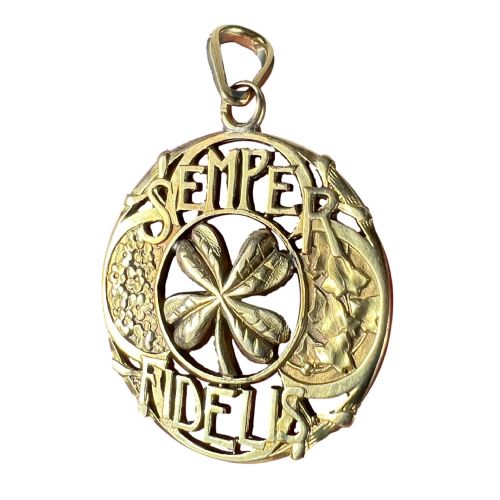
The objects range from intricate floral acanthus brooches adapted as pendants to geometric Art Deco creations and single-strand emerald or pearl configurations. Each piece carries the distinct hallmarks of French gold smithing across the nineteenth and twentieth centuries.
How they were made
Goldsmiths utilised 18ct yellow, rose, and white gold to construct the structural foundations, chains, and bezels of these necklaces. Gemstones such as diamonds, pearls, rubies, citrine, emeralds, and coral are frequently set into the metal to add texture and luminance.
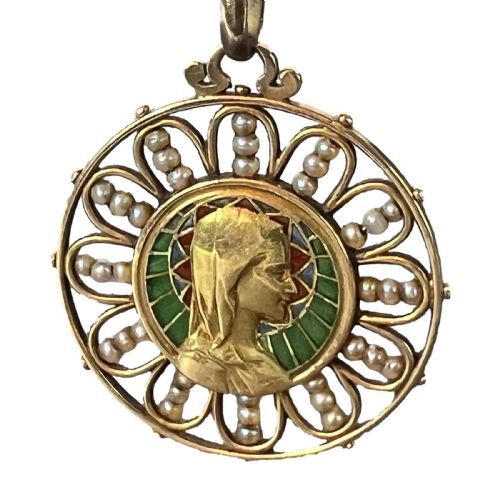
Plique-a-jour enamel appears extensively in religious medals, creating a translucent, stained-glass effect without a backing metal. Artisans also employed hand-carving, piercing, and rose-cut diamond arrangements to achieve fine detail on charms and pendants.
French Gold Necklace Retail Price Guide 2026
Typical asking prices for french gold necklace among the pieces listed under this phrase on Sellingantiques today, from the lower quarter to the upper quarter. They describe what is for sale here now, not the wider market.
The listings span periods from the Georgian era through to the mid-twentieth century, dominated by 18ct yellow gold.
What varies in quality
The sophistication of the enamel work dictates a significant portion of the visual appeal, with crisp plique-a-jour shading marking superior craftsmanship. The precision of the hand-engraving on medals and the matching of pearls or diamonds also separate standard items from finer examples.
Maker attribution plays a role in distinction, as pieces bearing signatures from known workshops or designers elevate the standing of the jewellery. Structural integrity in delicate elements like pierced halos and fine curb link chains further defines the upper tier.
Paul Brandt·Monier·Pageli Perriat·Sellier·Dropsy·Chaumet·Mazzoni·Perroud·Monet·Gallia
The French Gold Necklace Glossary
- Plique-a-jour
- An enamelling technique where enamel is applied in cells without a backing, allowing light to shine through the transparent or translucent material. It resembles miniature stained glass and frequently frames religious figures in these pieces.
- Longuard chain
- A lengthy gold chain traditionally worn around the neck to secure a watch or locket. In modern contexts, collectors often wear them doubled or layered.
- Rose-cut diamond
- A vintage diamond cut featuring a flat base and a domed crown composed of triangular facets. This style produces a soft, candlelit sparkle rather than modern brilliant fire.
- Witch's heart
- A pendant shape featuring an asymmetric, twisted heart with a pointed tail curling to one side. It symbolises being captivated or fallen in love.
- Medal charm
- A small devotional or commemorative medallion cast in gold, often worn suspended from a chain or bracelet. They frequently bear inscriptions or depictions of saints.
French Gold Necklace: Frequently Asked Questions
What is plique-a-jour enamel?
Plique-a-jour is an intricate enamelling technique where the vitreous paste is fired within open wireframes rather than a solid metal backing. This creates a stained-glass effect that allows natural light to illuminate the translucent colours.
You will frequently see this technique used on religious pendants from the early twentieth century to depict robes and halos with luminous depth.
How do I date a French gold medal?
Dating these medals relies on stylistic cues, hallmarks stamped directly onto the gold, and the specific devotional iconography popular at the time. Art Deco pieces show geometric borders, while earlier Victorian examples lean towards ornate floral framing.
Maker signatures stamped on the medal surface also help cross-reference active workshop periods in French records.
What is a longuard chain used for?
Historically, longuard chains served a utilitarian purpose by securing pocket watches, eyeglasses, or fob seals within easy reach of the wearer. Their generous length allowed them to be doubled over the neck or pinned securely to garments.
Today, collectors appreciate them as versatile, substantive gold necklaces that accommodate various pendants and charms.
How should I care for antique enamel?
Antique enamel requires gentle handling because the glass material can chip or crack if subjected to sharp impacts or harsh chemical cleaners. Warm water and a soft cloth suffice for routine cleaning without risking the structural integrity of the metalwork.
Store your necklace separately from other jewellery to prevent scratching the delicate enamel surfaces and gemstone settings.