



Freestanding Wood Bookshelf
A freestanding wood bookshelf organises a room with simple utility while showcasing rich timber grains.
Freestanding Wood Bookshelf
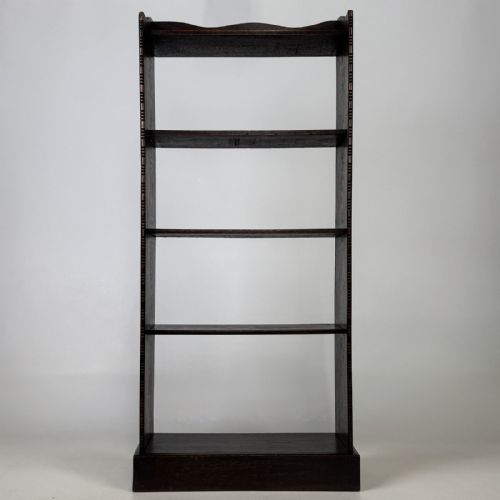
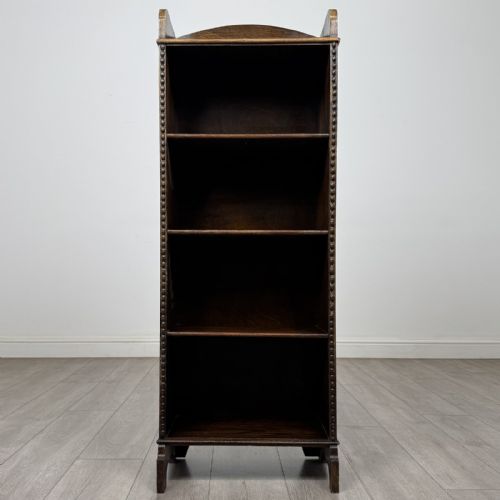
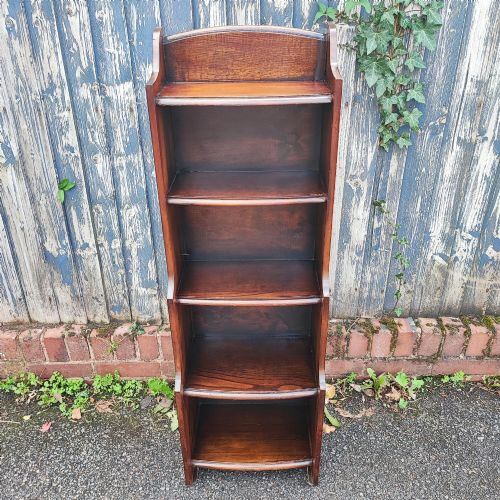
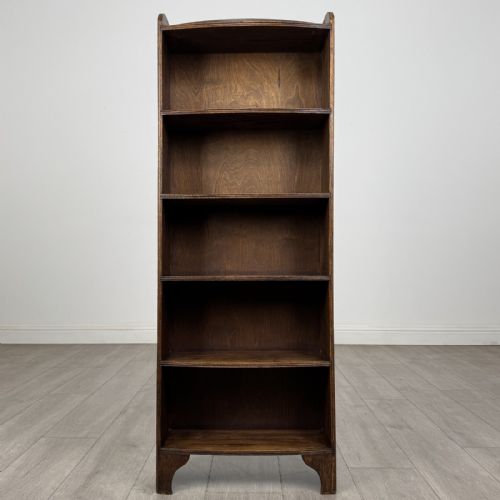
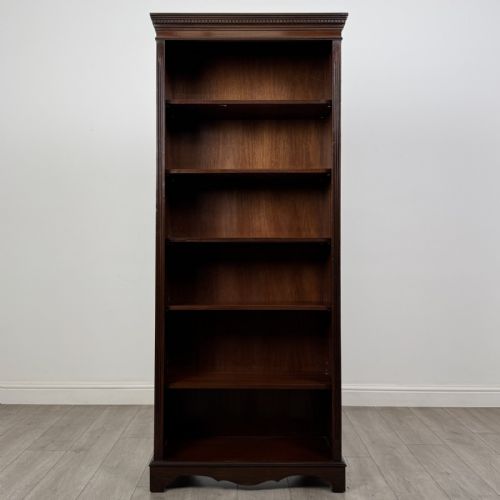
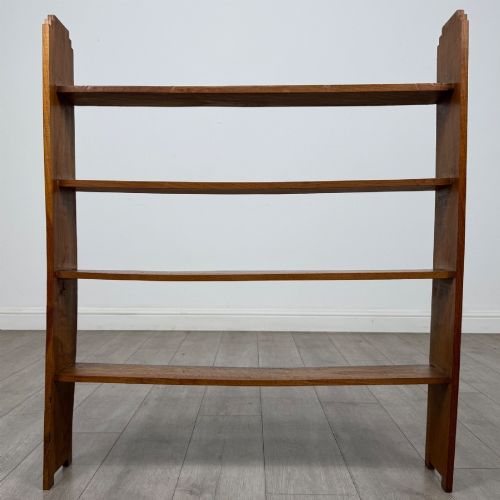
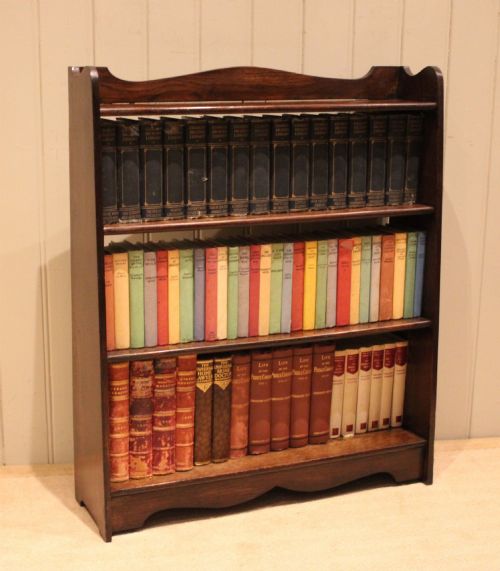
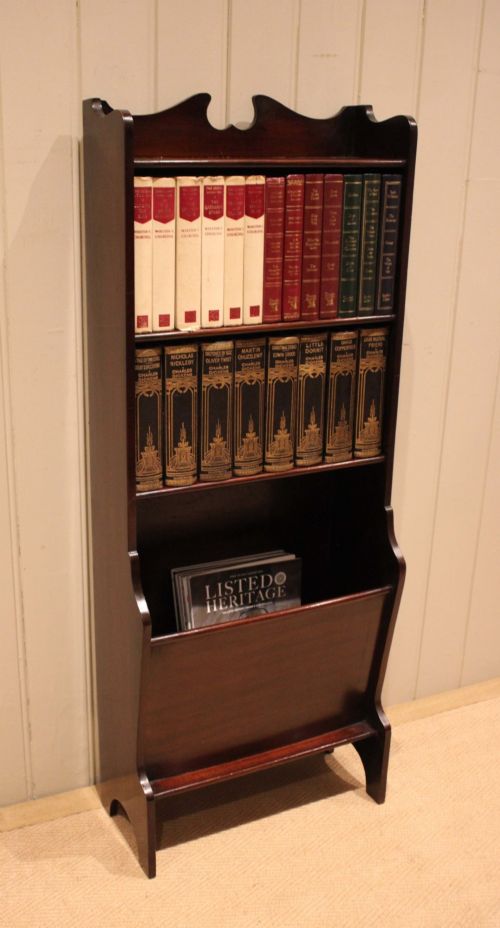
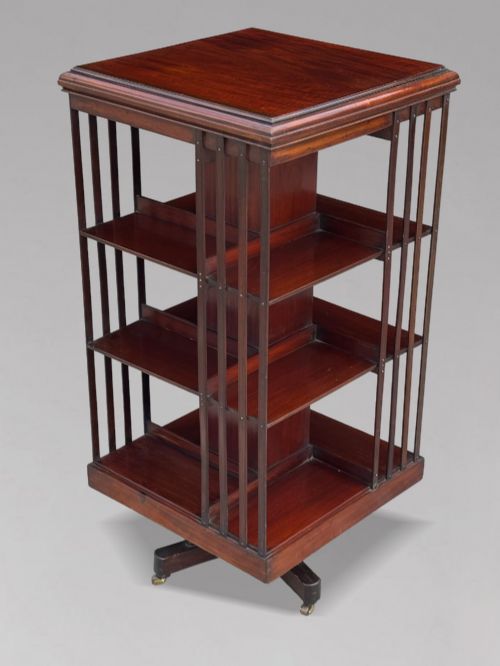
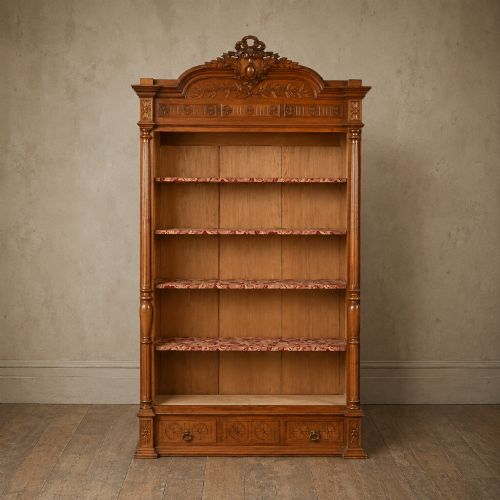
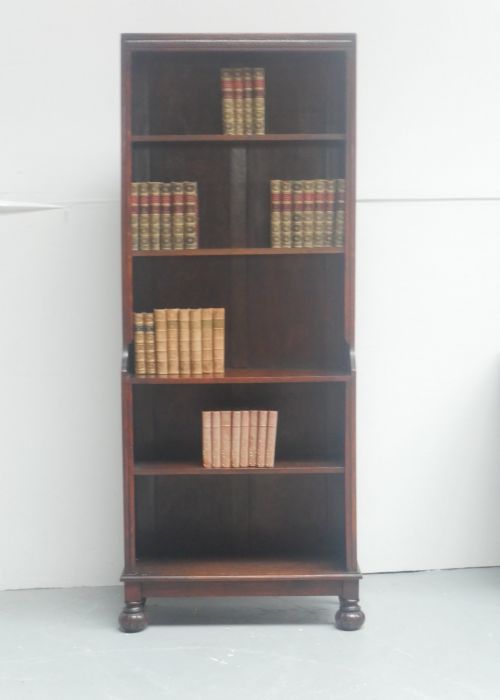
A freestanding wood bookshelf gives any room practical surface space for volumes while standing independently without wall attachment. These items arrive in various forms such as open shelves, revolving models, and units with cupboards or magazine racks.
Makers utilised diverse formats including corner cabinets, etageres, and waterfall display shelves to suit different domestic interiors. Each variation provides accessible storage designed to fit directly onto the floor of a study or living area.
How they were made
Cabinet makers constructed these pieces using solid woods like oak, mahogany, walnut, and rosewood, alongside decorative wood veneer. Workshops often applied fine mouldings, beaded edges, or carved details to enhance the timber surfaces.
Some configurations incorporate functional brass or cast iron hardware to support revolving mechanisms or shelving structures. Construction methods varied from simple joined solid wood to complex veneered cabinetry across different periods.
Freestanding Wood Bookshelf Retail Price Guide 2026
Typical asking prices for freestanding wood bookshelf among the pieces listed under this phrase on Sellingantiques today, from the lower quarter to the upper quarter. They describe what is for sale here now, not the wider market.
Some nineteenth-century timber shelves manage to spin completely in circles while holding your heaviest volumes.
What varies in quality
The choice of timber and the precision of the cabinet work determine the standing of an individual bookcase. Finely figured mahogany or Partridge wood paired with careful carving elevates certain items above standard utility furniture.
Structural complexity also separates standard open shelves from intricate revolving bookcases or double-sided library pieces. The refinement of the mouldings and the integrity of the joints dictate the overall character of the piece.
Waring and Gillows
The Freestanding Wood Bookshelf Glossary
- Waterfall bookcase
- A tiered shelving unit where each level steps back progressively from the one below it. This form creates a descending profile often seen in Edwardian and nineteenth-century pieces.
- Revolving bookcase
- A rotating unit designed to sit on the floor and grant easy access to books from any angle. These typically incorporate internal mechanisms hidden beneath timber framing.
- Whatnot
- A piece of freestanding furniture featuring multiple open tiers for displaying objects or books. They appeared frequently during the Victorian period.
- Wood veneer
- A thin layer of choice timber applied over a secondary wood base to provide decorative grain patterns. Craftsmen utilised this technique on various nineteenth and twentieth-century cabinets.
- Open bookcase
- A shelving unit lacking doors or enclosed backs to allow direct access to volumes. These range from simple Edwardian oak designs to large continental library editions.
Freestanding Wood Bookshelf: Frequently Asked Questions
What periods do these bookcases cover?
The available selection spans from the nineteenth century through the Edwardian era into the 1920s and 1930s. Pieces reflect the prevailing stylistic shifts of those decades, from Victorian mass to Art Deco lines.
Buyers will find examples representing specific historical periods including early Victorian and Regency designs alongside interwar oak furniture.
How do I place a freestanding shelf?
These units stand entirely on their own without requiring wall fixtures or brackets for support. Position them against room partitions or use double-sided and revolving versions in open spaces.
Ensure the floor surface is level to keep the structure steady, particularly with taller nineteenth-century library editions or multi-tiered whatnots.
What woods were commonly used?
Cabinet makers relied primarily on hardwoods such as mahogany and oak for structural strength and durability. Walnut, rosewood, and Partridge wood also appear in specific pieces for decorative effect.
Some items combine solid timber construction with wood veneer surfaces to showcase striking grain patterns across the shelves and panels.
Are these units only for books?
While designed primarily to hold volumes, many of these pieces serve broader display and storage functions. Etageres, whatnots, and waterfall shelves accommodate decorative objects alongside reading material.
Certain configurations include integrated cupboards or magazine racks to expand their utility beyond simple open book storage.