
Freestanding Umbrella Rack
A freestanding umbrella rack keeps hallways tidy, organising wet walking sticks and wet weather gear where visitors arrive.
Freestanding Umbrella Rack
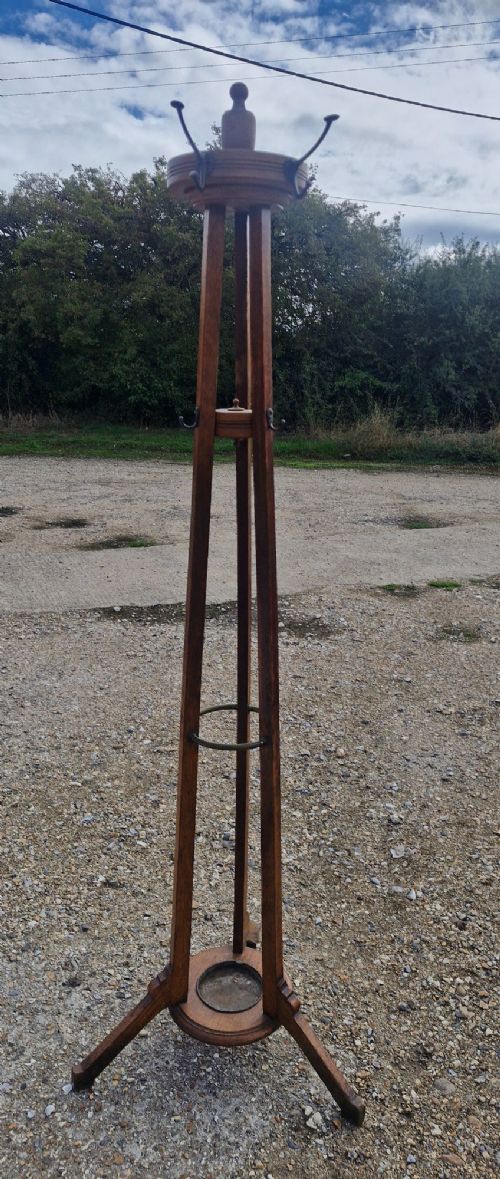
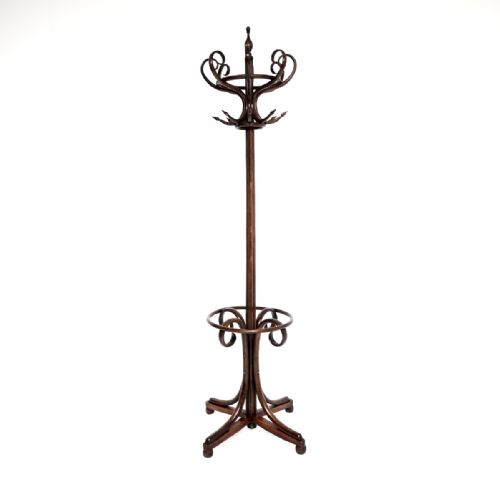
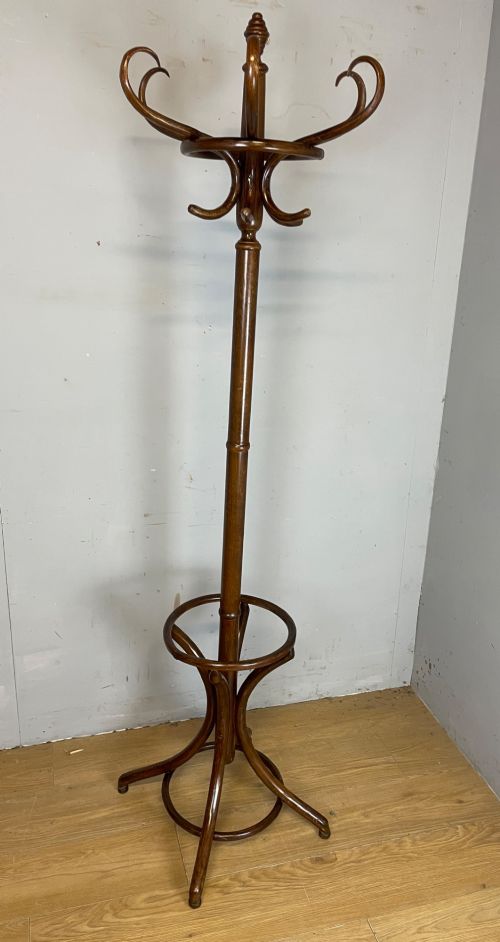
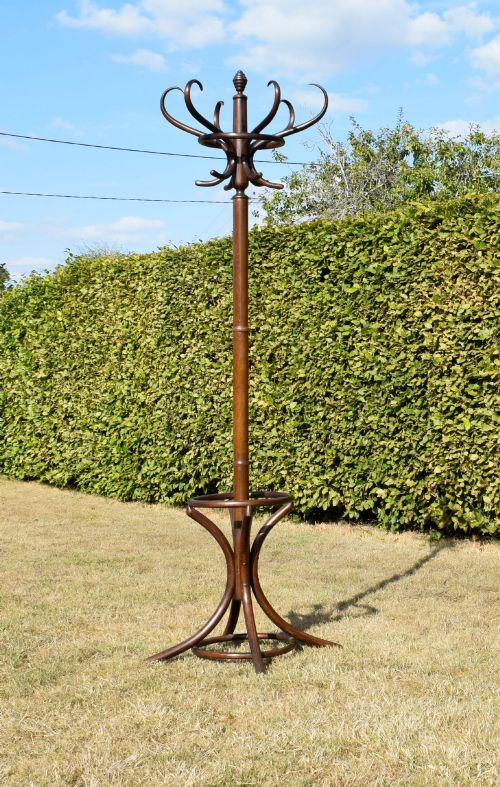
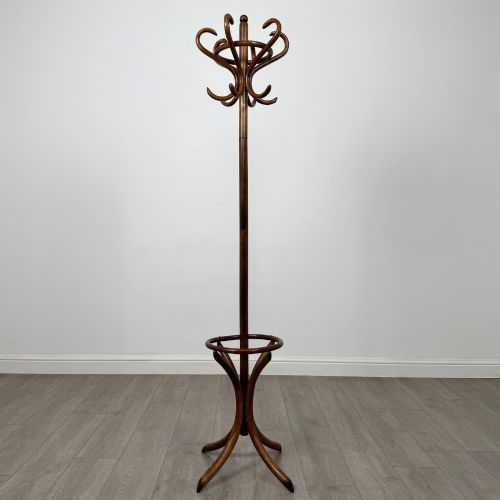
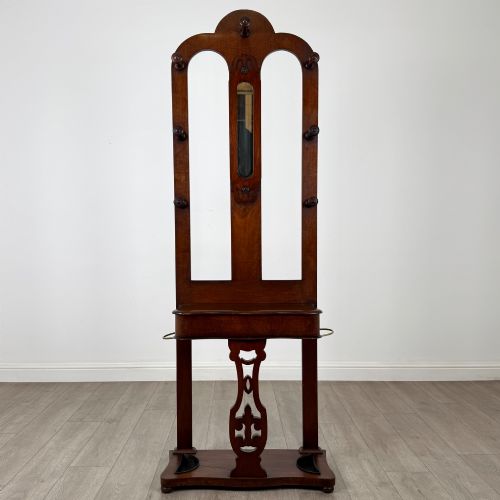
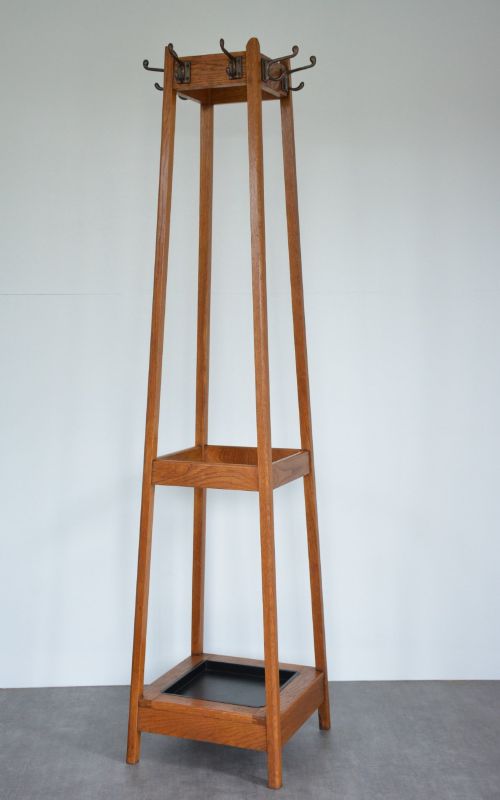
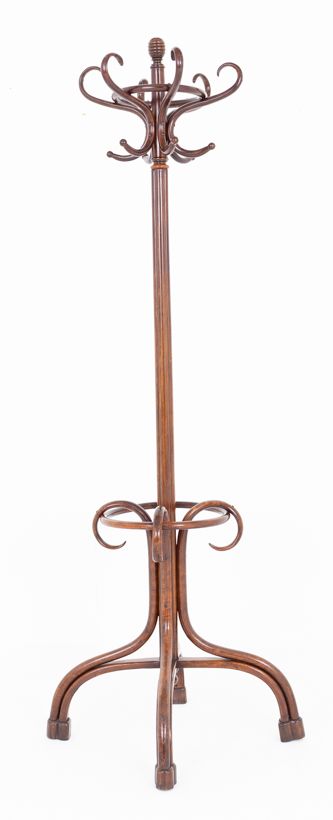
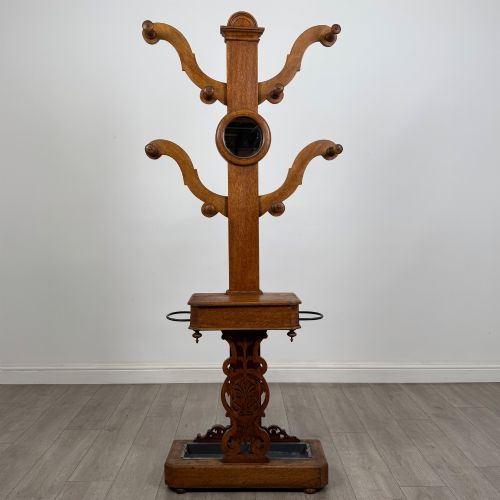
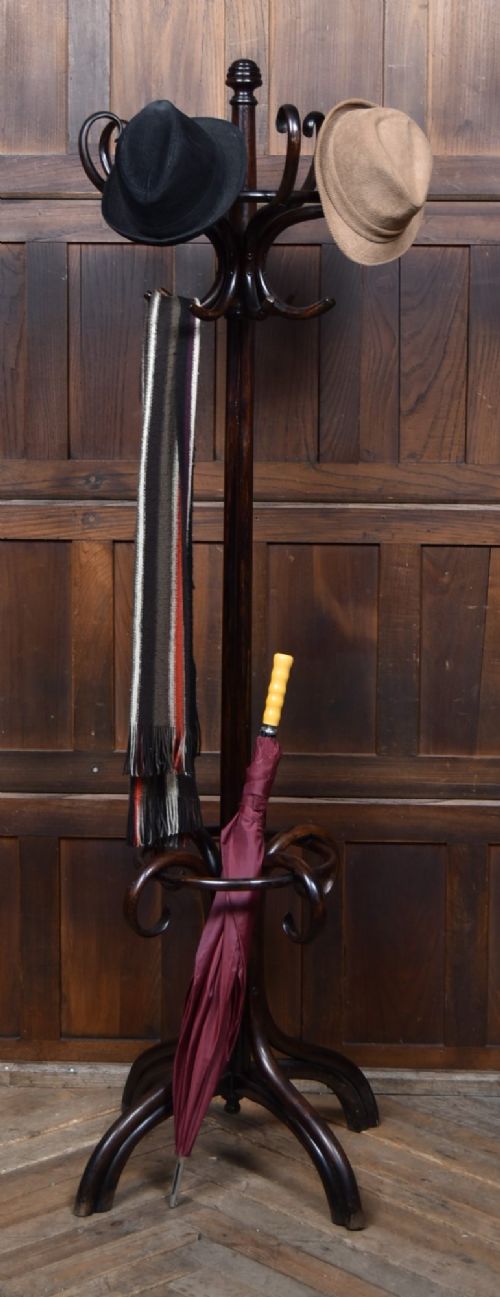
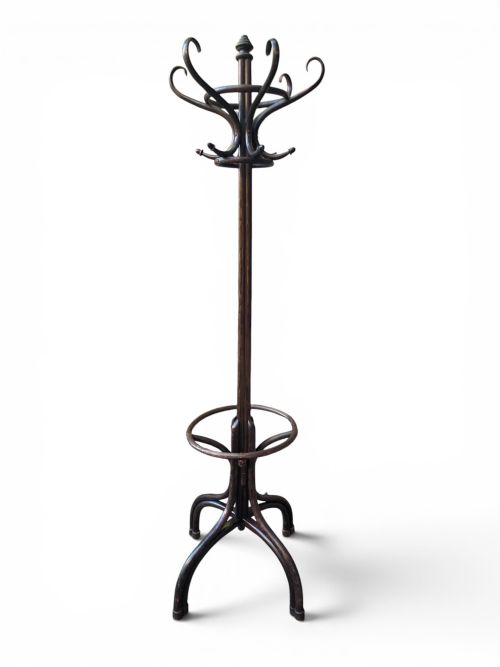
A freestanding umbrella rack appears across this selection primarily as part of larger hall furniture, combining coat hooks, hat storage, and dedicated stick wells into a single unit. These hall stands and coat trees date from the Victorian and Edwardian eras through to the mid twentieth century.
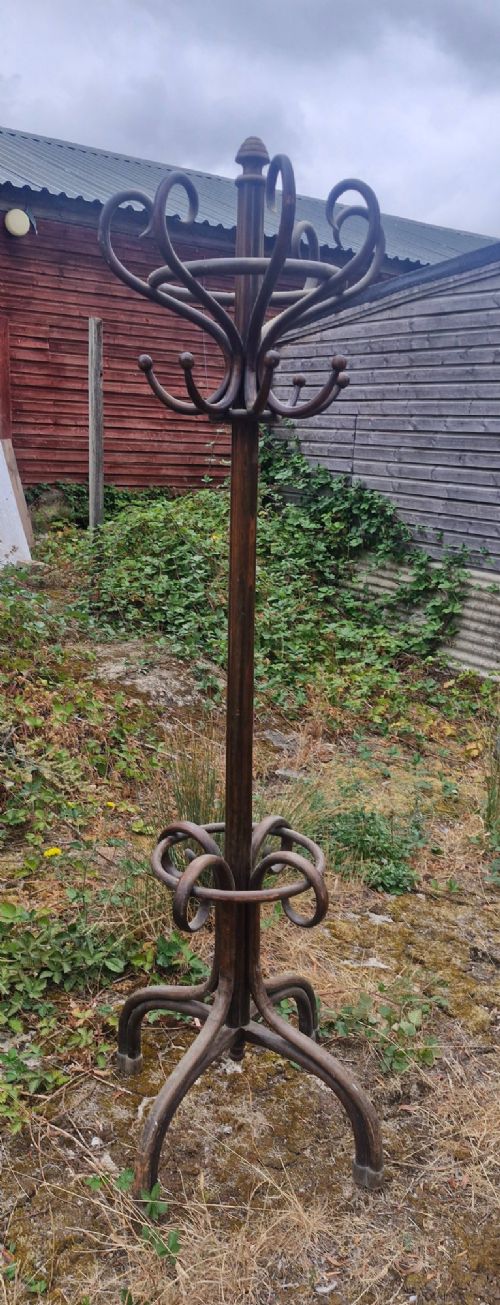
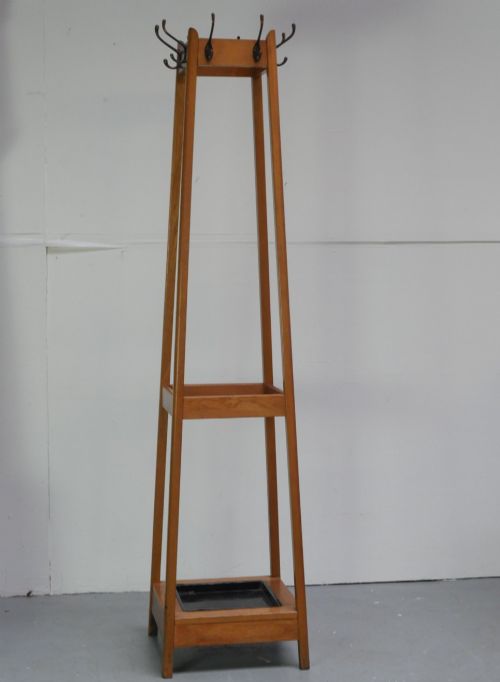
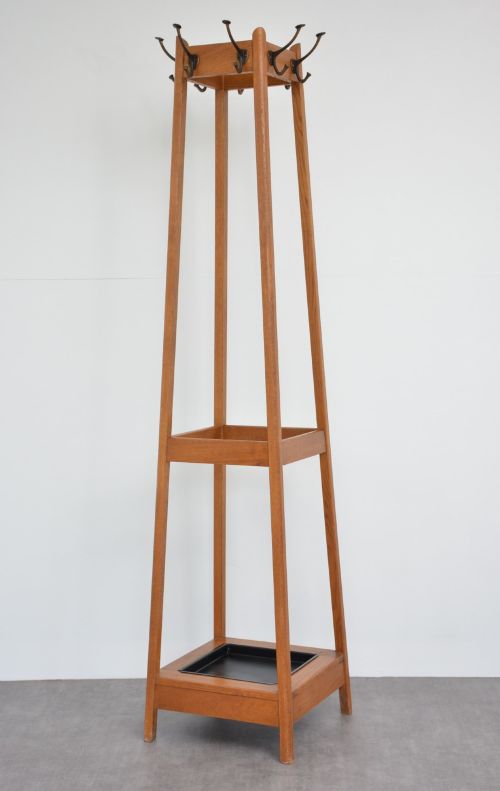
Buyers will frequently encounter bentwood constructions alongside solid timber designs in oak, pitch pine, and mahogany. Many examples integrate metal drip trays at the base to catch water from wet umbrellas and walking sticks.
Origins span English workshops, French ateliers, and Austrian makers, reflecting domestic hallway traditions from the nineteenth and early twentieth centuries.
Materials and construction techniques
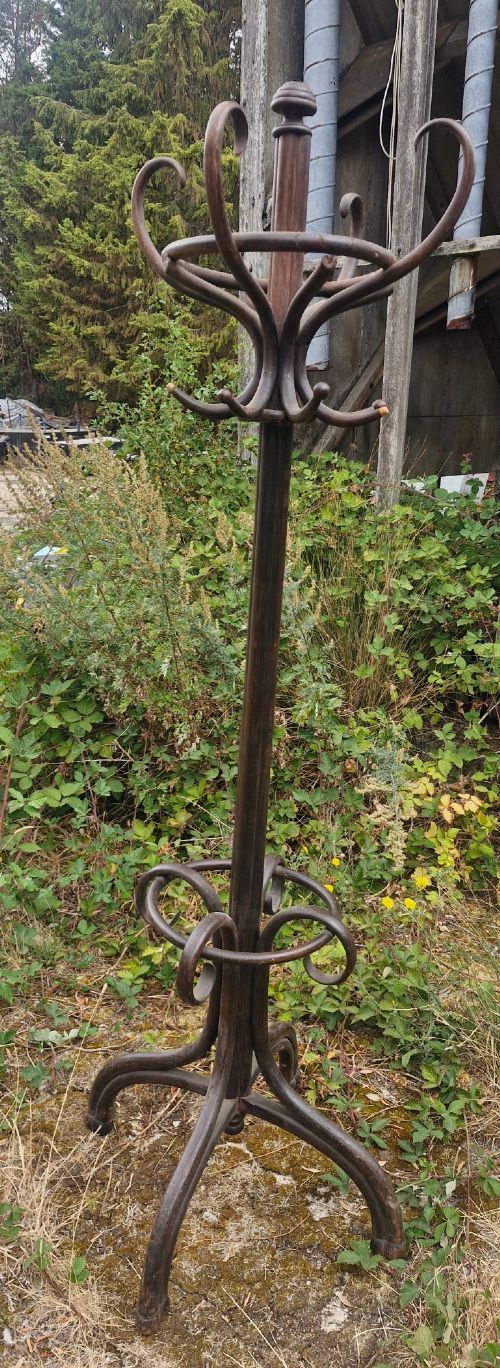
Bentwood manufacturing relies on steaming beech or beechwood until pliable, allowing craftsmen to bend the timber into graceful curved loops and structural stems. These pieces utilise screw-in sections and reinforced joints to bear the weight of heavy coats and damp umbrellas.
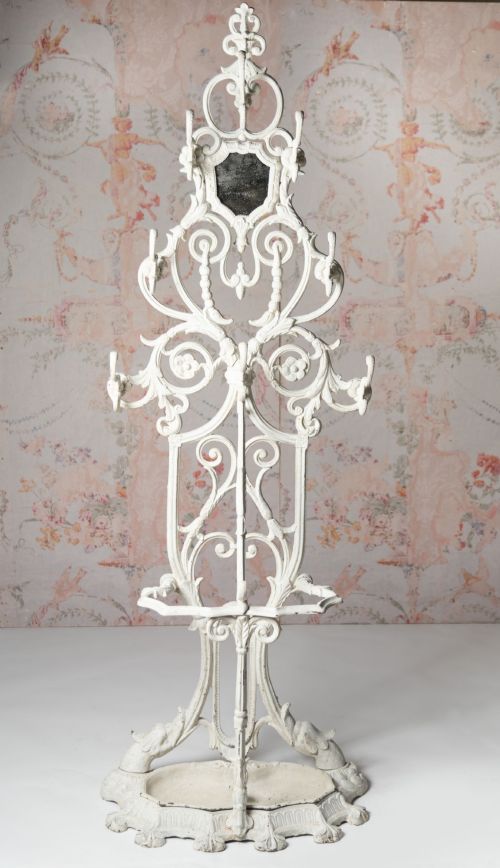
Solid oak and pitch pine examples employ traditional joinery such as mortise and tenon frames, panelled backs, and applied mouldings. Metal components appear as cast iron frames, brass hooks, and removable sheet metal drip trays designed to resist corrosion from standing water.
Listings feature bentwood, oak, beech, pitch pine, and metal across Victorian, Edwardian, and mid century periods.
Markers of distinction in construction
Quality rests on the integrity of the steam-bent curves and the stability of the central column under load. Superior pieces retain original manufacturer stamps or paper labels, while lesser examples show fatigue in the glue joints and replacement hardware.
The presence of intact, original metal drip trays and matching umbrella rings separates utilitarian survivals from finer decorative examples. Denser hardwoods and crisper turned details indicate higher workshop standards.
Thonet·Fischel·Astrola·GW Evans
The Freestanding Umbrella Rack Glossary
- Bentwood
- Timber shaped through the application of steam and pressure. This technique creates lightweight, resilient frames characteristic of late nineteenth century seating and coat stands.
- Drip tray
- A shallow metal basin positioned beneath umbrella holders. It catches moisture from wet sticks to protect hallway flooring.
- Hall stand
- A multi-functional piece of hallway furniture. It typically combines a mirror, coat hooks, a glove box, and stick wells.
- Revolving hatstand
- A coat and hat rack featuring a rotating upper section. This allows access to garments hung from multiple angles in confined spaces.
- Stick stand
- A compact furniture form dedicated entirely to walking sticks and umbrellas. These often feature metal ring dividers and open frame bases.
Freestanding Umbrella Rack: Frequently Asked Questions
Where should I place a freestanding umbrella rack?
Position the rack near the main entrance door where coats and wet gear are naturally discarded upon entry. Ensure there is adequate clearance around the base for retrieving umbrellas.
Keep the piece away from direct heat sources such as radiators to prevent timber from drying out, cracking, or warping over time.
How do I care for a wooden hall stand?
Dust the timber surfaces regularly with a dry cloth and occasionally apply a neutral beeswax to nourish the grain. Avoid chemical sprays that can degrade historic polishes.
Empty and dry the metal drip tray frequently to prevent rust formation from lingering moisture left by wet umbrellas.
How do I identify bentwood furniture?
Look for continuous curved wooden sections forming the structural loops and arches of the stand without visible corner joints. Beech is the predominant timber used in these steam-bent designs.
Check for impressed manufacturer marks or remnants of paper labels on the underside of the base or along the central column.
Did Victorian umbrella stands come alone?
While dedicated stick stands existed, many Victorian and Edwardian examples formed part of larger hall stands incorporating mirrors, glove drawers, and coat hooks. These multi-purpose pieces served the formal reception needs of large households.
Smaller standalone racks became more common in Edwardian and later twentieth century hallways as domestic spaces evolved.