




Freestanding Mahogany Vitrine
A freestanding mahogany vitrine brings architectural glass and rich timber together to display treasured objects.
Freestanding Mahogany Vitrine
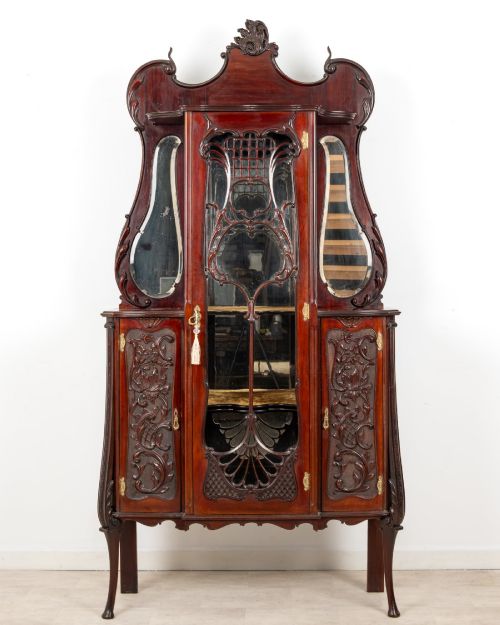
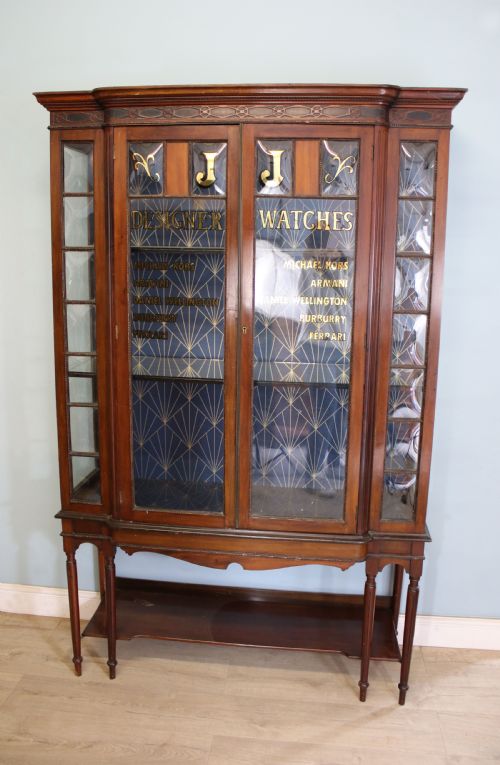
A freestanding mahogany vitrine is a display cabinet designed to show collectibles from multiple angles through glazed panels.
These pieces emerge across the Victorian and Edwardian periods, including shop display cabinets and domestic vitrines.
They arrive in styles ranging from plain Edwardian forms to revival designs influenced by French and Chippendale tastes.
How they were made
Carpenters constructed the primary frames using mahogany, often incorporating satinwood inlay and brass mounts.
Glazing forms the main body of the cabinet, supported in some examples by mirror glass backs and velvet or fabric linings.
Freestanding Mahogany Vitrine Retail Price Guide 2026
Typical asking prices for freestanding mahogany vitrine among the pieces listed under this phrase on Sellingantiques today, from the lower quarter to the upper quarter. They describe what is for sale here now, not the wider market.
The inventory records pieces spanning from 1860 through the Edwardian period, utilising mahogany, glass, brass, satinwood, and ormolu.
What varies in quality
Quality rests in the crispness of the mahogany carving and the finesse of any ormolu mounts or satinwood inlay.
The refinement of the glass framing and the presence of specialist elements like mirror glass distinguish finer cabinets.
F. Sage & Co
The Freestanding Mahogany Vitrine Glossary
- Vitrine
- A glass-fronted cabinet used for displaying fine objects or porcelain.
- Bijouterie
- A small cabinet or table specifically designed to showcase jewellery and small ornaments.
- Ormolu
- Gilt-bronze mounts applied as decorative accents to the cabinetry.
- Satinwood
- A pale, lustrous timber utilised for contrasting inlay work.
Freestanding Mahogany Vitrine: Frequently Asked Questions
What is a freestanding mahogany vitrine?
It is a fully glazed display cabinet made primarily from mahogany, designed to stand away from walls.
These pieces house porcelain, curiosities, and collections while letting light pass through the sides and front.
Where were these cabinets placed?
Domestic examples sat in drawing rooms and reception spaces to show off family collections.
Shop display cabinets served commercial spaces to showcase retail goods before entering the antique market.
How do I date a vitrine?
Dating relies on stylistic clues, such as Edwardian inlaid details or heavier Victorian carved mahogany frames.
Construction methods and the specific revival style also point toward the nineteenth or early twentieth century.
What styles are common?
Common styles include Edwardian pieces, late Victorian cabinets, and revival designs inspired by French Louis furniture.
Chippendale taste and Arts & Crafts influences also appear across the selection.