




Freestanding Mahogany Shelving
Freestanding mahogany shelving units are adaptable display and storage furniture pieces that bring rich timber grain and classic proportion into a room without needing wall fixings.
Freestanding Mahogany Shelving
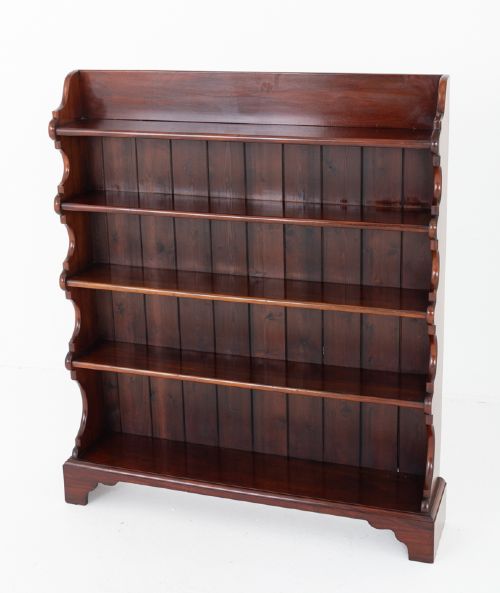
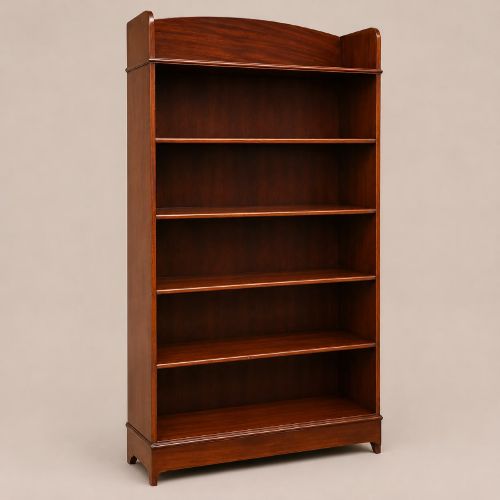
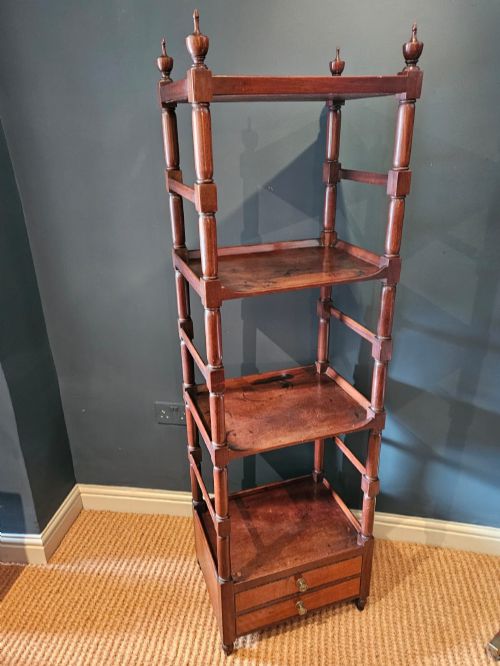
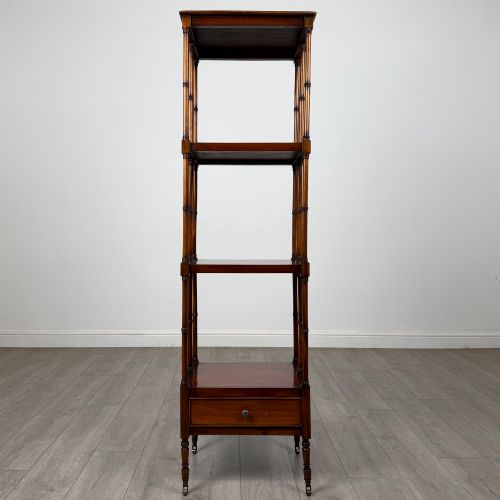
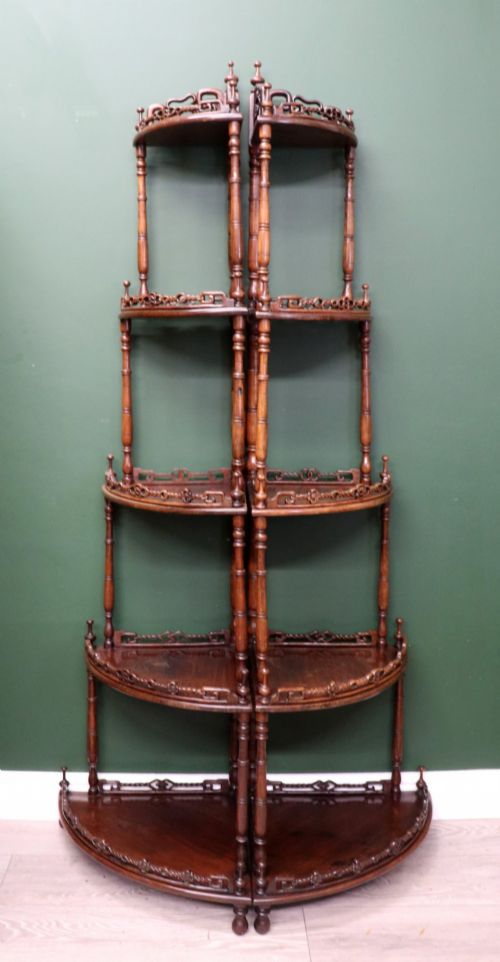
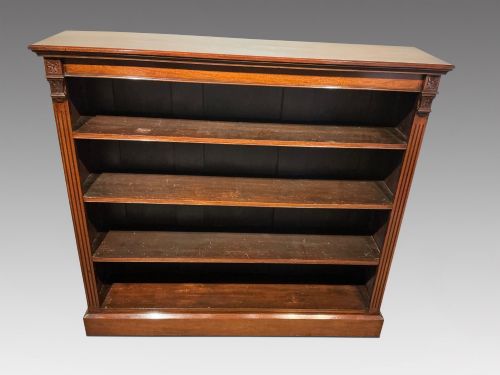
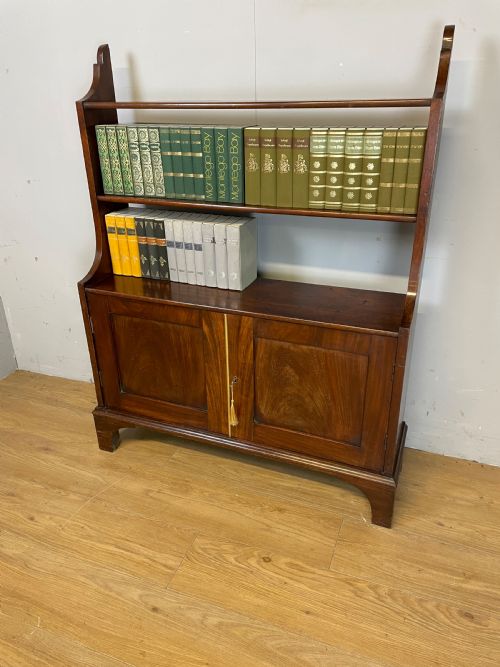
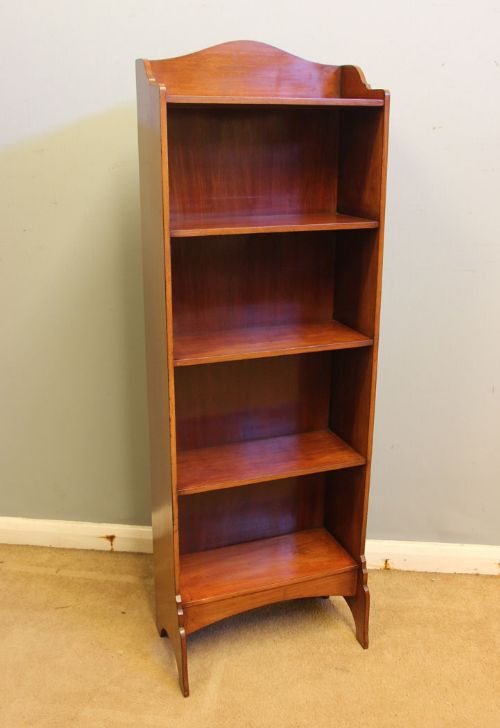
Freestanding mahogany shelving spans open bookcases, tiered whatnots and display stands designed to sit away from walls. The pieces on this page draw from the 19th Century, Victorian, Edwardian, Regency and 1920 periods.
The most common formats include open bookcases with fixed or adjustable shelves, slender multi-tiered whatnots and corner display units. These forms serve libraries, studies and living spaces with practical open storage.
How they were made
Cabinet makers utilised solid mahogany and flame mahogany veneers over secondary timbers, often accentuating the grain with polished finishes. Structural elements incorporate brass details, glass panels and slender turned pillars.
Construction techniques include dentil cornices, graduated tiered platforms and freestanding vertical supports designed to hold weight securely. Wood veneer and solid timber components are joined to create stable open frameworks and enclosed cupboard bases.
Freestanding Mahogany Shelving Retail Price Guide 2026
Typical asking prices for freestanding mahogany shelving among the pieces listed under this phrase on Sellingantiques today, from the lower quarter to the upper quarter. They describe what is for sale here now, not the wider market.
Listings feature periods from the 19th Century, William IV, Victorian, Regency and Edwardian eras, alongside 1910 and 1920 examples.
What varies in quality
Quality depends upon the choice of timber and the depth of the mahogany grain, with flame mahogany figures commanding greater visual interest. The crispness of carved details, slender pillars and dentil cornices distinguishes finer examples from simpler workshop output.
Proportion and structural honesty separate better pieces, particularly in multi-tiered whatnots and tall open bookcases where balance is essential. Well-executed adjustable shelving mechanisms and solid brass fittings indicate careful original manufacture.
The Freestanding Mahogany Shelving Glossary
- What-not
- A set of open shelves standing on pillars, used for displaying small objects and books. These tiered pieces often feature three to five levels.
- Flame mahogany
- A veneer cut from the fork of the mahogany tree that produces a distinctive flickering flame pattern. It is prized for decorative cabinet fronts and top surfaces.
- Dentil cornice
- A moulding decorated with a series of small, rectangular blocks resembling teeth. This architectural detail frequently tops formal bookcases.
- Waterfall bookcase
- A shelving unit where each tier is set back from the one below, creating a stepped profile. The style gained popularity during the 19th and early 20th centuries.
Freestanding Mahogany Shelving: Frequently Asked Questions
Where should I place freestanding mahogany shelving?
These pieces suit libraries, studies and living rooms where access from multiple sides or open display is desired. Because they stand independently, they do not require wall attachment.
Ensure the floor is level so the timber frame remains square and the shelves bear weight evenly without twisting.
What is the difference between a whatnot and a bookcase?
A whatnot is typically a multi-tiered stand supported by slender pillars, built primarily for displaying decorative items. Bookcases are designed specifically for holding volumes.
Bookcases often include enclosed lower cupboards or adjustable shelves, whereas whatnots focus on open, stepped tiers.
How do I care for mahogany shelves?
Keep timber furniture away from direct heat sources and strong sunlight to prevent the mahogany finish from fading or drying out. Dust regularly with a soft, dry cloth.
Apply a quality beeswax polish occasionally to nourish the wood grain and maintain the natural lustre of the surface.
Are these shelves strong enough for heavy books?
Many period bookcases feature sturdy solid mahogany construction and adjustable shelving designed to hold substantial libraries. Lighter tiered whatnots suit display objects and smaller volumes rather than heavy folios.
Check the thickness of the timber shelves and the condition of the vertical supports before loading heavy items.