





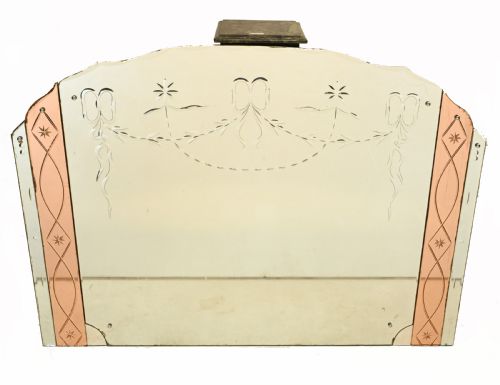
Frameless Bevelled Mirror
These pieces of frameless bevelled mirror offer clean lines and exceptional clarity, bringing light and space to any interior.
Frameless Bevelled Mirror
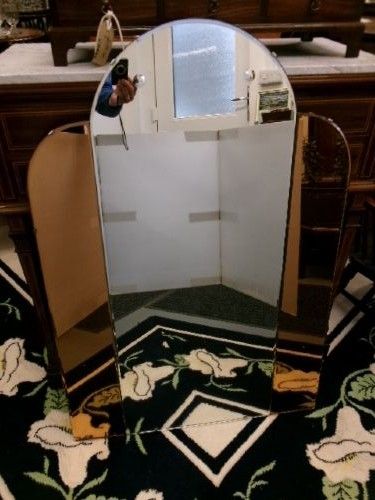
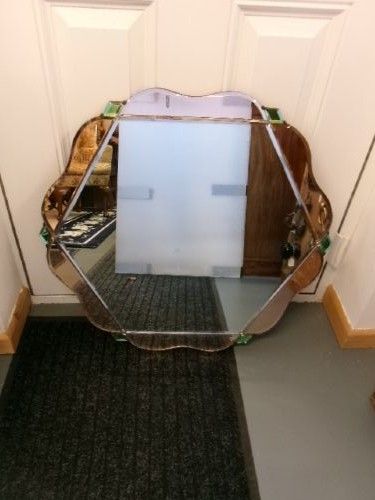
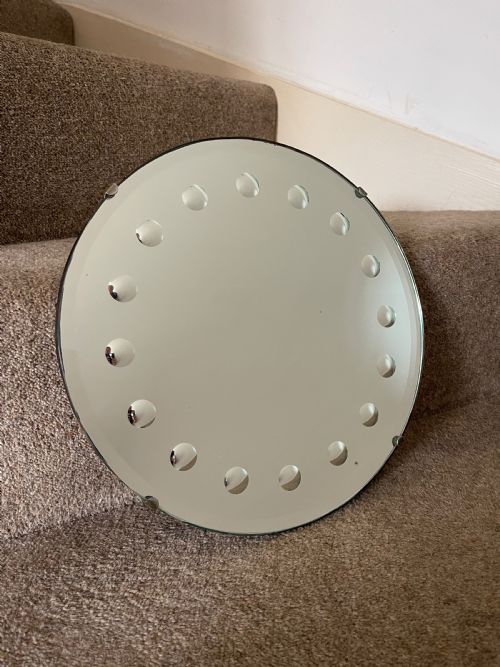
When you search for a frameless bevelled mirror, you encounter wall mirrors, mantle mirrors, and vanity mirrors dating mainly from the Art Deco period alongside Victorian examples. The typical piece relies on shaped or faceted glass plates without a traditional wooden frame, often featuring geometric outlines such as octagons, diamonds, and circles.
Most examples you meet on this page hail from the nineteen-twenties and nineteen-thirties, characterised by stylised motifs, embossed glass panels, and easel backs for tabletop use. You also find wall mirrors equipped with original metal fittings or mounted on wooden supports to secure the heavy glass plate.
French workshops contributed distinctive designs, including round wall mirrors with etched details and large diamond shapes that maximise the reflection of light. Whether small octagonal vanity stands or large mantelpieces, these objects span domestic decorative arts from the late nineteenth century through the interwar years.
How they were made
Maker operations utilised heavy mirror glass and silvered glass plates, shaping them through cutting and grinding to achieve characteristic bevelled edges. These thick plates required robust metal fittings, chrome mounts, or wooden backing boards to support the weight safely.
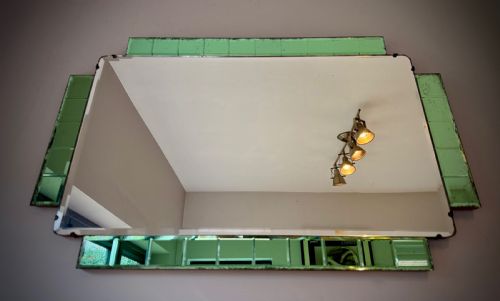
Art Deco examples frequently incorporated specialist techniques such as surface etching, embossing, and the addition of coloured glass panels like emerald green sections. Artisans secured these mirrored components using discreet clips and original hardware designed specifically for frameless construction.
Frameless Bevelled Mirror Retail Price Guide 2026
Typical asking prices for frameless bevelled mirror among the pieces listed under this phrase on Sellingantiques today, from the lower quarter to the upper quarter. They describe what is for sale here now, not the wider market.
What varies in quality
The distinction between standard domestic pieces and superior examples lies in the complexity of the glass cutting and the originality of the hardware. Pieces featuring multi-panel construction, coloured glass inserts, or elaborate etching demonstrate higher craftsmanship than plain geometric plates.
The integrity of the original silvering and the presence of period-correct metal fittings or easel stands determine the overall desirability. Heavy, substantial mirror plates with clean bevels and untouched original mountings represent the finer end of the surviving range.
The Frameless Bevelled Mirror Glossary
- Bevelling
- The practice of grinding and polishing the outer edges of a glass plate at an angle to catch and refract light. This technique creates a decorative border without needing a physical frame.
- Silvered glass
- Glass coated on the reverse with a reflective metallic compound to produce a mirror surface. Historic pieces often display gentle ageing within this backing layer.
- Easel vanity mirror
- A small mirror supported by a hinged rear strut designed to stand on a dressing table or mantelpiece. These portable pieces often date from the interwar period.
- Etched glass
- Glass decorated by applying acid or mechanical abrasion to cut surface patterns into the plate. This method produces permanent opaque designs against the reflective background.
Frameless Bevelled Mirror: Frequently Asked Questions
What defines an Art Deco mirror?
Art Deco mirrors rely on geometric shapes like octagons, diamonds, and circles combined with clean, unadorned edges. They often feature stepped designs, contrasting coloured glass panels, or surface etching.
These pieces reflect the modernist design ethos of the interwar decades. They reject heavy nineteenth-century ornamentation in favour of streamlined silhouettes.
Where were vanity mirrors used?
Vanity mirrors served as dressing table accessories in bedrooms and boudoirs during the early twentieth century. Their adjustable easel stands allowed users to alter the angle for grooming.
Smaller examples also functioned as display stands on tabletops. Their portable nature made them popular household items across the period.
How do I care for antique glass?
Clean mirror glass gently using a soft cloth and mild cleaning solutions that avoid ammonia. Protect the exposed edges where the silvered backing meets the air to prevent degradation.
Keep these items away from damp environments that accelerate the ageing of the reflective coating. Careful handling preserves the original bevels and hardware.