

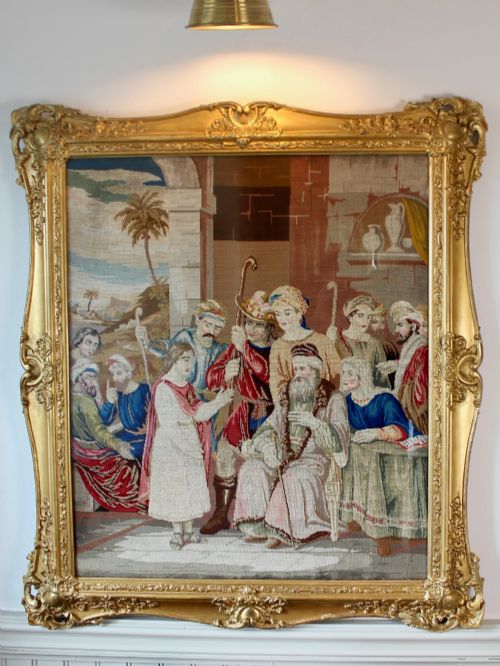


Framed Woolwork Embroidery
Framed woolwork embroidery brings nineteenth-century textile art to your walls, offering tactile depictions of domestic scenes, animals, and maritime subjects.
Framed Woolwork Embroidery
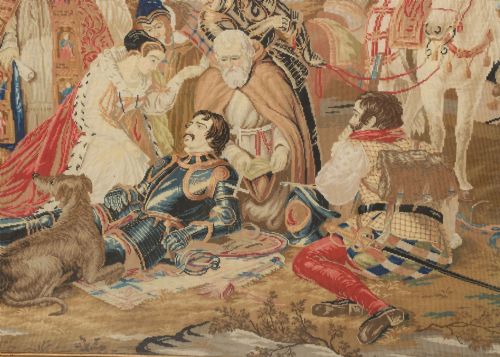
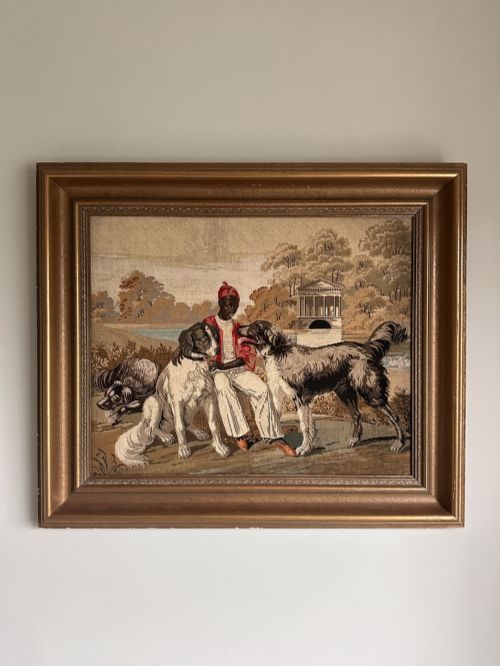
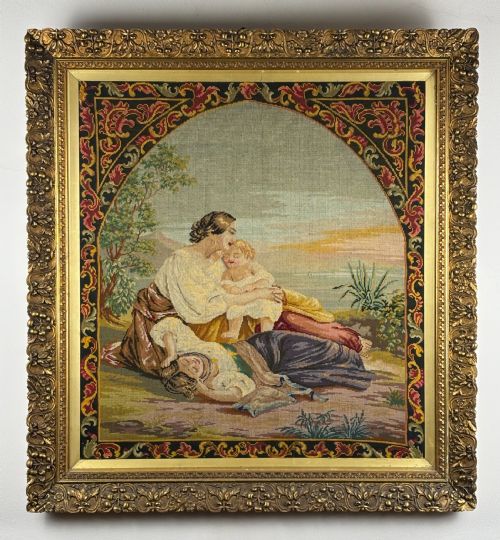
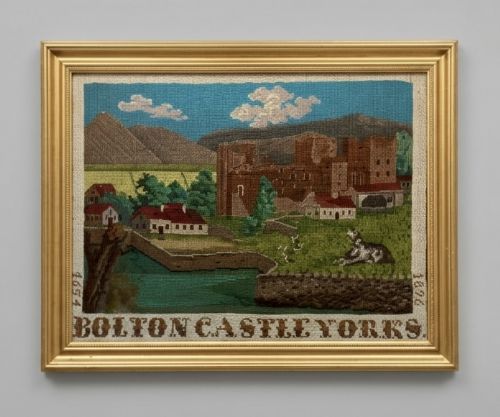
When you search for framed woolwork embroidery, you encounter nineteenth-century textile art spanning the Victorian, Regency, and Edwardian periods. These works range from folk art and maritime woolies to large Berlin woolwork tapestries depicting biblical, historical, and pastoral subjects.
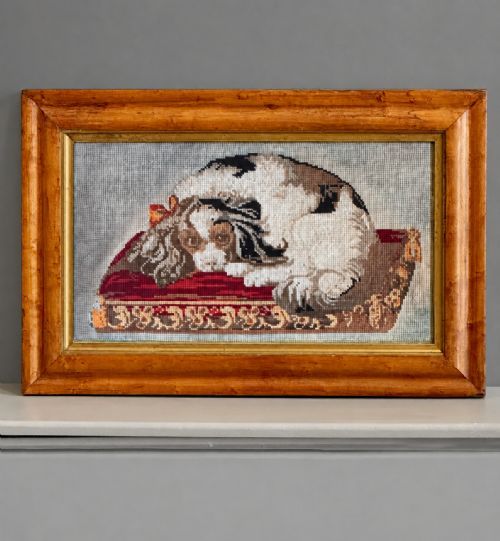
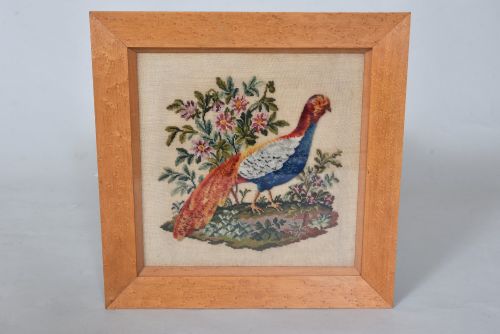
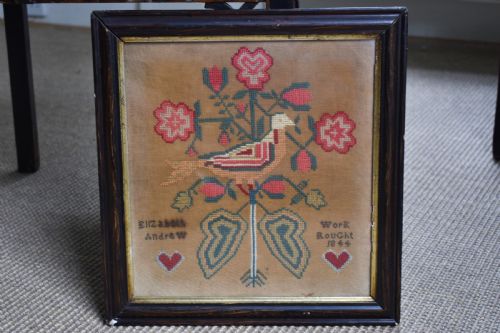
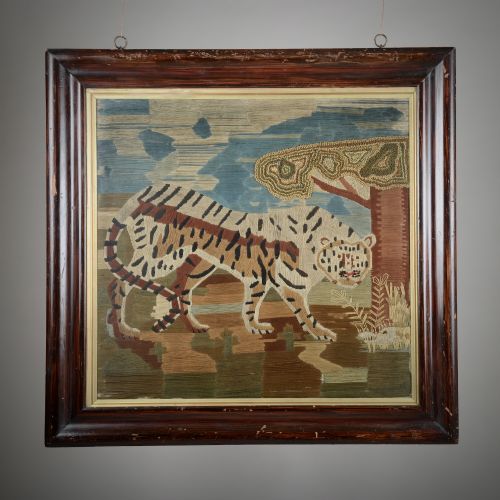
The most common pieces on this page are Victorian wool work pictures and needlepoint tapestries housed in original wood, giltwood, or burr maple frames. You also find sampler traditions, plushwork animals, and commemorative military embroideries.
Origins stretch across Britain, Scotland, Italy, and Germany, reflecting diverse domestic and professional needlework traditions of the 1800s and early 1900s.
How they were made
These works utilise wool, silk, and felt stitched onto canvas or fabric grounds, employing techniques such as Berlin work, gros point, petit point, and plushwork. Makers mapped patterns onto grid paper or worked freehand to build dense, textured pictorial surfaces.
Framing is integral to the survival of these textiles, utilising glass protection alongside wood, rosewood, oak, giltwood, or verre églomisé frames to shield the wool and canvas from environmental damage.
Framed Woolwork Embroidery Retail Price Guide 2026
Typical asking prices for framed woolwork embroidery among the pieces listed under this phrase on Sellingantiques today, from the lower quarter to the upper quarter. They describe what is for sale here now, not the wider market.
Listings feature works from the Victorian, Regency, and Edwardian eras, executed in wool, silk, and felt within wood, giltwood, and rosewood frames.
What varies in quality
Quality in framed woolwork embroidery rests on the fineness of the stitchwork, the complexity of the colour palette, and the vitality of the composition. Masterworks display precise shading and anatomical accuracy in figures or animals, whereas simpler folk art relies on charming naive proportions.
The integrity of the original housing elevates a piece, particularly when framed in period burr maple, rosewood, or verre églomisé glass rather than modern replacements.
The Framed Woolwork Embroidery Glossary
- Berlin work
- A style of counted-thread embroidery popular in the nineteenth century, worked in wool on canvas from hand-painted or printed grid patterns.
- Verre églomisé
- A process of applying cold painting and gilding to the rear of glass, frequently used for decorative antique picture borders.
- Gros point
- A coarse needlepoint stitch utilised for large-scale tapestry work, providing durable texture and bold visual impact.
- Plushwork
- A specialised embroidery technique featuring looped or cut pile that creates a raised, velvet-like tactile surface.
Framed Woolwork Embroidery: Frequently Asked Questions
What is a woolie?
A woolie is a traditional maritime embroidery made by nineteenth-century sailors at sea, usually depicting naval vessels using wool threads on canvas.
These pieces capture naval history directly from the hands of mariners and remain highly sought after by maritime collectors.
How do I date an antique embroidery?
Dating relies on stylistic clues, framing materials, subject matter, and the specific type of wool or canvas ground used in the construction.
Victorian Berlin work and Regency pastoral scenes each exhibit distinct colour palettes and framing styles characteristic of their respective decades.
Where should I hang woolwork?
Woolwork embroideries require display away from direct sunlight to prevent the natural wool and silk threads from fading over time.
Interior walls with stable humidity protect both the delicate textile fibres and the original wood or gilt frames.
What is Berlin work?
Berlin work refers to a nineteenth-century method of needlepoint embroidery where makers followed coloured grid patterns to produce vivid pictorial scenes.
This technique allowed domestic needleworkers to create elaborate floral motifs, portraits, and narrative tableaus with remarkable tonal depth.