
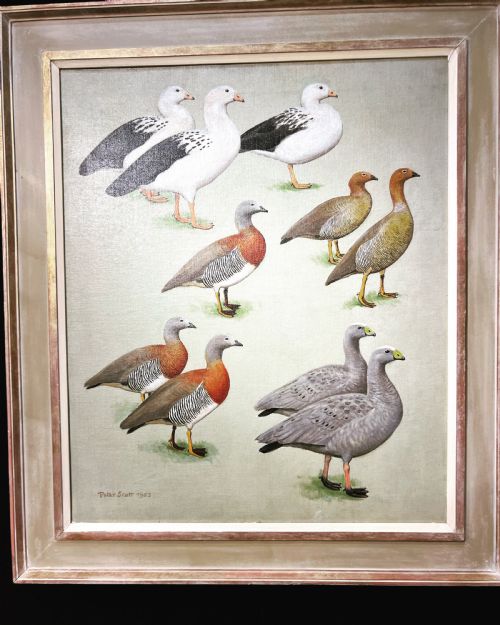


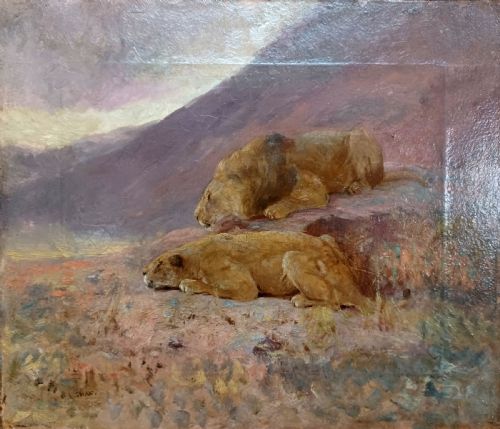


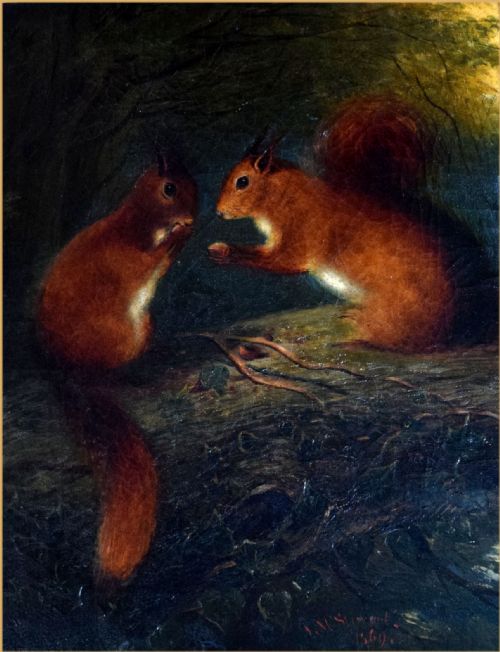

Framed Wildlife Oil Canvas
These framed wildlife oil canvas works capture centuries of animal subjects, bringing dramatic natural history straight into your room.
Framed Wildlife Oil Canvas
A framed wildlife oil canvas brings together natural history subjects and traditional painting techniques across several centuries. You will encounter everything from sweeping nineteenth century sporting scenes to detailed eighteenth century studies of birds and waterfowl.
The selections on this page span the Victorian period through to the mid twentieth century, featuring animals in marshes, woodlands, and highland landscapes. Common subjects range from wild ducks and geese to majestic stags, lions, and bears.
Judging Quality
Quality rests upon the artist's ability to render anatomy and movement correctly, whether depicting flying geese, stalking lions, or feeding squirrels. Stronger examples display convincing textures in fur and plumage alongside well balanced compositions.
The harmony between the canvas and its frame also matters significantly. Hand gilded wooden frames that suit the period of the painting elevate the overall presentation considerably.
The inventory includes nineteenth century sporting art, Victorian animalier studies, and eighteenth century European works on canvas.
Philipp Ferdinand de Hamilton·Marmaduke Cradock·Jacob Bogdani·Thomas Blinks·Constant Ludovic Artz·Geza Vastagh·Cuthbert Edmund Swan·William Crampton·James Malcolm Stewart·Stephen Elmer·Sir Peter Markham Scott
The Framed Wildlife Oil Canvas Glossary
- Oil paint
- A slow drying medium consisting of pigments suspended in a drying oil, typically linseed oil. It allows artists to build rich layers and depth.
- Canvas
- A heavy woven fabric stretched across a wooden frame to form the painting surface. It provides the standard foundation for traditional oil works.
- Giltwood
- Wood carved and coated with gold leaf or metallic powder to create a bright, reflective surface. It frequently frames antique paintings.
- Animalier
- A nineteenth century artistic movement focusing on the realistic depiction of animals. Practitioners specialised in sculpture and painting of wildlife.
- Naturalism
- An art style dedicated to detailed and unidealized observation of the natural world. It guides many of the landscape and fauna compositions seen here.
Framed Wildlife Oil Canvas: Frequently Asked Questions
How do I date a framed wildlife oil canvas?
Dating relies on the style of the brushwork, the species depicted, and the construction details of the canvas and stretcher frame behind the painting. Signatures and archival records for named artists also help narrow down the decade of creation.
Framing styles offer additional clues, as nineteenth century giltwood differs noticeably in profile and preparation from eighteenth century or mid twentieth century examples.
Where should I hang these oil paintings?
Choose a wall away from direct sunlight and fluctuating heat sources, such as radiators, to protect the oil paint and canvas from cracking or warping. Stable indoor environments preserve both the artwork and its wooden frame.
Position the painting at eye level where adequate lighting can highlight the fine details of the fur, feathers, and natural background without causing glare on the canvas.
What subjects are most common in these paintings?
Birds feature prominently, ranging from wild ducks and geese in marshlands to exotic fowl in woodland settings. Game birds such as black game appear alongside sporting subjects and larger predators.
Landscapes also play a major role, placing stags, bears, and foxes into specific regional settings like highland views or fenlands.