


Framed Watercolour Miniature Portrait
A framed watercolour miniature portrait captures a vanished face in pigment on paper or card, preserved behind glass for private contemplation.
Framed Watercolour Miniature Portrait
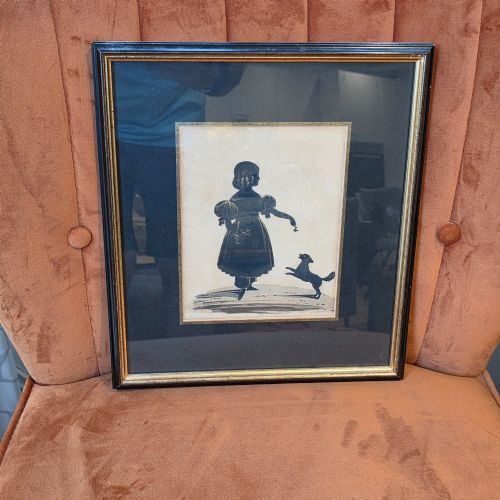
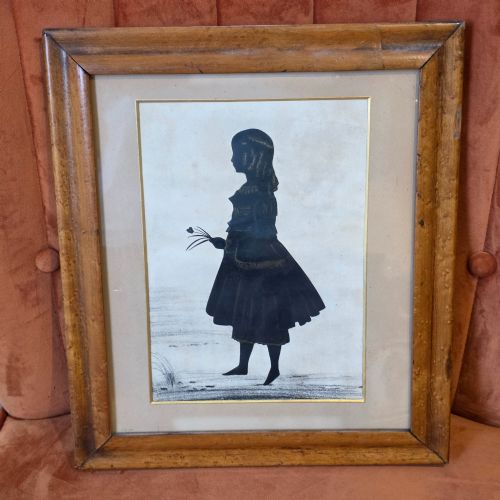
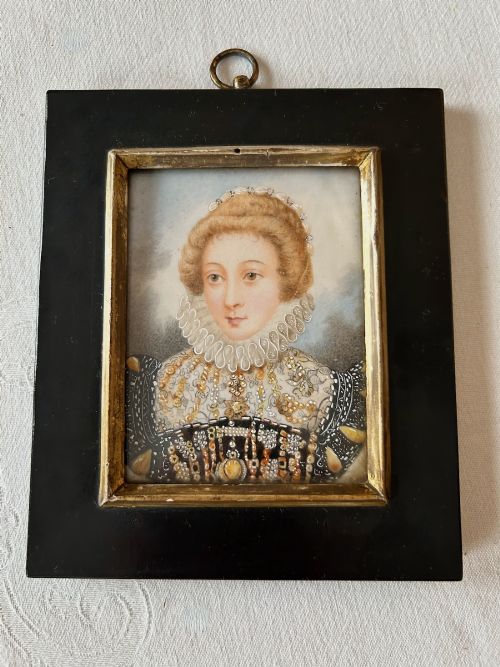
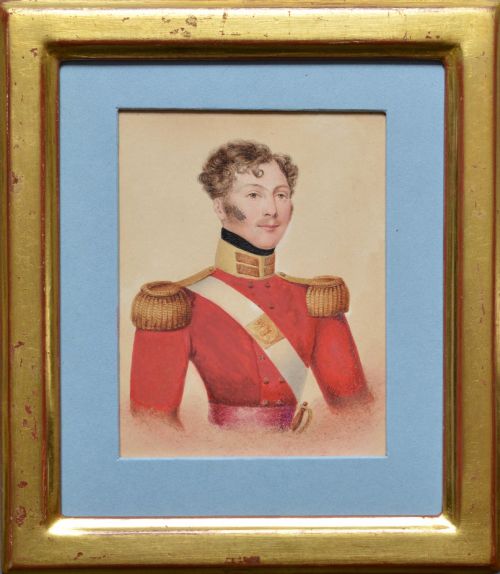
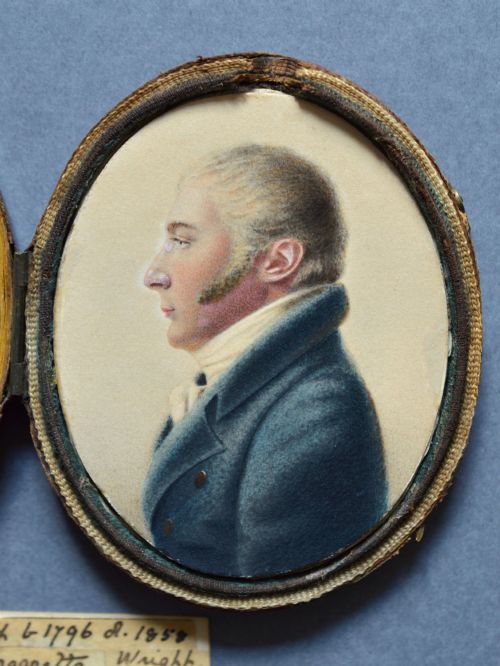
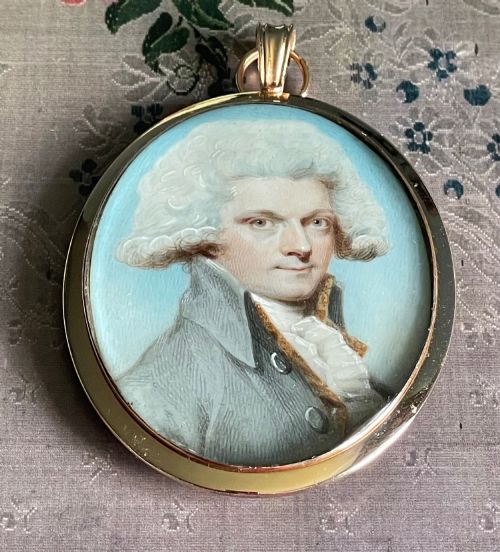
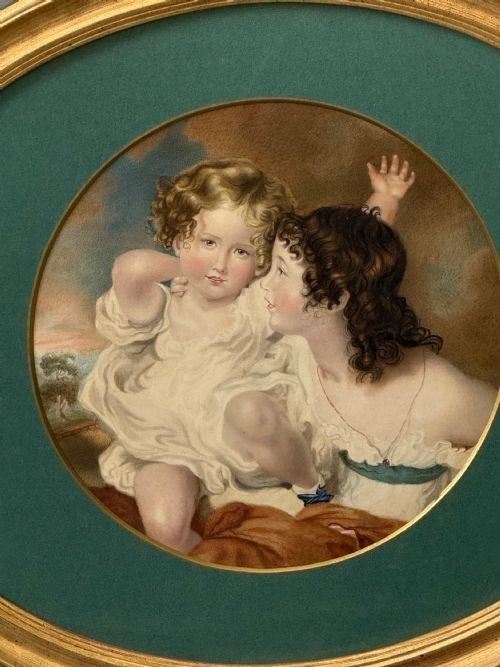
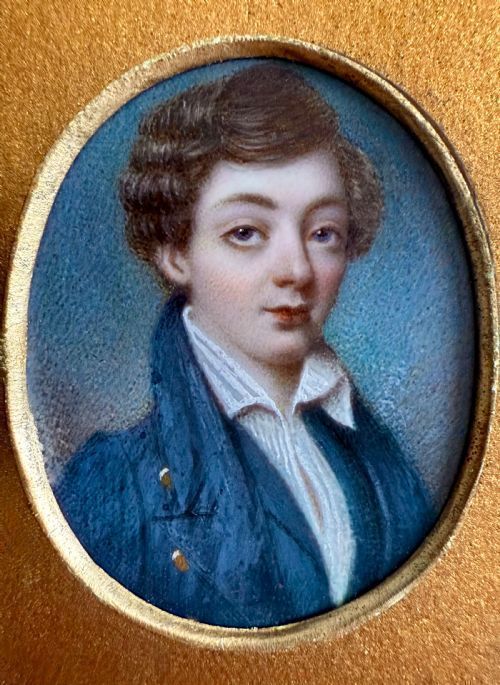
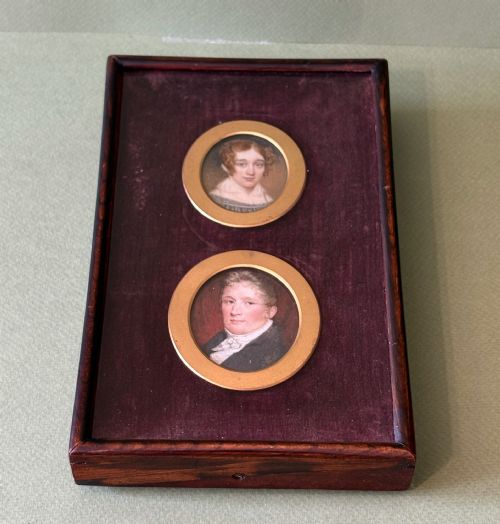
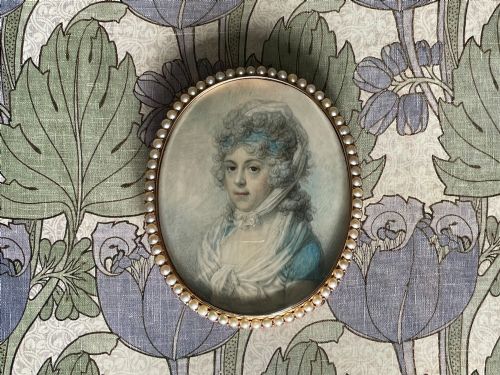
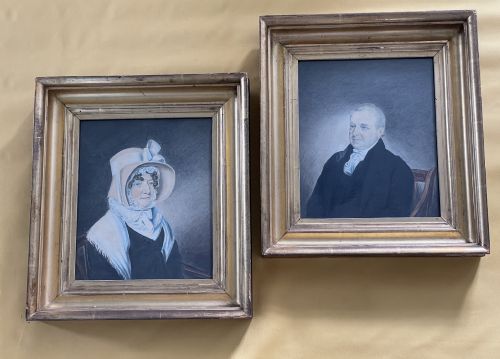
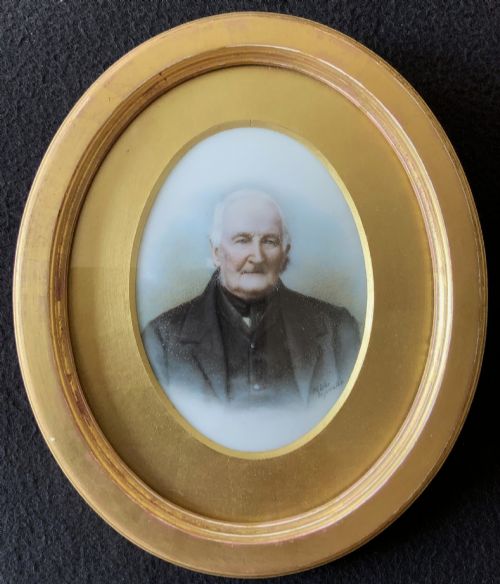
A framed watercolour miniature portrait represents a small-scale likeness executed by hand, most commonly encountered from the eighteenth and nineteenth centuries. These works span Georgian, Regency, and Victorian periods, taking the form of oval paintings, cut-paper silhouettes, and pendant pieces.
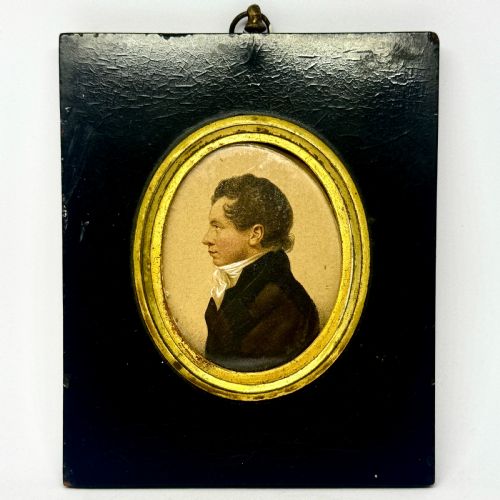
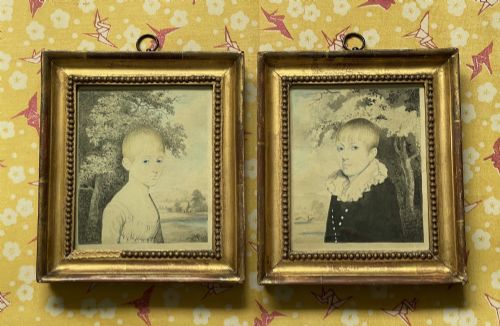
The subjects range from British and European officers, children, and gentlemen to ladies in lace, framed closely in ebonised wood, gilt metal, or brass. Many survive in pairs or family groups, reflecting domestic portraiture trends across different social strata.
Materials and technique
Preservation relied on heavy framing, sealing the fragile paint behind glass within housings of ebonised wood, brass, or gilt metal to protect the delicate paper from atmospheric moisture and dust.
Several portraits capture stern military officers staring down viewers across two centuries with unyielding Victorian disapproval.
Assessing the work
The distinction between ordinary and superior pieces rests on the precision of the brushwork and the psychological depth captured in the sitter's expression. Master practitioners rendered textiles, lace, and facial contours with acute sensitivity, whereas lesser examples remain stiff or formulaic in execution.
The integrity of the original housing also influences the character of the object, as period frames in matching ebonised wood or chased gilt metal complement the painted surface without modern alteration.
William James Hubard·Henri Fradelle·Thomas John Horsley·Charles Shirreff·Richard Cosway·Frederick Buck·William Naish·Albin R Burt·George Engleheart·William Egley
The Framed Watercolour Miniature Portrait Glossary
- Watercolour
- A paint consisting of pigment suspended in a water-soluble binder, used on paper to create translucent miniature layers. It is the primary medium for these portraits.
- Ebonised wood
- Timber treated to resemble ebony, frequently used for dark, contrasting frames during the Georgian and Victorian eras. These frames often feature brass bezels or suspension rings.
- Silhouette
- A portrait represented as a solid shape, usually black, created by cutting paper or painting profile views. Some examples combine cut paper with watercolour details.
- Pendant
- A small framed portrait designed to be worn or hung by a loop, frequently housed in gold or gilt metal with a glazed reverse for hairwork.
Framed Watercolour Miniature Portrait: Frequently Asked Questions
Where were these miniature portraits displayed?
Owners kept these small paintings in private spaces, placing them on writing desks, hanging them in intimate parlour arrangements, or carrying them as personal tokens.
Their scale suited personal travel and private remembrance rather than large public display rooms.
How do I date a framed miniature?
Dating relies on the costume of the sitter, the framing materials, and the structural construction of the backboard and glass. Regency pieces often show distinctive hairstyles and high-waisted dress.
Frame styles, such as ebonised wood with convex brass hangers, also shift character between the Georgian and Victorian periods.
What is the significance of ebonised frames?
Dark ebonised wood frames provided a stark, high-contrast border that made the pale skin tones and bright pigments of the miniature stand out.
This framing choice was particularly favoured during the Georgian and Victorian periods for domestic portrait displays.