

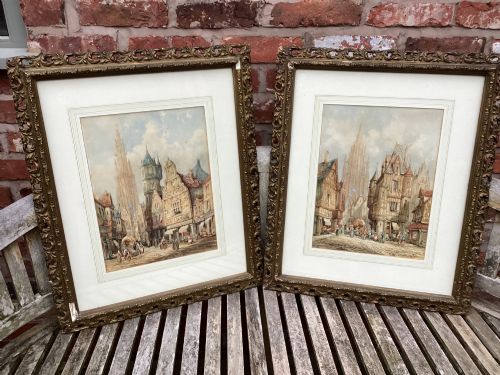
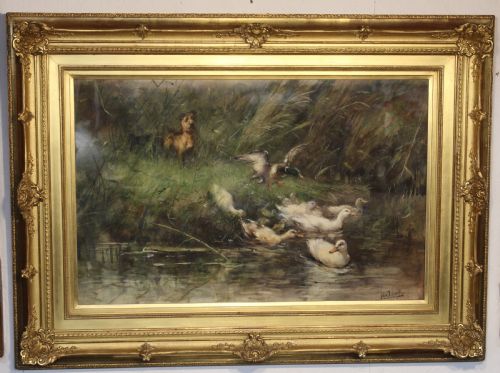
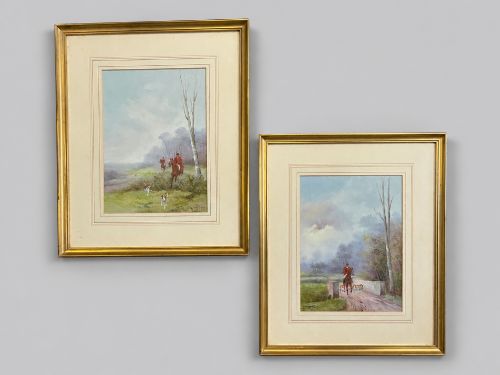
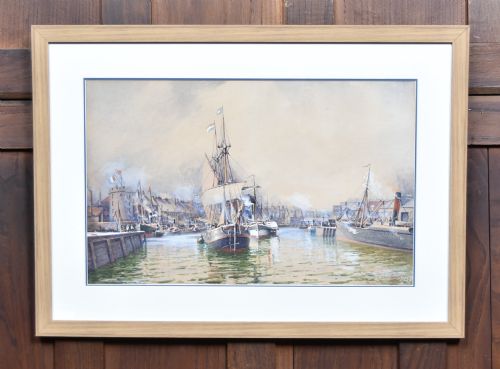


Framed Water Colour Painting
These framed water colour painting examples bring home paper, glass, and wood works ranging from Victorian coastal scenes to mid-century modern views.
Framed Water Colour Painting
A framed water colour painting brings together pigment on paper or fabric protected beneath glass within wooden or gilded frames. When you search for framed water colour painting, you encounter works spanning the nineteenth century through to the mid-twentieth century.
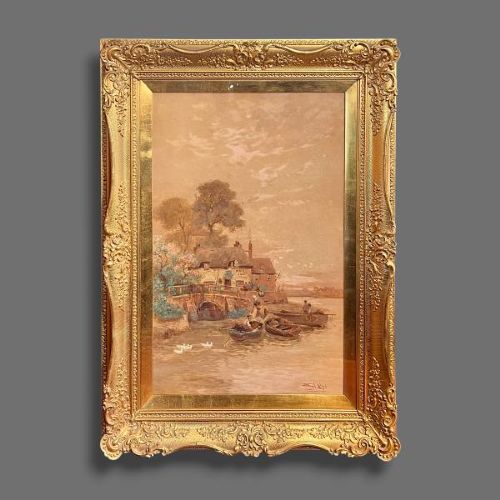
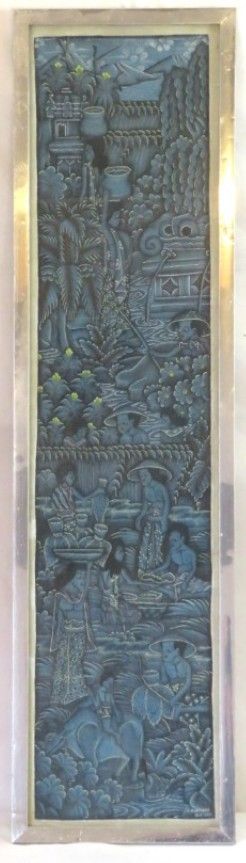
The selection here includes nineteenth-century Italian and Dutch school pieces alongside Victorian maritime subjects and Edwardian landscapes. You also find specific studio illustrations and Balinese works executed on fabric rather than standard paper.
Most pieces arrive ready to hang, retaining their original or period-appropriate frames of wood, gilt wood, or gilded wood. These objects range from intimate architectural sketches to large-scale topographical views.
Materials and technique
Watercolour pigment is applied directly to absorbent paper or fabric grounds, relying on the white of the underlying surface to create luminosity through translucent washes. Artists build up depth using layered liquid colour, sometimes supported by pencil or ink underdrawing.
Framing typically involves wooden mouldings, often enhanced with gilt wood or gilded surfaces to complement the tonal range of the painting. Glazing with glass protects the delicate water-soluble pigments from atmospheric moisture and dust.
Framed Water Colour Painting Retail Price Guide 2026
Typical asking prices for framed water colour painting among the pieces listed under this phrase on Sellingantiques today, from the lower quarter to the upper quarter. They describe what is for sale here now, not the wider market.
Listings feature paper, fabric, glass, and gilded wood across periods from the nineteenth century to the mid-twentieth century.
Judging quality
Quality rests on the surety of the brushwork and the clarity of the pigment washes across the paper surface. Stronger works demonstrate a confident handling of light and perspective, particularly in complex architectural or maritime compositions.
The integrity of the framing materials also distinguishes the pieces, with well-preserved period gilt wood frames adding considerable presence to the artwork. The condition of the paper support, free from excessive fading or damp staining, marks the distinction between standard decorative pieces and finer works.
William Woolard·Stuart Lloyd·Edith E Caswall·B. Kaufmann·Charles H Poingdestre·Belisario Gioja·Yves Brayer·J . W . CAREY
The Framed Water Colour Painting Glossary
- Watercolour
- A paint consisting of a pigment suspended in a water-based solution. It is traditionally applied to paper to create translucent washes of colour.
- Giltwood
- Wood that has been covered with a thin layer of gold leaf or gold paint. This finish frequently appears on nineteenth-century picture frames.
- Topographical
- Depicting specific physical locations or landscapes accurately. Many nineteenth-century works focus on identifiable towns, ports, and lakes.
- Wash
- A thin, fluid layer of transparent watercolour spread evenly across the paper. Masters use this technique to establish skies and broad background tones.
Framed Water Colour Painting: Frequently Asked Questions
How do I hang a framed watercolour?
Hang these works away from direct sunlight to prevent the watercolour pigments and paper supports from fading over time.
Ensure the wall fixings match the weight of the wooden and glass frame assembly for secure placement.
Are these paintings original works?
Every piece listed is an original hand-painted work on paper or fabric rather than a modern mechanical print.
Artists applied the water-soluble pigments directly by hand, making each piece a singular creation.
What periods do these paintings date from?
The selection spans from nineteenth-century Victorian and Edwardian pieces through to interwar and mid-century modern examples.
Dates range across the 1800s, 1900s, 1920s, 1930s, 1950s, and 1960s.
Do the frames come with the paintings?
Each artwork includes its protective wooden, gilt wood, or gilded frame complete with glass covering.
These frames preserve the paper underneath and match the period of creation.