


Framed Vintage Sampler
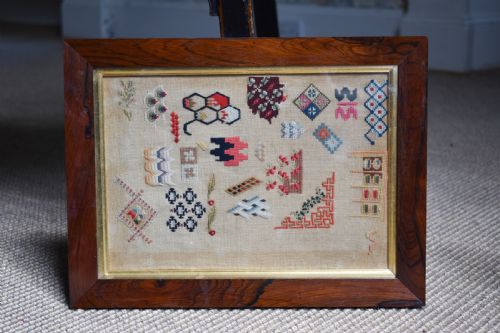
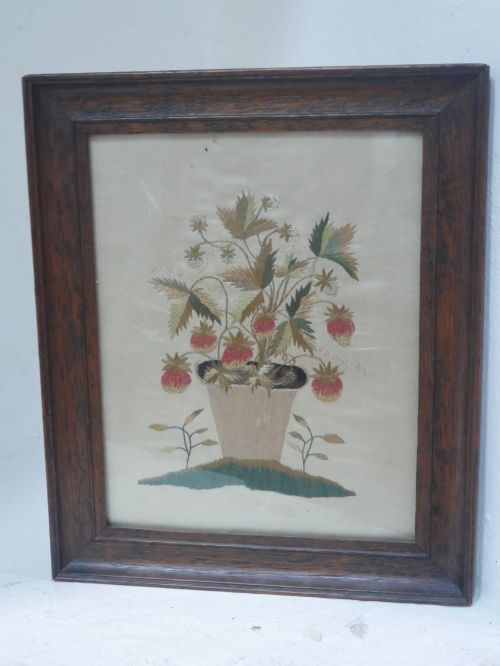
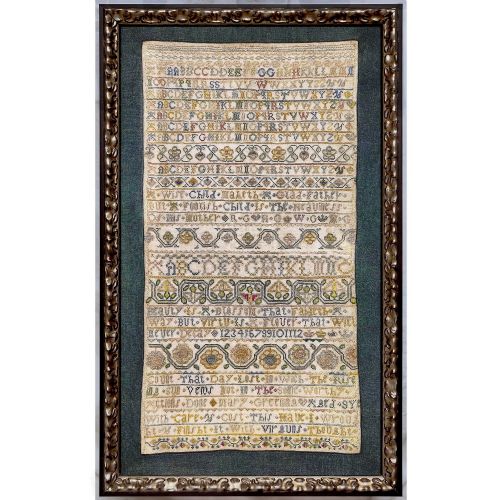
These framed vintage sampler works are textile records worked in thread, linen, wool and silk, offering a tangible connection to domestic history.
Framed Vintage Sampler
A framed vintage sampler represents needlework created across the eighteenth, nineteenth and early twentieth centuries, encompassing styles from Georgian and Victorian periods to folk art. You will frequently encounter nineteenth-century examples alongside earlier eighteenth-century needlework pictures and educational alphabet pieces.
Origins range across English and French traditions, utilising various formats from standard rectangular wall art to firescreens and maps. The survival of these textiles relies heavily on their preservation behind glass within period wood or gilt frames.
Judging quality in needlework
Quality rests upon the precision of the stitch work, the complexity of the design and the preservation of the materials. Finer examples display disciplined execution in difficult stitches and well-proportioned pictorial elements, whereas simpler works prioritise charming folk character over technical perfection.
The completeness of provenance adds weight, particularly when a sampler retains the maker's name, age, date and location, such as a school or parish. Condition of the ground linen and stability of the original threads further distinguish superior pieces from those with heavy degradation.
Listings feature works spanning the 17th, 18th and 19th centuries, utilising materials such as linen, wool, silk, glass and gilt wood.
The Framed Vintage Sampler Glossary
- Sampler
- A piece of needlework produced as a demonstration or test of skill in various stitches and patterns. They often include alphabets, religious verses and decorative motifs.
- Band sampler
- An early format of needlework featuring horizontal bands of distinct patterns and stitches arranged in rows. These served as reference templates for embroiderers.
- Map sampler
- A specialised geographical needlework piece featuring cartographic details of countries or counties. They combined domestic education with needlecraft skill during the eighteenth and nineteenth centuries.
- Needlepoint
- Canvas work embroidery executed by stitching yarn or thread through a stiff open-weave ground fabric. This technique covers the entire foundation to create a dense, durable surface.
- Firescreen
- A decorative household panel designed to shield a person's face from the radiant heat of an open fireplace. Many incorporate framed needlework panels as functional art.
Framed Vintage Sampler: Frequently Asked Questions
How do I date a sampler?
Many samplers include embroidered dates, makers' names and ages, which provide a direct point of reference for their creation. Stylistic cues such as lettering fonts, border motifs and framing materials also help narrow down the period.
Changes in linen quality and thread types offer further clues when inscriptions are missing or illegible. Comparing the stitching style to documented schoolgirl works from specific decades clarifies the timeline.
Where should I hang a sampler?
Keep textile art away from direct sunlight and damp environments to prevent fading and fibre degradation. Interior walls with stable temperature and humidity offer the safest conditions for antique framing.
Positioning the piece at eye level in a hallway, study or living room allows the fine detail of the stitching to be appreciated without risk of physical damage.
Are all samplers made by children?
A significant proportion of nineteenth-century and earlier samplers were worked by young girls in schools or domestic settings as part of their education. These educational pieces frequently record the maker's age and institution.
Other examples were produced by adults as decorative art, technical displays, or professional needlework exercises. The distinction usually appears in the complexity of the composition and the presence of school inscriptions.
How are samplers framed?
Antique samplers typically sit behind protective glass within timber or gilt wood frames to secure the textile and block airborne dust. The framing materials often match the period of the embroidery, though some pieces have undergone later re-framing.
Proper conservation framing ensures the textile does not touch the glass directly, preventing moisture accumulation and protecting the delicate fibres over time.