
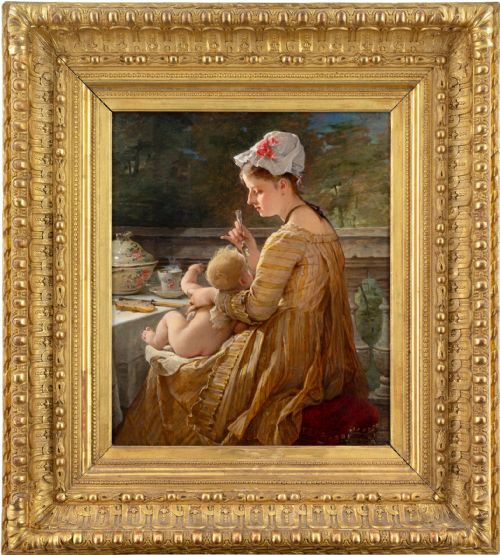
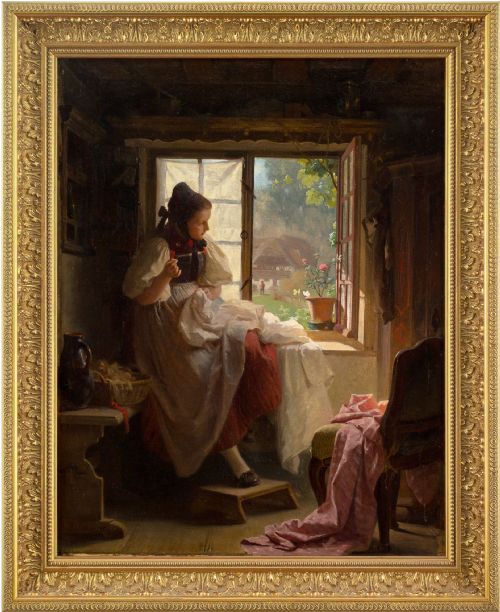
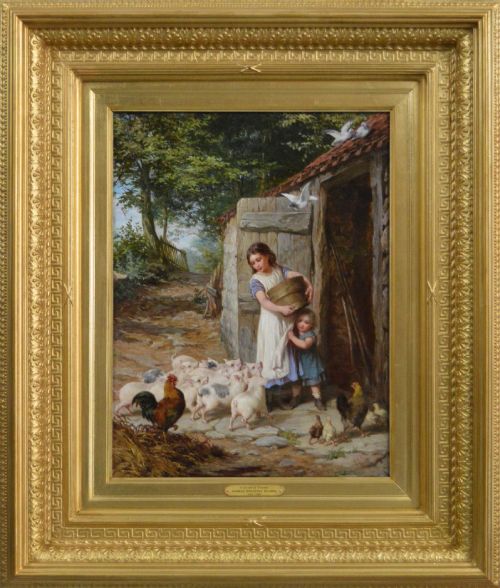
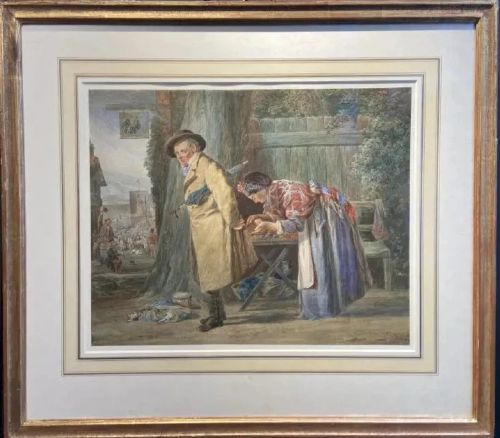
Framed Victorian Genre Scene
A framed victorian genre scene brings domestic life and social history from the nineteenth century directly onto the wall.
Framed Victorian Genre Scene
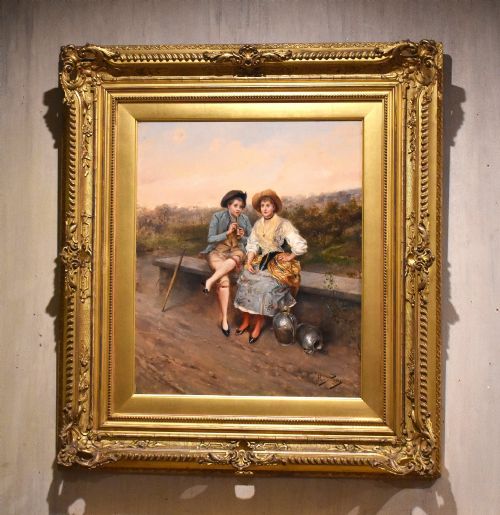
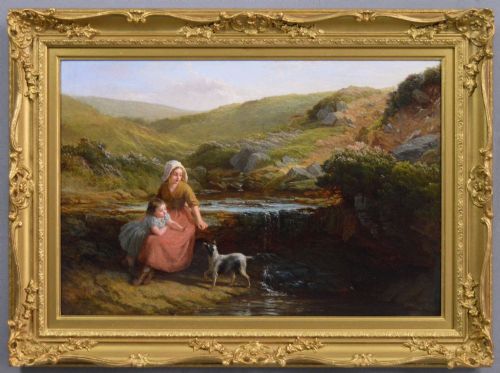
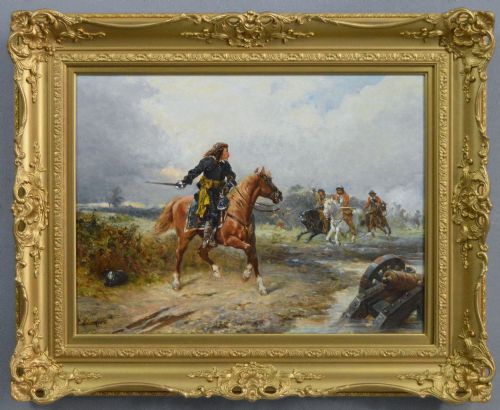
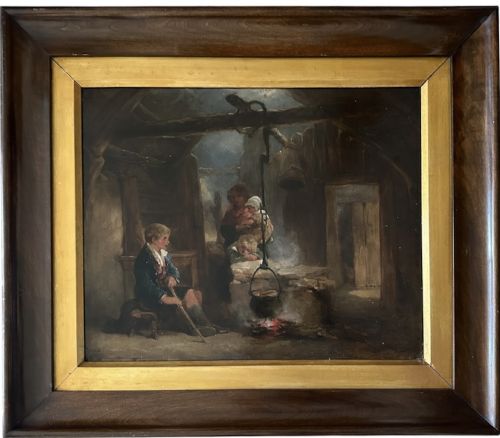
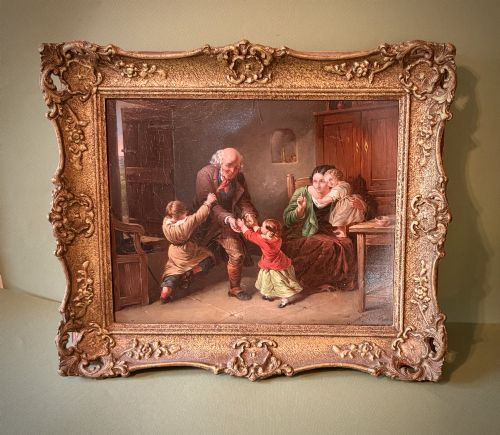
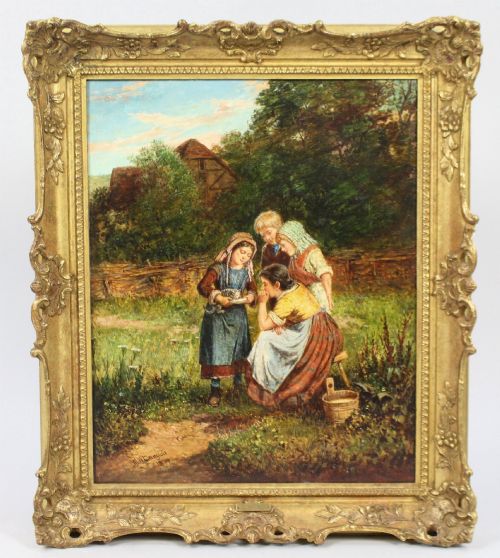
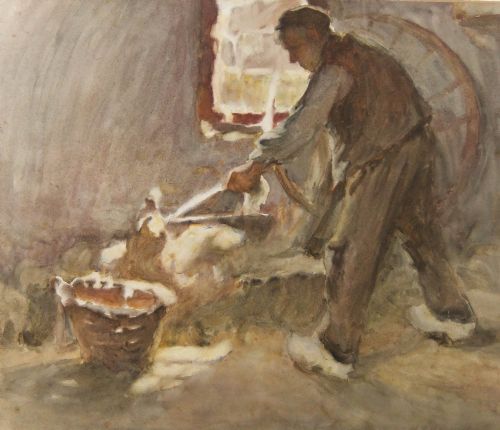
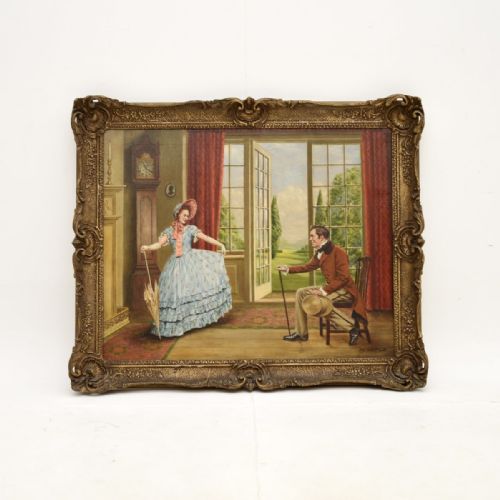
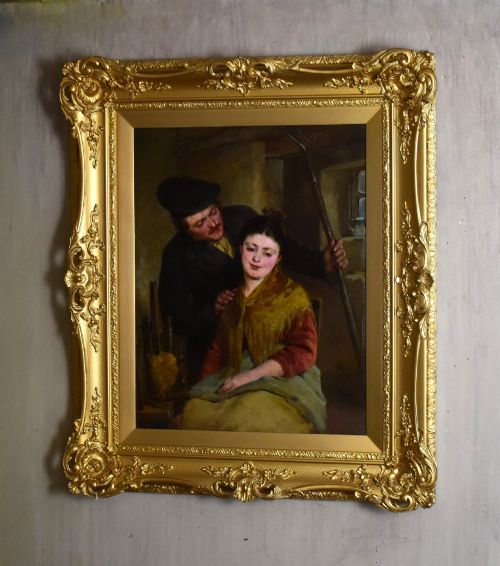
A framed victorian genre scene depicts everyday narrative subjects, domestic interiors, and rural life created during the nineteenth century. These works capture specific moments of human activity, from children playing in cottages to labourers resting by the sea.
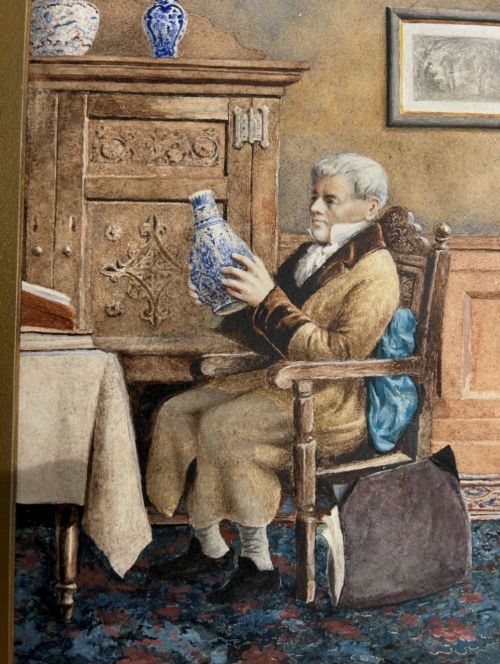
The pieces on this page appear primarily as oil paintings on canvas or panel, alongside watercolour paintings and framed prints or engravings. Most examples date from the Victorian period through to the early twentieth century.
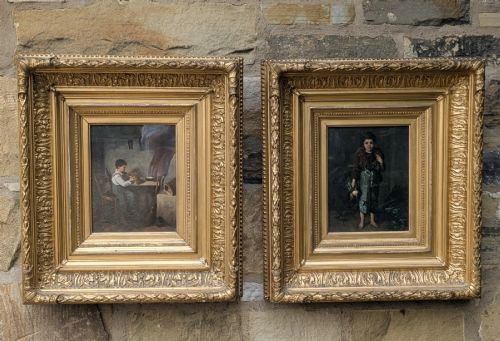
Subjects range from quiet interior domestic scenes and country house settings to outdoor rural labour and social history. Buyers encounter both individual works and matched pairs by named nineteenth-century artists.
Materials and technique
Artists painted primarily in oil on stretched canvas or wood panel, or applied watercolour pigments to paper support. These traditional mediums were worked with fine brushes to capture narrative detail and expression in domestic interiors and figures.
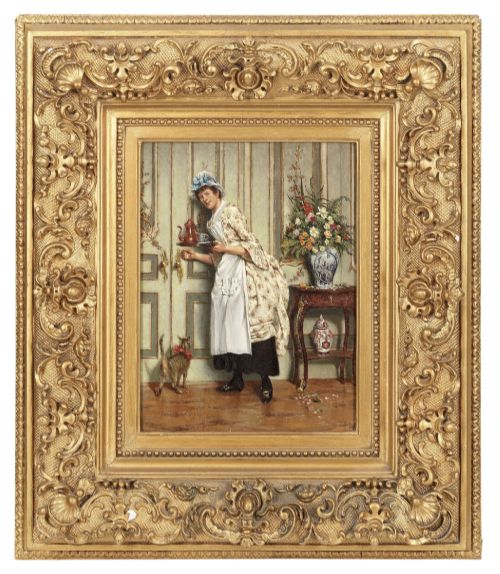
Works are housed in period frames constructed from wood, finished with gesso moulding and gold leaf or giltwood highlights. These frames provide structural housing while complementing the visual depth of the paintings and prints.
Listings span the nineteenth century, including works dated from 1840 to 1920 in oil, watercolour, and print formats.
Judging quality
The preservation of the original paint surface and the matching period frame influence the integrity of the piece. Intact original giltwood frames and stable canvas supports maintain the historical context of the artwork.
Felix Stone Moscheles·Henry Stacy Marks·Stephen Samuel Lewin·Mark William Langlois·Henry Silkstone Hopwood·Alfred Lyndon Grace·Howard Helmick·Adelaïde Salles-Wagner·Max Kaltenmoser·George Augustus Holmes·Joseph H Barnes·Frederick Walker·Louis Charles Verwee·Charles Hunt·Joseph Farquharson·Carlo Ferranti·Renato Moretti·Delapoer Downing·Miles Birkett Foster·Albert Ludovici Jnr·James Hayllar·Charles Edward Wilson·Harry Brooker·George Kilburne·Alexander Rosell
The Framed Victorian Genre Scene Glossary
- Genre painting
- Depiction of aspects of everyday life by depicting ordinary people engaged in common activities. These works provide a visual record of social history and domestic habits.
- Gesso
- A plaster-like mixture applied to wood framing before gilding or painting. It provides a smooth surface for moulding decorative relief details.
- Mezzotint
- A printmaking process of the printmaker family where tones are worked from dark to light on a roughened copper plate. This technique produces rich tonal gradations.
- Oil on canvas
- Pigment bound in a drying oil applied to a woven fabric support stretched over a wooden frame. This was the primary painting medium for exhibition works.
Framed Victorian Genre Scene: Frequently Asked Questions
What is a genre scene?
A genre scene represents everyday subjects and ordinary people rather than historical events, portraits, or landscapes. These paintings show domestic interiors, children playing, or rural workers.
They offer a direct window into nineteenth-century social history and domestic habits through narrative art.
How do I hang oil paintings safely?
Hang paintings on secure wall fixings away from direct sunlight and damp conditions. Stable indoor temperatures prevent the canvas and wooden frame from warping.
Ensure the hanging wire and wall hooks match the weight of the framed artwork.
Are watercolours different from oil paintings?
Watercolours use pigment suspended in a water-soluble vehicle applied to paper, whereas oil paintings use slow-drying oils on canvas or panel. Watercolours require protective glass framing to prevent moisture damage.
Oil paintings present a heavier textured surface and usually hang without glass protection.
How can I tell the period of a frame?
Period frames feature hand-modelled gesso ornamentation over wooden foundations, often showing fine craquelure or age patination to the gilt surface. Nineteenth-century frames use specific moulding profiles and corner joints.
Original frames match the materials and wear patterns appropriate to the age of the painting.