



Framed Textile Picture
A framed textile picture brings historical needlework and woven silk into domestic spaces, preserving centuries of domestic craft behind protective glass.
Framed Textile Picture
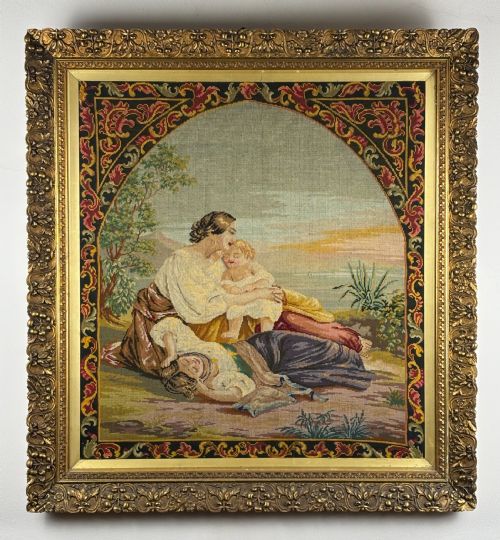
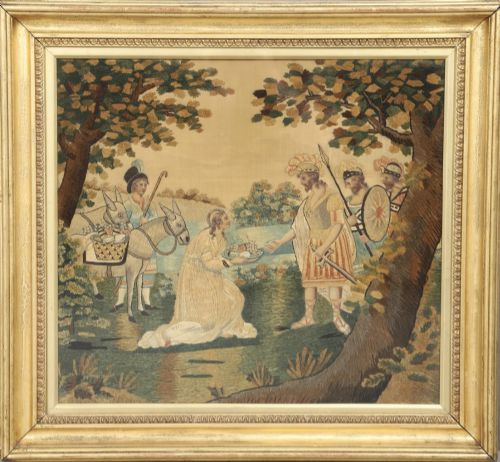
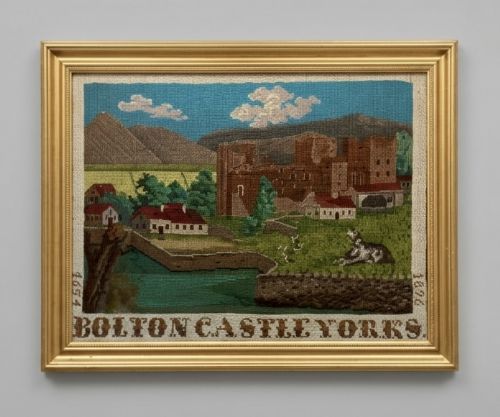
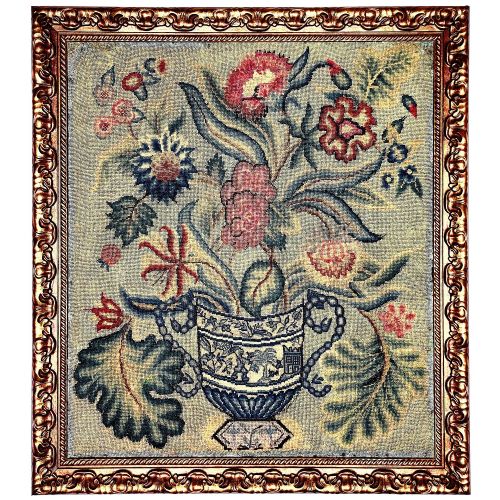
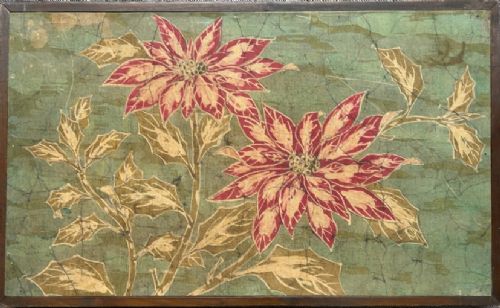
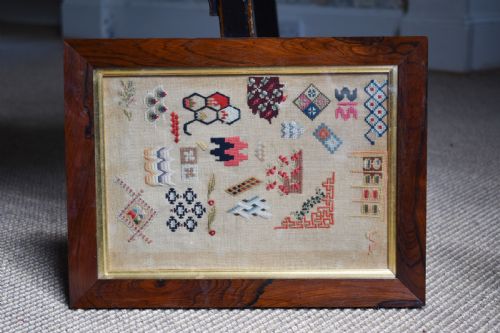
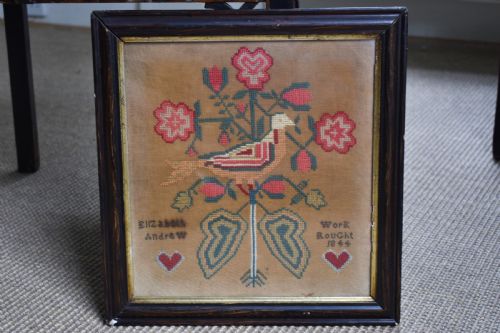
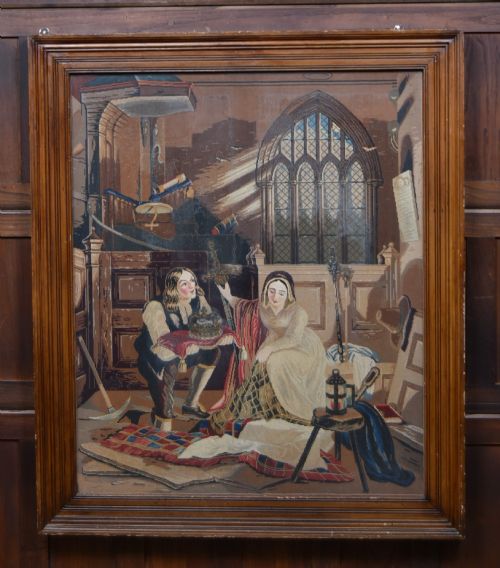
A framed textile picture encompasses needlework samplers, woven silk portraits, and embroidered tapestries preserved under glass within period wooden or gilt frames. Buyers searching for a framed textile picture encounter works spanning from the seventeenth century through to the mid-twentieth century, with nineteenth-century woolwork and Victorian Berlin work appearing frequently on this page.
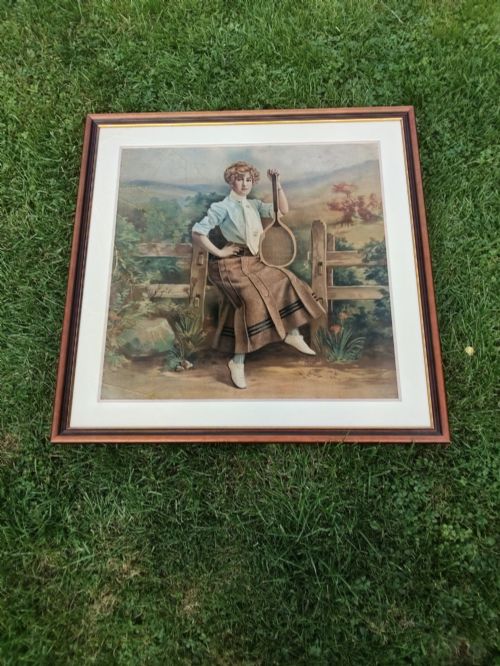
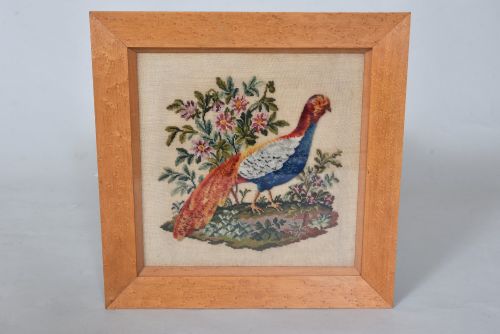
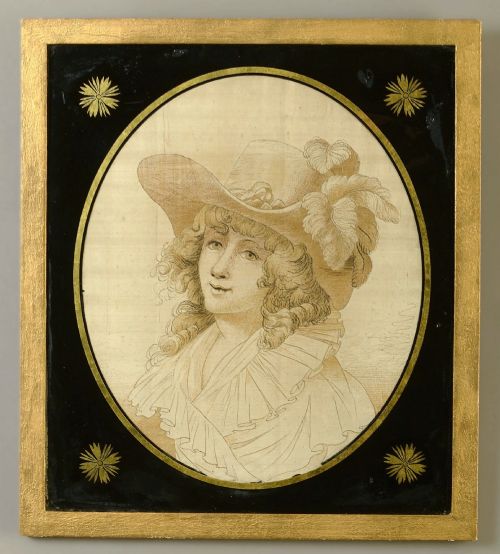
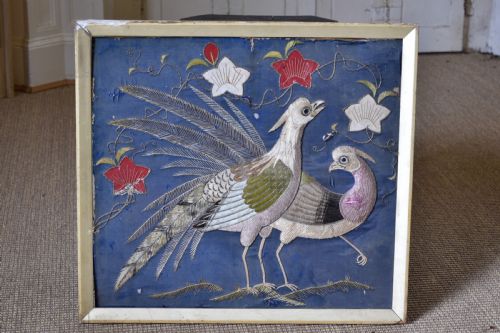
The assortment includes domestic samplers, botanical studies like strawberries, avian subjects such as pheasants and cockerels, and classical or historical figures rendered in silk floss and wool. Forms range from oval woolwork pictures in verre églomisé mounts to large eighteenth-century needlework compositions and Edwardian sporting tapestries.
Origins stretch across English, French, Chinese, and Italian workshops, reflecting diverse regional stitching traditions. Buyers select these pieces for their tactile depth, hand-stitched textures, and the intimate domestic history embedded within each canvas or linen ground.
Materials and Technique
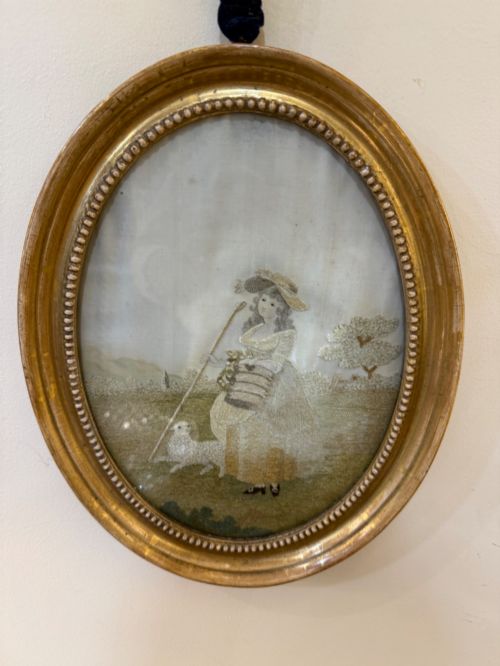
Needlework pictures rely on wool, silk, and linen grounds stitched with silk floss, wool yarn, or metallic threads using techniques such as gros-point, Berlin work, and stumpwork. Eighteenth-century and Georgian pieces frequently combine hand-painted silk details with fine needlework faces and hands.
Framing materials protect the delicate textiles, utilising timber frames such as burr maple, giltwood, and faux tortoiseshell fitted with protective glass. Early examples employ specialised mounts like verre églomisé glass panels to frame the central stitched artwork.
Framed Textile Picture Retail Price Guide 2026
Typical asking prices for framed textile picture among the pieces listed under this phrase on Sellingantiques today, from the lower quarter to the upper quarter. They describe what is for sale here now, not the wider market.
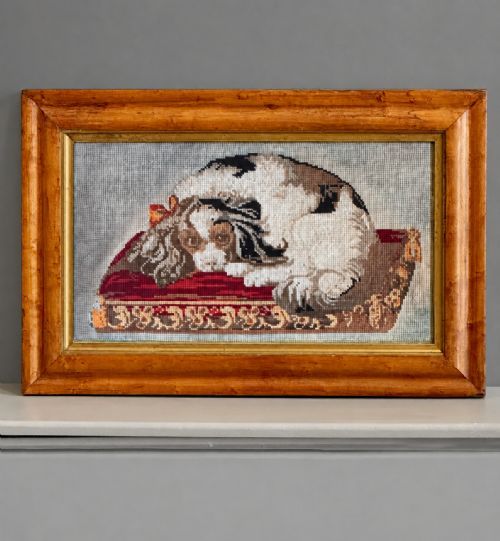
King Charles spaniels and plushwork pheasants keep a watchful, stitched eye over centuries of domestic needlework.
Evaluating Quality
The integrity of the original frame and mount contributes significantly to the piece, particularly where burr maple or verre églomisé surrounds the textile. Condition depends upon the preservation of the silk or wool ground, minimising fading and fabric degradation over centuries.
Stevens of Coventry
The Framed Textile Picture Glossary
- Sampler
- A piece of needlework produced as a demonstration or test of skill in various stitches and alphabets. These often include dates, maker names, and pious verses.
- Berlin Work
- A type of needlepoint embroidery popular in the nineteenth century using brightly coloured wool worked onto a canvas grid from printed pattern charts.
- Stumpwork
- A raised embroidery style popular in the seventeenth century featuring padded figures and elements built up over wooden moulds or wire.
- Verre Églomisé
- A process of applying gold or silver leaf to glass and engraving designs into it, often used for decorative borders on historical picture frames.
- Gros-point
- A coarse needlepoint stitch executed on canvas, commonly used for historical tapestries and pictorial woolwork panels.
Framed Textile Picture: Frequently Asked Questions
How do I clean a framed textile picture?
Cleaning requires dusting the exterior wooden or gilt frame with a dry cloth while avoiding any moisture near the glass or interior textile.
Opening the sealed frame to clean the interior risks damaging fragile historic silk and wool fibres and should be left to professional conservators.
Where should I hang a silk picture?
These works require interior walls away from direct sunlight, which causes silk floss and dyed wools to fade rapidly.
Stable room temperatures and low humidity protect the organic textile fibres and prevent warping in the antique wooden frames.
How do I date a needlework picture?
Dating relies on stylistic clues within the clothing, hair styles, and framing materials, alongside stitched dates found on samplers.
Burr maple frames, verre églomisé glass, and hand-painted silk components typically point towards the Georgian and Regency periods.
What is the difference between tapestry and needlework?
Tapestries are woven on a loom where the design is integrated directly into the fabric structure during the weaving process itself.
Needlework involves stitching thread through an existing woven canvas, linen, or wool ground using a needle after the fabric is manufactured.