


Framed Sheep Artwork
Framed sheep artwork comprises pastoral oil paintings and watercolours depicting flocks in landscapes, prized for bringing nineteenth and early twentieth-century rural calm into domestic interiors.
Framed Sheep Artwork
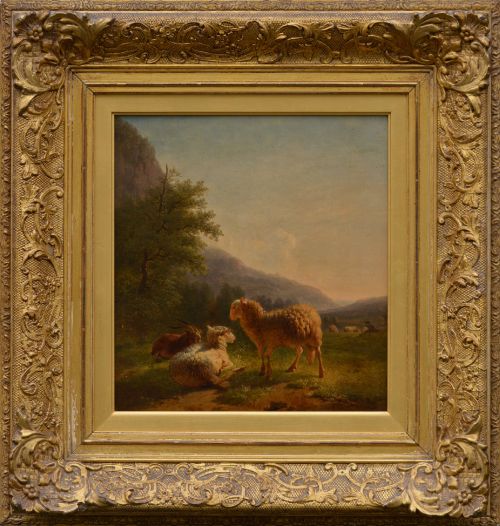
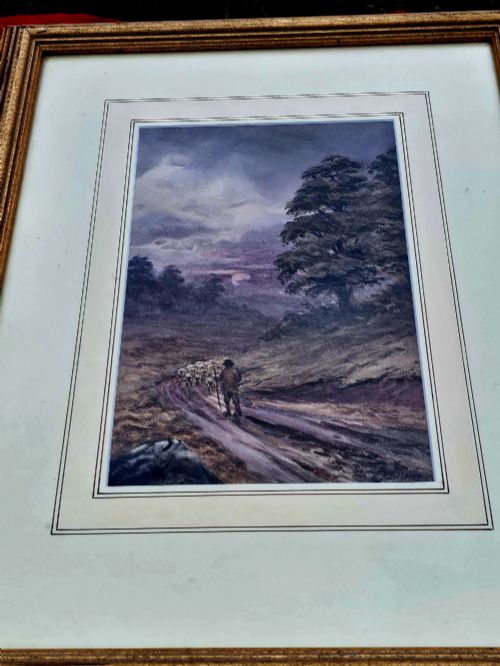
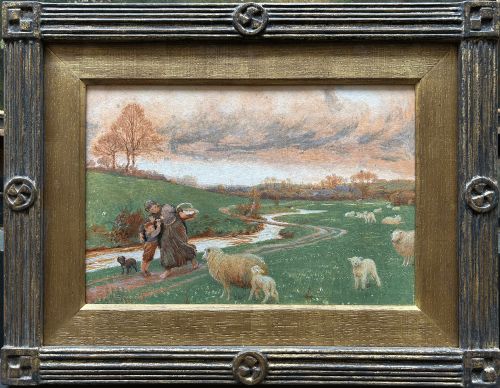
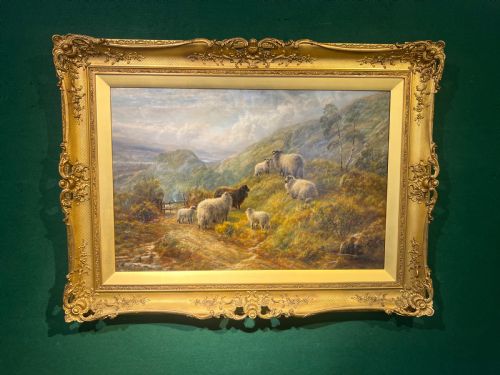
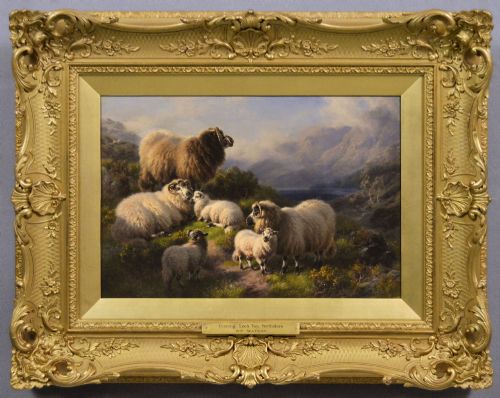
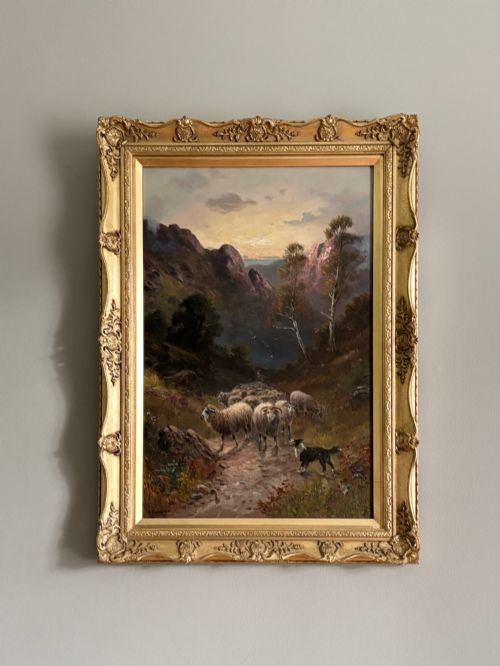
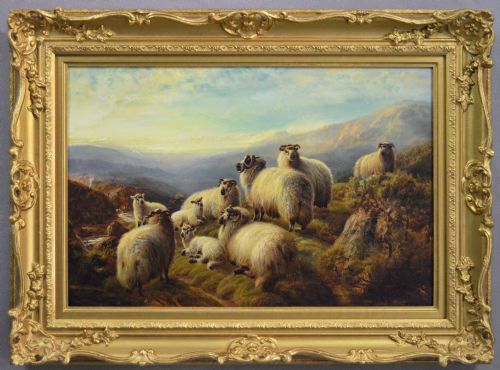
Framed sheep artwork captures pastoral scenes, rural landscapes, and animal portraits across the nineteenth and early twentieth centuries. These pieces typically present sheep grazing in moorlands, navigating country lanes, or sheltering in barns.
The most frequent examples on this page are oil paintings on canvas and framed watercolours originating from the Victorian and Edwardian periods. Artists of these eras focused on the quiet rhythm of farming life, often setting flocks against recognizable British and European scenery.
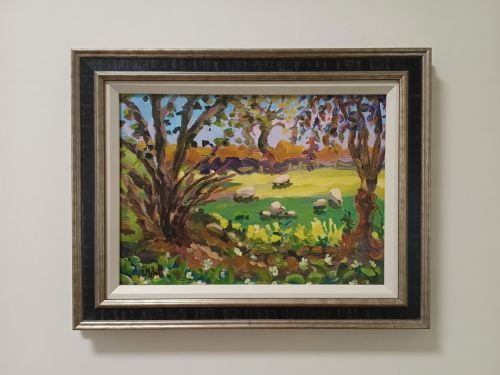
Subjects range from individual studies of sheep and shepherds to expansive pastoral landscapes featuring Highland cattle and horses alongside the flock. Works vary from detailed realism to looser impressionistic interpretations of the countryside.
How they were made
Painters used oil on canvas or watercolour on paper, mounted within wooden frames often finished with gesso and gilt. Canvas works built up rich textures for the fleece and landscape, while watercolours relied on transparent washes to capture atmospheric light.
Frames played an integral role in presentation, utilising moulded wood and gilt ornamentation to complement the pastoral subject matter. These materials preserve the artwork while defining the visual boundary of the rural scene.
Several sheep share their framed pastures with goats, cattle, and observant farm dogs keeping watch over the flock.
What varies in quality
Quality rests upon the artist's ability to render the anatomy and texture of the animals alongside the depth of the surrounding landscape. Master painters achieved a distinct sense of movement and natural light within the wool and pasture.
The handling of the medium distinguishes standard decorative pieces from fine art works, particularly in the precision of brushwork and the preservation of the original canvas or paper within its period frame.
Eugène Verboeckhoven·Thomas Sidney Cooper·Henry Charles Fox·Robert Watson·Owen Bowen·William Henry Mander
The Framed Sheep Artwork Glossary
- Oil on canvas
- A painting medium where pigments are suspended in drying oils and applied to a stretched cloth support. This technique allows for rich colour blending and textured brushwork.
- Watercolour
- A painting method where fine pigment powders are mixed with a water-soluble binder and applied to paper. It produces translucent washes suited to capturing shifting atmospheric conditions.
- Giltwood
- Wood carved and coated with a thin layer of gold leaf or metallic gilt. It provides a decorative and reflective border for traditional paintings.
- Gesso
- A paint mixture consisting of a neutral binder mixed with chalk, gypsum, or pigment. It is applied to wooden frames as a smooth base for subsequent gilding or painting.
- Pastoral
- A genre of art depicting the rural countryside, farms, and agricultural life with a focus on simplicity and calm. These scenes often feature shepherds, flocks, and rustic landscapes.
Framed Sheep Artwork: Frequently Asked Questions
What periods do these paintings come from?
The pieces span the nineteenth century through to the mid-twentieth century, encompassing Victorian and Edwardian eras. Many examples date specifically from the late 1800s and early 1900s.
During this time, pastoral subjects enjoyed immense popularity among collectors who sought idealized or realistic depictions of rural life.
How should I hang and light these pieces?
Oil paintings and watercolours require placement away from direct sunlight to prevent the fading of pigments and degradation of paper. Stable indoor humidity protects both the canvas and the original wooden frames.
Subtle picture lights or ambient room illumination help highlight the brushwork without exposing the materials to damaging heat.
Are these artworks signed by the artists?
Many works bear the original signatures or monograms of the painters who created them. Attribution is further supported by historical records and stylistic hallmarks associated with specific regional schools.
Unsigned pieces are often attributed to followers or circles of prominent nineteenth-century animal and landscape painters based on technique and composition.
What subjects accompany the sheep in these scenes?
Flocks are frequently depicted alongside shepherds, sheepdogs, and other farm animals such as cattle and horses. The settings range from open moorlands and coastal paths to snow-covered Scottish glens and country lanes.
These elements provide narrative context, capturing the daily routines of farming and herding across different regions.