

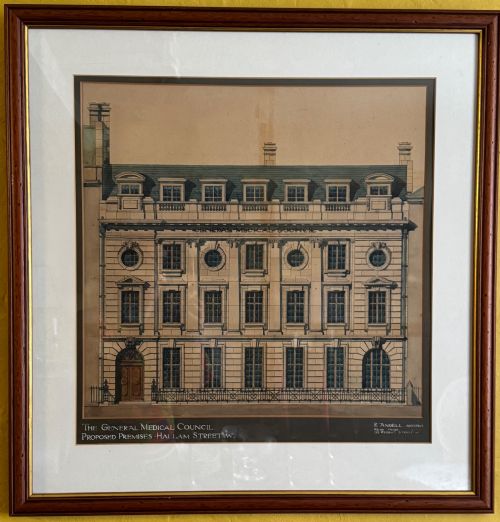
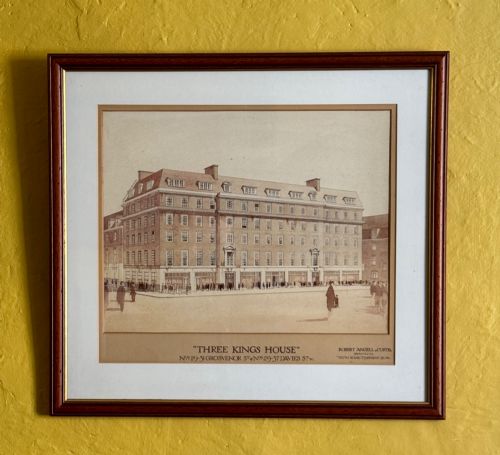
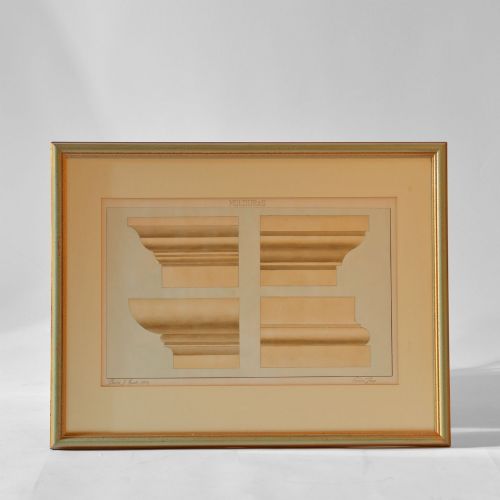
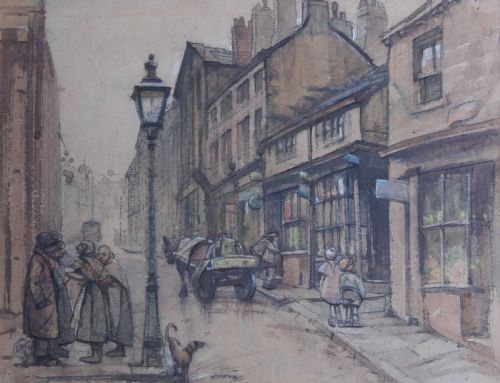



Framed Sepia Watercolour
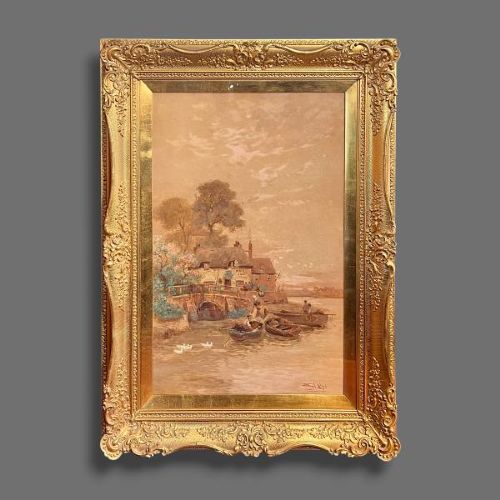
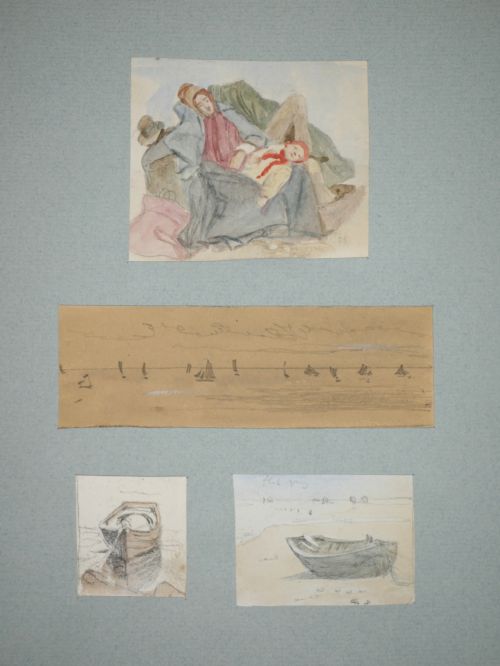
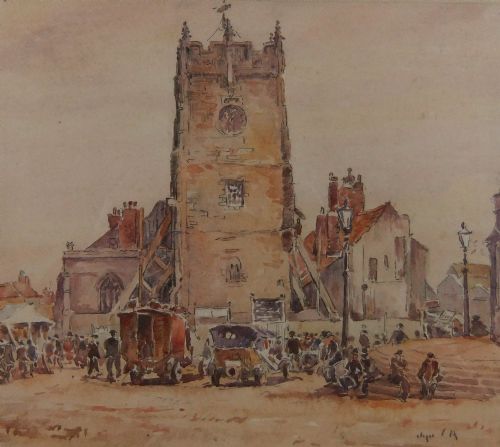
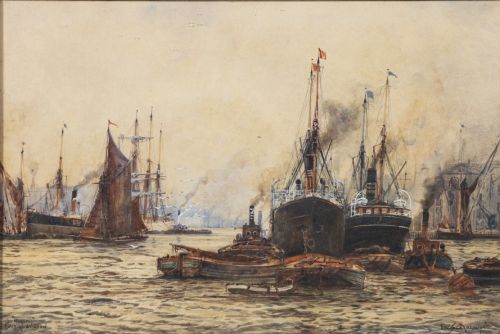
These framed sepia watercolour works bring monochrome depth and tonal warmth to a room through delicate washes on paper.
Framed Sepia Watercolour
A framed sepia watercolour presents monochrome or brown-toned pigment on paper, frequently reinforced with ink or pencil lines. These artworks capture architectural studies, marine views, and rural landscapes across various historical periods.
The pieces on this page span the eighteenth, nineteenth, and early twentieth centuries, encompassing Georgian, Victorian, Edwardian, and Regency eras. Forms range from intimate portraits and military sketches to large-scale maritime paintings and townscapes.
British and continental subjects dominate the selection, including identifiable locations from Yorkshire, London, and Venice. Many are mounted behind glass within period wood or giltwood frames.
Materials and Technique
Watercolour pigment combined with ink or pencil creates these monochrome compositions on paper surfaces. Artists applied fluid washes to build tone and shadow before enclosing the finished works behind protective glass.
Frames utilise wood, burr timber, or giltwood mouldings suited to Georgian, Victorian, and Edwardian aesthetic standards. Many examples combine pencil underdrawing with precise ink detailing beneath the translucent pigment.
Framed Sepia Watercolour Retail Price Guide 2026
Typical asking prices for framed sepia watercolour among the pieces listed under this phrase on Sellingantiques today, from the lower quarter to the upper quarter. They describe what is for sale here now, not the wider market.
Several artists clearly painted while caught in the rain, judging by the occasional stray water droplet frozen into the pigment wash.
Judging Quality
Quality rests upon the sureness of the initial draughtsmanship and the control of tone across the paper surface. A skilled hand achieves depth and atmosphere using minimal pigment density.
The integrity of the framing materials and the preservation of the paper support influence the overall standard. Works displaying precise architectural perspective or expressive brushwork demonstrate superior execution.
Cuthbert Crossley·Stuart Lloyd·Bruce Bairnsfather·James Smetham·Frank William Scarbrough·John Smith Atherton·Richard Harry Carter·J F Marie Huet Villiers·Francis Wheatley·J W Hogley·John Augustus Atkinson·George Arthur Fripp·Hercules Brabazon Brabazon·Samuel Palmer·Pio Panfili·W Tatton Winter·Amos Green·Snaffles·Thomas Clavering Alder·George Graham·Walter Emsley·Arthur Netherwood·Tom Dudley·Fred Lawson
The Framed Sepia Watercolour Glossary
- Sepia
- A brown pigment derived from the ink sac of the cuttlefish, widely utilised for monochromatic drawings and watercolours.
- Giltwood
- Timber carved and coated with a thin layer of gold leaf, commonly found on traditional picture frames.
- Wash
- A thin, fluid layer of watercolour pigment spread evenly across paper to create backgrounds or tonal gradients.
- Draughtsmanship
- The artist's skill in drawing and outlining forms prior to or alongside the application of colour.
Framed Sepia Watercolour: Frequently Asked Questions
What is a sepia watercolour?
A sepia watercolour is a painting executed primarily in shades of brown pigment, often combined with ink or pencil on paper.
These works rely on tonal gradation rather than a full spectrum of colour to define form, shadow, and light.
How should I hang these watercolours?
Paper watercolours require protection from direct sunlight to prevent the pigments and paper from fading over time.
Position them on interior walls away from moisture and direct heat sources to preserve the paper and frame.
How do I identify the period?
Period attribution relies upon framing styles, paper types, costume details, and signature characteristics associated with specific eras.
Georgian and Victorian works often exhibit specific mounting techniques and handwriting styles on the reverse or margin.