





Framed Schoolgirl Sampler
A framed schoolgirl sampler records young hands practising alphabets, maps and verses in silk and wool on linen.
Framed Schoolgirl Sampler
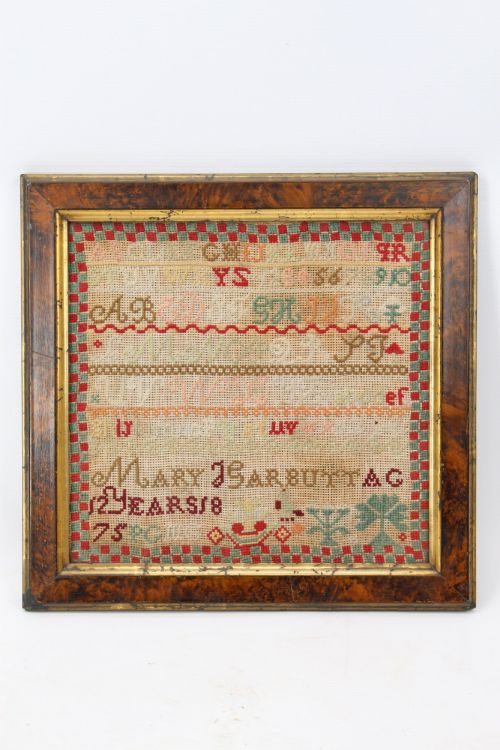
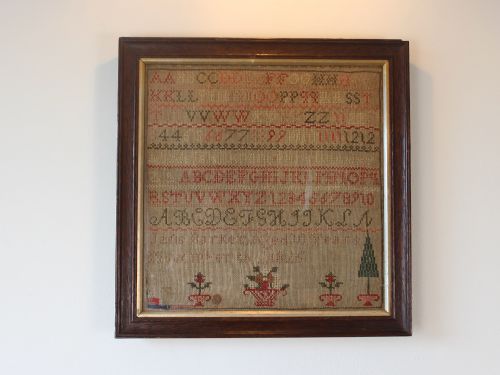
A framed schoolgirl sampler is a piece of textile art worked by a young girl, most often displaying alphabets, numbers, names and sometimes maps or school scenes. These needlework samplers survive from the eighteenth and nineteenth centuries, spanning the Georgian, Regency, William IV and Victorian eras.
Most examples found here date from the nineteenth century, including specific dates ranging from 1811 to 1875, alongside pieces attributed broadly to the eighteenth and nineteenth centuries. Makers frequently recorded their age, such as twelve years old, alongside their names and locations like Oswestry National School.
The format usually involves hand-stitched silk thread or wool worked onto a linen ground, preserved behind glass within a wooden frame. Forms include standard needlework samplers, alphabet panels and map needlepoint, all categorized as textile wall art.
Materials and technique
Makers constructed these textile pieces using silk thread, wool and standard thread stitched directly onto a woven linen ground. Young girls utilised various needlepoint stitches to form letters, numbers, borders and pictorial motifs such as alphabets and maps.
Completed needlework panels were mounted into wooden frames and protected behind glass to preserve the delicate textile fibres. This framing method guards the wool, silk and linen against dust and handling damage while displaying the wall art.
Framed Schoolgirl Sampler Retail Price Guide 2026
Typical asking prices for framed schoolgirl sampler among the pieces listed under this phrase on Sellingantiques today, from the lower quarter to the upper quarter. They describe what is for sale here now, not the wider market.
Listings span the eighteenth and nineteenth centuries, utilising linen, wool, silk thread and wood across Georgian and Victorian styles.
Judging quality
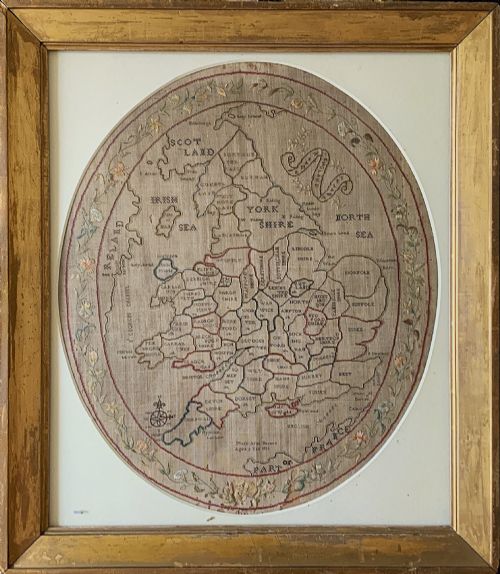
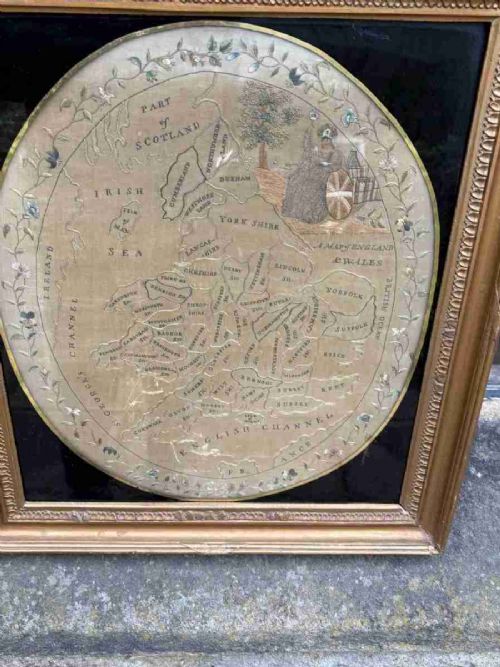
Quality rests upon the regularity of the stitching, the complexity of the design, and the survival of the original linen and threads. Pieces that incorporate detailed cartography, such as a map of England and Wales, or comprehensive alphabet and pictorial work demand greater technical skill than basic lettering.
Condition and legibility distinguish examples, with clear lettering, stable silk and wool threads, and minimal fading separating superior pieces. The presence of legible maker details, dates and school origins enhances the historical weight of the textile.
The Framed Schoolgirl Sampler Glossary
- Sampler
- A piece of needlework produced to demonstrate proficiency in various stitches and patterns. These historic panels often record the maker's name, age and date.
- Needlepoint
- A type of canvas or linen work where yarn or thread is stitched through the mesh to cover the ground entirely. It forms dense, durable pictorial or geometric surfaces.
- Alphabet sampler
- A specific needlework form dominated by rows of letters and numbers. Young makers used these to practice lettering before attempting complex verses or maps.
- Linen
- A strong fabric woven from flax fibres that served as the primary foundation for historic needlework. Its even weave allowed precise counting of threads for stitching.
- Map sampler
- An advanced geographical needlework project depicting counties, countries or regions. Examples from the Georgian period often illustrate England and Wales.
Framed Schoolgirl Sampler: Frequently Asked Questions
What ages were the makers?
Makers were typically young girls, often around eleven or twelve years old, working under instruction at home or in establishments like national schools.
Their stitched panels record these ages alongside names and dates to document their progress and domestic education.
How should I hang them?
Display these framed textiles away from direct sunlight to prevent the silk threads, wool and linen from fading and weakening over time.
Keep them in rooms with stable humidity levels to protect the historic wooden frames and the fragile textiles behind the glass.
Are all pieces dated?
Many examples include specific years stitched directly into the linen, ranging from the early nineteenth century up to the eighteen-seventies.
Others lack an explicit date but can be attributed to the Georgian or Victorian periods through the style of the lettering, framing and materials used.
What subjects besides alphabets appear?
Makers stitched maps, such as geographical representations of England and Wales, alongside names, dates and institutional titles like Oswestry National School.
Some pieces include deliberate stitching errors or playful alphabet exercises that reflect the individual child's hand at work.