


Framed Profile Paper Art
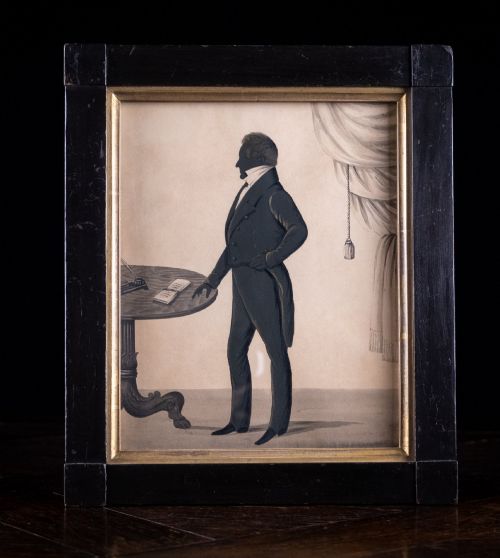
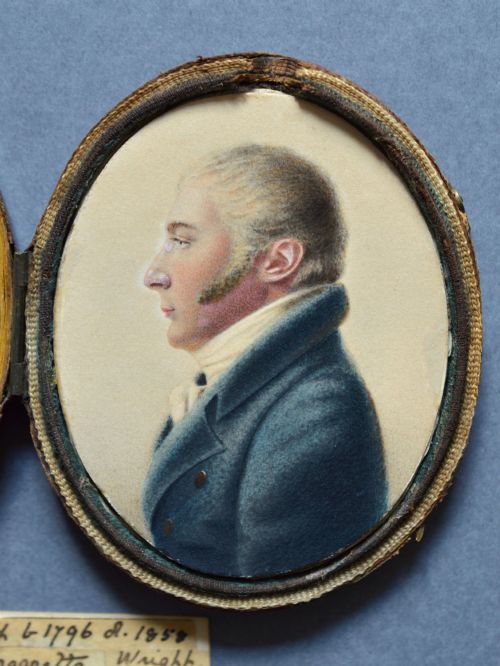
Framed profile paper art captures the shadow likeness and painted profile of sitters from past centuries, offering direct intimacy with Regency and Victorian faces.
Framed Profile Paper Art
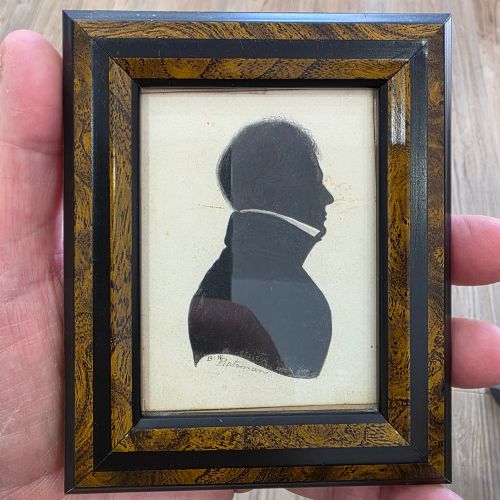
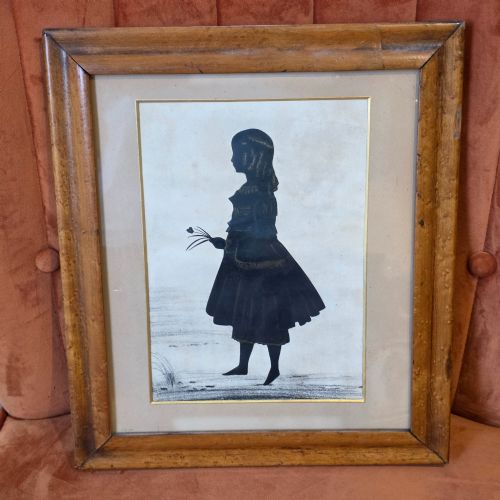
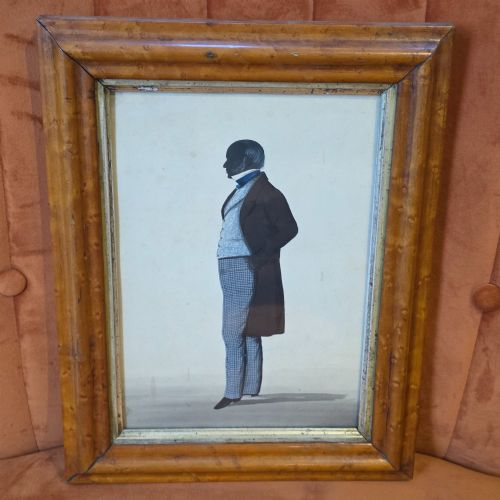
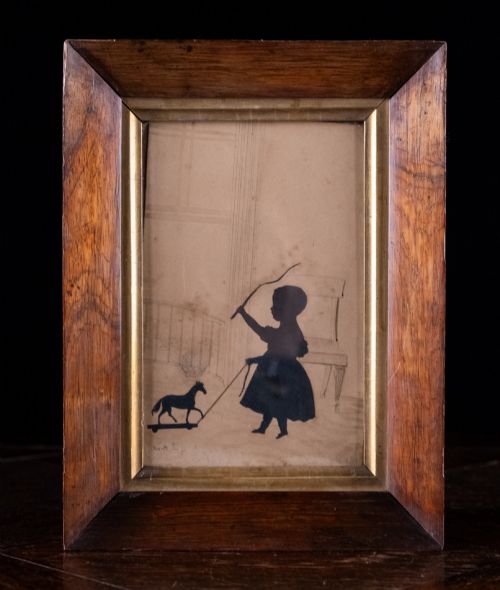
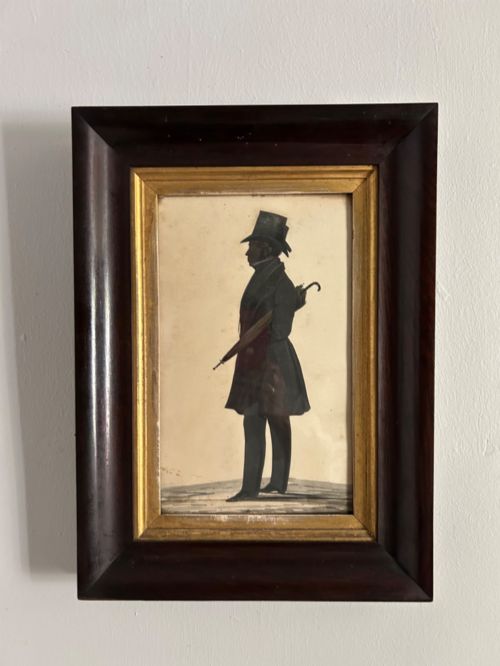
The version most commonly met on this page is the nineteenth-century silhouette, often showing full-length or bust-length figures executed in black paper, ink, and occasional gilding. Such works frequently arrive in period maple or ebonised wood frames with original glass.
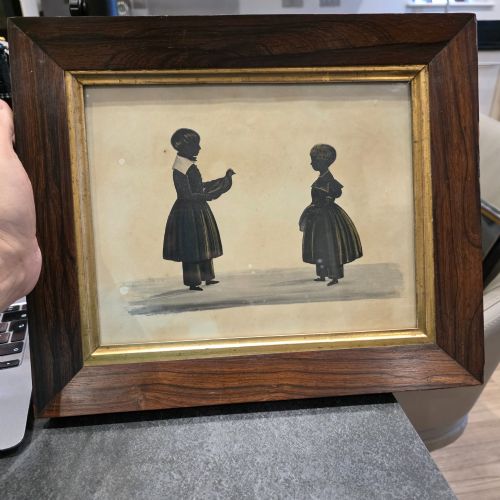
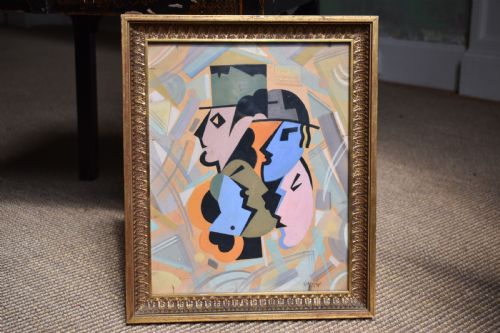
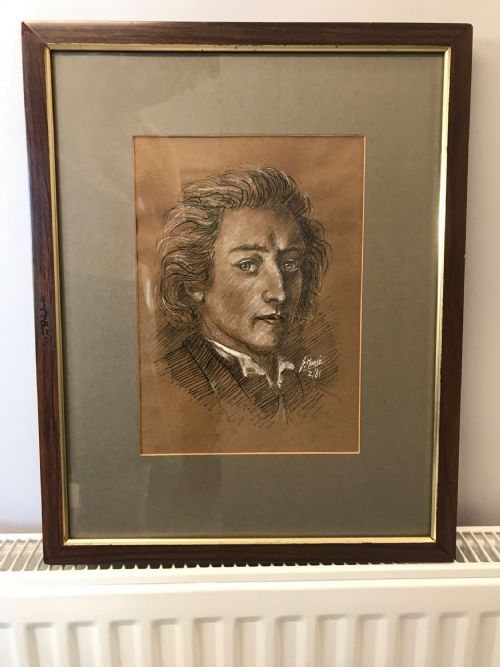
Beyond simple bust profiles, the selection encompasses conversation pieces showing multiple figures with animals, alongside watercolour portraits and pen and ink studies. These varied formats provide a comprehensive view of historical portraiture preserved behind glass.
Materials and construction methods
Frames play an integral part in the construction, utilising maple, ebony, and moulded wood to protect the delicate paper work within. Glazing helps prevent dust and moisture from damaging the ink, charcoal, and watercolours used across the various centuries represented.
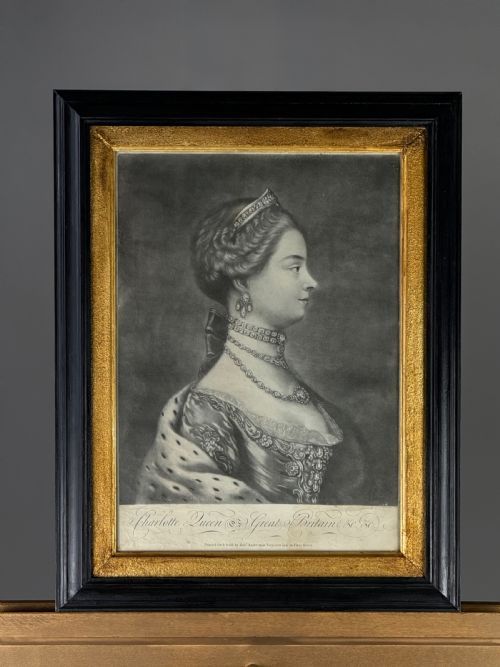
Several profiles preserve the likenesses of household pets and famous historical figures, including a dog and a royal mistress.
Judging quality in profile art
Quality rests upon the precision of the hand-cutting and the finesse of any added ink or watercolour detailing, where confident lines distinguish accomplished artists from amateur efforts. The expression and posture of the sitter must convey distinct character rather than stiff uniformity.
The preservation of the original framing, glass, and backing paper greatly influences the standing of a piece. Intact signatures, period inscriptions, and documented studio stamps provide historical weight that elevates certain works above unsigned examples.
Thomas John Horsley·James McArdell·Jeremiah Meyer·Augustin Edouart·Frederick Frith·George Atkinson·John Smith of Edinburgh·Nathaniel Bermingham·John Duncan Fergusson
The Framed Profile Paper Art Glossary
- Silhouette
- A portrait representation showing the profile of a subject, typically filled in solidly with dark colour or cut from paper. This form gained immense popularity during the eighteenth and nineteenth centuries before photography.
- Cut-paper
- An artistic technique involving the manual snipping of paper to create intricate pictorial or portrait designs. Skilled practitioners achieved remarkable likenesses without the aid of pencil sketches.
- Gilded silhouette
- A profile portrait enhanced with applied gold leaf or metallic paint to delineate hair ornaments, buttons, or costume trim. This technique added decorative richness to otherwise stark black profiles.
- Conversation piece
- An informal group portrait depicting family members or associates engaged in a shared activity, often rendered in silhouette. These domestic scenes frequently include children and family pets.
- Ebonised frame
- Wood finished to resemble ebony, frequently used to house nineteenth-century profile art. The dark border creates a high-contrast boundary that accentuates the light background of the portrait.
Framed Profile Paper Art: Frequently Asked Questions
How do I date an old silhouette?
Dating relies primarily on the style of dress, hair styling, and bonnet shapes worn by the sitter, which shifted rapidly across the Georgian and Victorian eras. Frame types and backing papers also offer reliable clues to the decade of production.
Makers' stamps, trade labels pasted to the reverse, and occasional handwritten inscriptions provide definitive dates and workshop locations for many surviving pieces.
Where should I hang profile art?
These intimate works require placement away from direct sunlight to prevent the fading of delicate watercolours, inks, and coloured papers. Small groupings work effectively on narrow wall spaces, stairwells, or paired beside larger mirrors.
Because original glasses and frames are fragile, select stable interior walls where temperature and humidity remain relatively constant throughout the year.
What is a conversation piece silhouette?
A conversation piece depicts multiple people and often animals interacting in a domestic or outdoor setting rather than posing for a standard single bust. These complex compositions show family groups at leisure, telling a visual story of daily life.
Such multi-figure works required exceptional skill in cutting and arranging numerous individual paper profiles within a single framed composition.
How do cut paper and painted silhouettes differ?
Cut paper silhouettes involve physically snipping the profile from dark paper and mounting it against a light background, creating crisp physical edges. Painted versions use black ink, pigment, or watercolour applied directly onto card, paper, or plaster.
Close inspection under the glass usually reveals whether the profile possesses physical thickness and shadow or lies completely flat against the surface.