

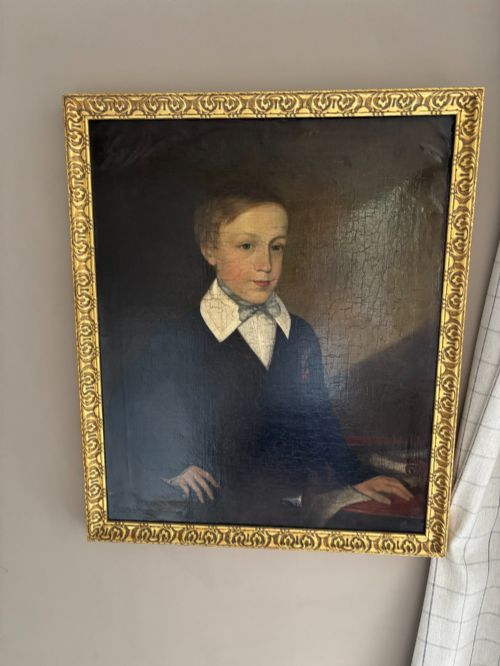

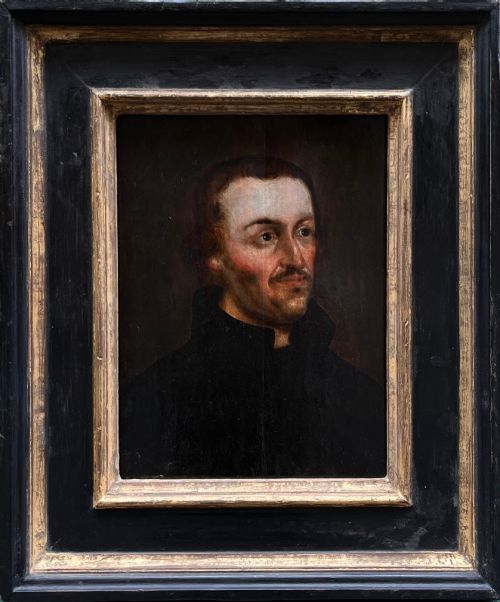

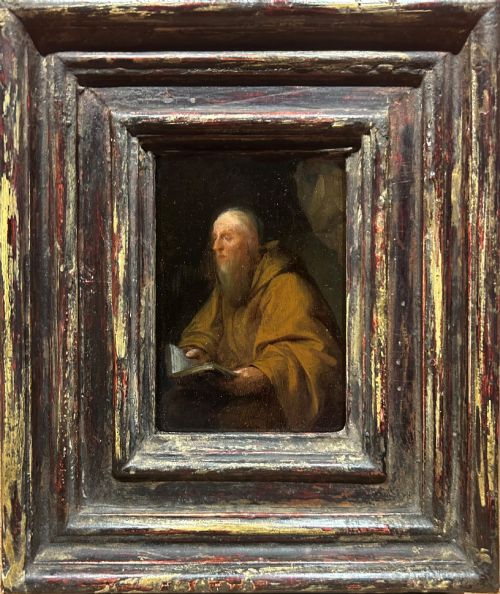

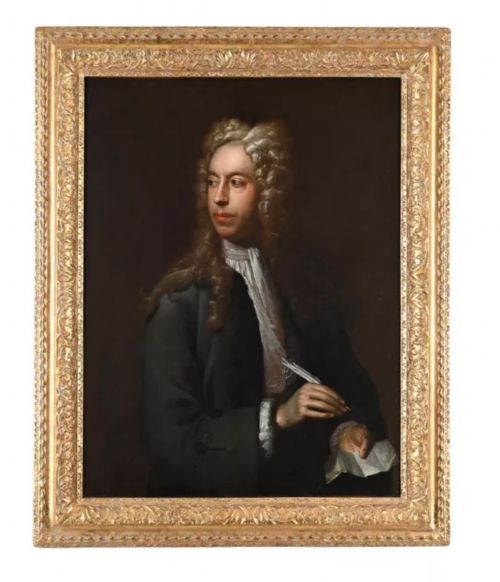


Framed Portrait of Scholars
A framed portrait of scholars captures thinkers, theologians, and readers in oil on canvas or copper, preserved within period frames.
Framed Portrait of Scholars
When you search for a framed portrait of scholars, you encounter historical oil paintings depicting thinkers, physicians, theologians, and readers. These works capture learned figures surrounded by study materials such as books, scrolls, and bookshelves.
The pieces on this page span several centuries, reaching from the seventeenth century through the nineteenth century to the early twentieth century. European schools including Dutch, German, Italian, and Spanish traditions dominate the selection, alongside British works.
Subjects range from specific historical figures like Martin Luther and Philip Melanchthon to anonymous medical doctors, hermits, and gentlemen scholars. Most examples present the sitter in three-quarter or bust-length format, often with dark, atmospheric backgrounds that focus attention on the face and hands.
What varies in quality
The preservation of the original paint layer and the condition of the canvas affect the overall integrity of the piece. Retaining an authentic period frame matching the age of the canvas enhances the historical cohesion of the object.
Framed Portrait of Scholars Retail Price Guide 2026
Typical asking prices for framed portrait of scholars among the pieces listed under this phrase on Sellingantiques today, from the lower quarter to the upper quarter. They describe what is for sale here now, not the wider market.
The selection includes European schools from Dutch, German, Italian, and Spanish traditions alongside British portraiture.
Jan van Staveren·Michael Dahl·John Watkins Chapman·John Scougall·James Ward
The Framed Portrait of Scholars Glossary
- Oil on canvas
- Pigment suspended in a drying oil applied to a woven fabric support stretched over a wooden frame. This method became the standard medium for European portraiture from the sixteenth century onward.
- Giltwood
- Timber carved and coated with a thin layer of gold leaf or metal powder over a prepared gesso ground. It provides a reflective, ornate border for formal historical paintings.
- School
- A group of artists working in a particular region, period, or under the direct influence of a master. Listings often attribute unsigned works to a specific European school when exact authorship remains unverified.
- Attributed to
- A term used by dealers and specialists when a work shows the style of a known artist but lacks definitive signature or documentation. It indicates strong stylistic parallels with a named painter.
Framed Portrait of Scholars: Frequently Asked Questions
How do I date a framed portrait of scholars?
Dating relies on stylistic evidence, costume details, and framing materials. Portrait subjects often wear clothing typical of specific decades, while painting techniques evolve from seventeenth-century dark grounds to brighter nineteenth-century palettes.
Examining the canvas preparation, stretcher construction, and the construction of the wooden frame provides further clues to the period of creation.
What subjects appear in these portraits?
The subjects include theologians, physicians, hermits, and gentlemen scholars engaged in reading or contemplation. Many are depicted alongside objects of learning such as books, scrolls, and shelves.
Some portray identified historical reformers and clergy, while others represent anonymous scholars intended to evoke academic or intellectual virtue.
Are these paintings signed by the artist?
Many historical portraits from earlier centuries remain unsigned and are instead attributed to specific regional schools or followers of master painters. Signatures, when present, may appear subtly within the shadows or along the edge of a book or table.
Dealers attribute unsigned works based on comparative brushwork, palette choices, and documentary research.
How should I care for an antique oil painting?
Keep oil paintings away from direct sunlight and steady fluctuations in temperature and humidity to prevent cracking of the paint and warping of the wood support. Dust the surface gently with a soft, dry brush without applying pressure.
Avoid using water, chemical cleaners, or liquid solvents on either the canvas or the giltwood frame.