
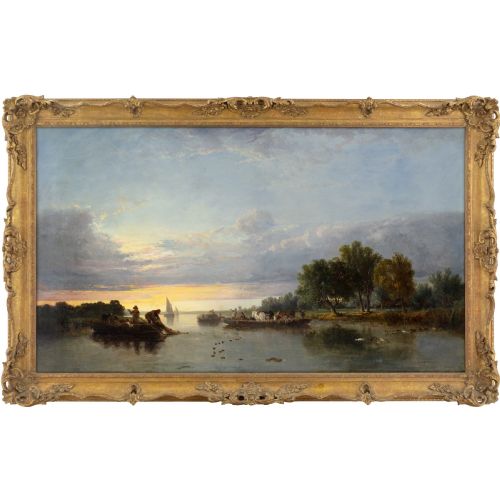
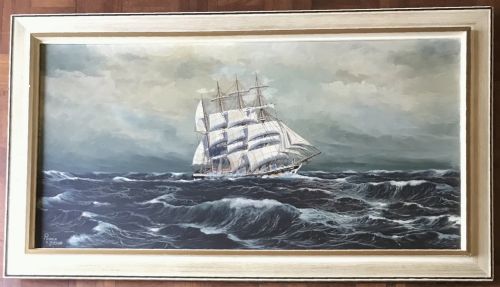
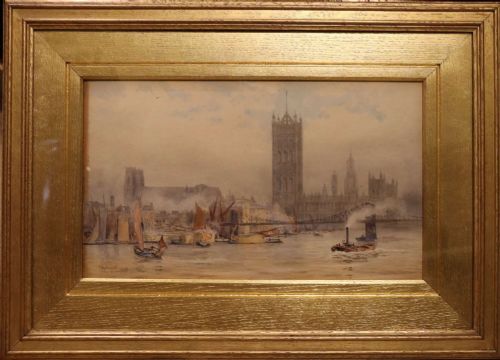
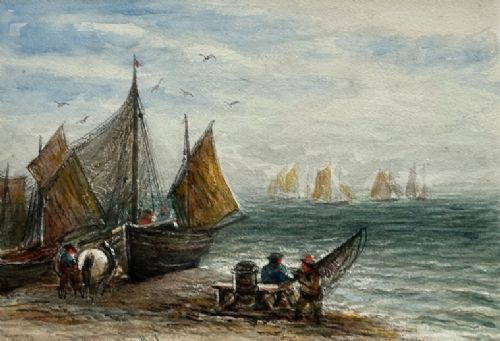




Framed Maritime Landscape Artwork
Framed maritime landscape artwork captures coastal views, bustling harbours and open seas preserved across centuries of painting.
Framed Maritime Landscape Artwork
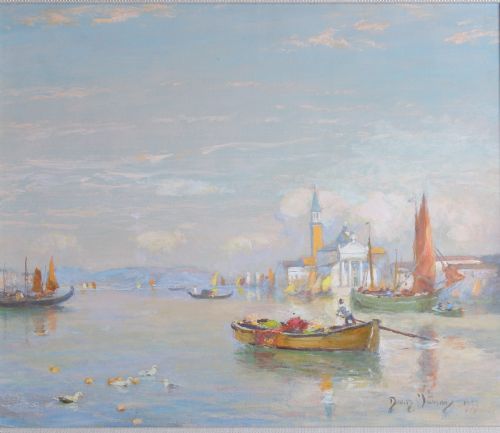
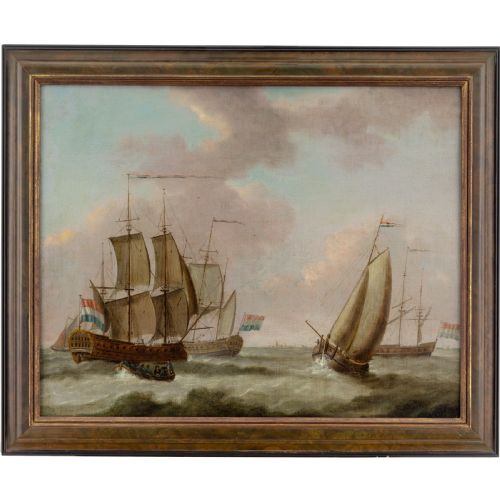
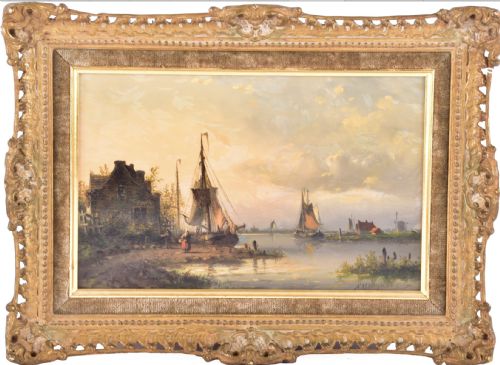
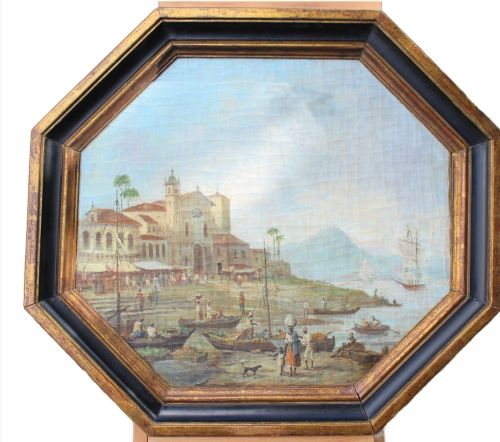
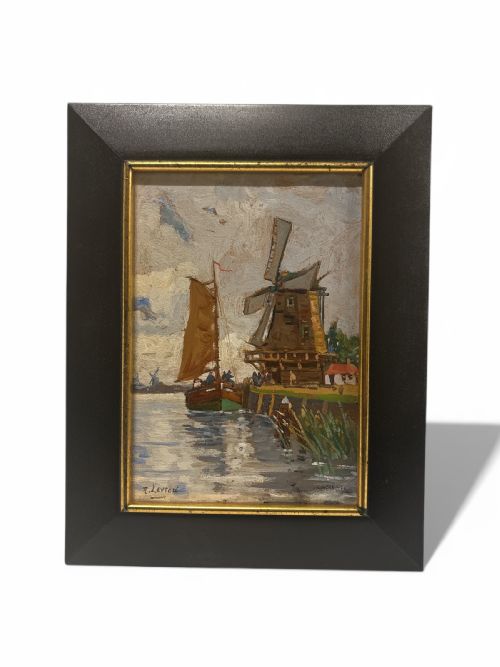
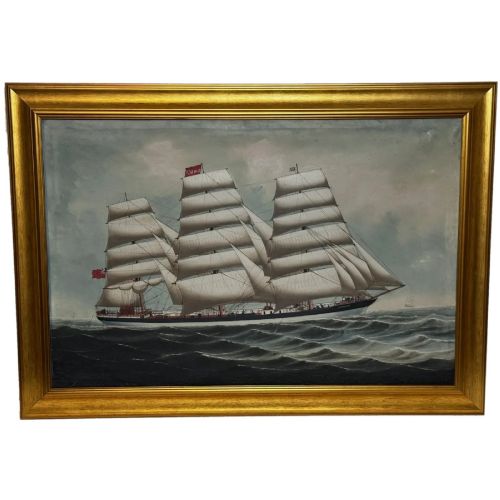
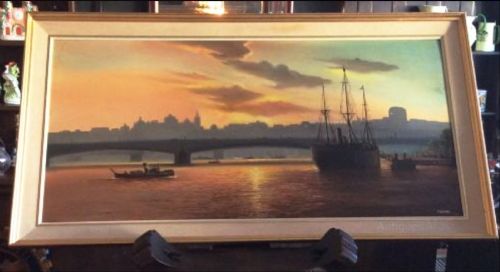
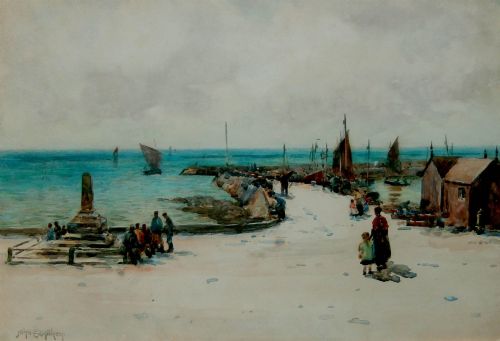
Framed maritime landscape artwork comprises paintings and watercolours depicting coastal vistas, fishing boats, shipping ports and open waters. The selections here span from the early nineteenth century through to the mid-twentieth century, capturing sea views from British shores, European rivers and international harbours.
Buyers will most frequently encounter nineteenth-century canvases and Edwardian watercolours housed in traditional gilt wood frames. These pieces range from intimate coastal studies to expansive panoramic scenes of the Thames and bustling fishing ports like St Ives and Whitby.
How they were made
Artists primarily applied oil paint onto stretched canvas or wooden board, while others utilised watercolour on paper to capture translucent washes of sea and sky. Many works retain their original gilt wood frames, constructed to protect and complement the painted surface.
The technique relies on deft brushwork and tonal layering to render the movement of water, atmospheric light conditions and maritime architecture. Painters balanced fine details of rigging and vessels with broader strokes of coastal atmosphere.
What varies in quality
Quality rests in the handling of light and atmosphere, where superior works capture the kinetic energy of water and the changing conditions of coastal weather with conviction. Masterful composition and confident brushwork elevate a scene from a mere record of a place to a compelling visual study.
The integrity of the frame and the preservation of the paint surface also distinguish the works. Original gilt wood framing that suits the period enhances the presentation, whilst stable paint layers free from excessive retouching maintain the artist's original intent.
James Orrock·Reginald Arthur Borstel·Francis Moltino·John Wilson Carmichael·George Stanfield Walters
The Framed Maritime Landscape Artwork Glossary
- Watercolour
- A painting method where fine pigment is suspended in a water-based solution and applied to paper. It allows for delicate washes and luminous effects particularly suited to coastal skies and sea spray.
- Gilt wood
- Timber carved and coated with a thin layer of gold leaf or metallic gilt paint. This traditional framing material provides a reflective boundary that isolates and illuminates the painting within.
- Marine art
- Artistic representation of the sea, ships, beaches and coastal settlements. This genre encompasses historical naval engagements, quiet harbour moorings and open ocean vistas.
- Oil on canvas
- A technique utilising pigments bound with drying oils applied to a woven fabric support. This medium permits rich impasto, depth of colour and subtle blending.
- Seascape
- A pictorial representation of the sea, analogous to a landscape depicting inland scenery. It focuses primarily on coastal waters, tides and maritime weather.
Framed Maritime Landscape Artwork: Frequently Asked Questions
What periods do these maritime artworks cover?
The selections span from the early nineteenth century through to the mid-twentieth century, including Victorian, Edwardian and later modernist interpretations.
Pieces reflect shifts in painting styles across these decades, moving from traditional topographical accuracy towards freer impressionistic brushwork.
How should I hang and care for these pieces?
Keep framed works away from direct sunlight and damp environments to protect both the paper or canvas and the original gilt wood frames.
Ensure stable wall fixings that support the weight of heavier nineteenth-century wooden frames and large canvases.
What is the difference between an oil and a watercolour?
Oil paintings utilise pigments bound in drying oil on canvas or board, offering rich textures and deep tones. Watercolours use water-soluble pigments on paper, creating translucent and luminous atmospheric effects.
Both mediums were utilised extensively across the nineteenth and twentieth centuries to capture maritime scenes.