






Framed Lion Artwork
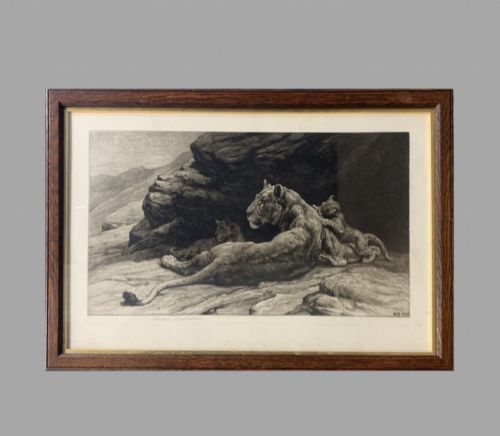
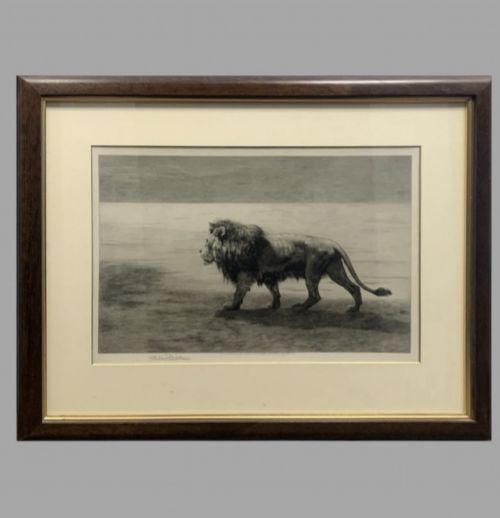
Framed lion artwork brings the majesty of the king of beasts into a room through Victorian academic studies, mid-century portraits, and detailed etchings.
Framed Lion Artwork
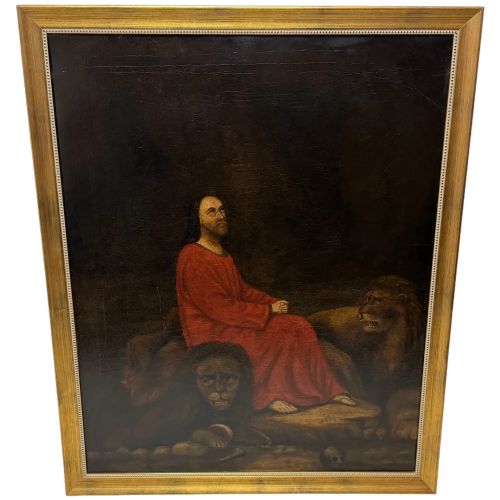
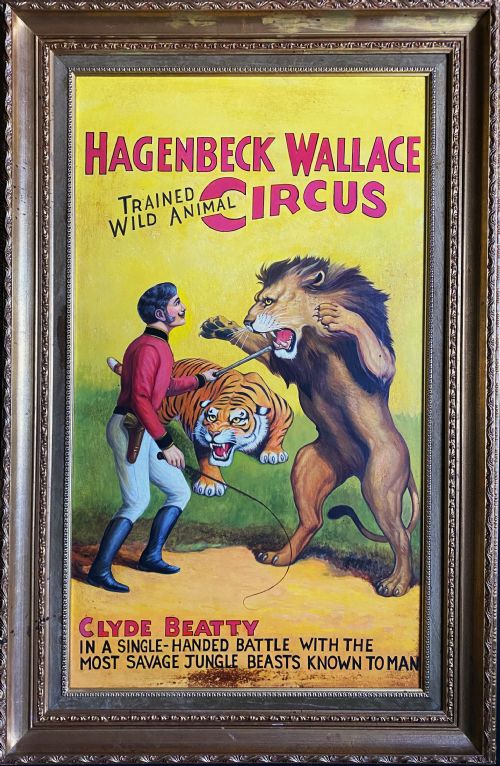
When you search for framed lion artwork, you encounter a striking array of depictions ranging from Victorian animalier paintings to mid-century modern illustrations. These pieces capture the raw power and silent grace of big cats through various artistic interpretations across different eras.
You are most likely to meet 19th-century works on this page, particularly Victorian animalier pieces and detailed etchings on vellum by notable printmakers. Mid-century portraits and oil paintings also feature prominently, offering a contrasting aesthetic from the 1950s and 1960s.
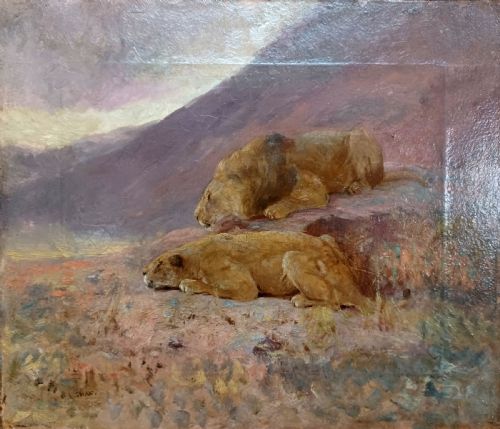
The subjects span biblical narratives, circus scenes, and dramatic wildlife studies showing lions stalking their prey at dusk. Each framed piece preserves a distinct historical approach to portraying these animals, whether through academic precision or atmospheric oil paint.
Materials and technique
Artists working on these pieces employed traditional mediums such as oil paint on canvas and delicate drawings on paper. Etchings on vellum required immense skill from printmakers, often producing signed artist proofs in limited editions.
The physical presentation relies on wood framing and glass protection, particularly for works on paper and vellum to ensure their longevity. Oil paintings on canvas provide texture and depth, utilising layered pigments to capture the lion's coat and expression.
Framed Lion Artwork Retail Price Guide 2026
Typical asking prices for framed lion artwork among the pieces listed under this phrase on Sellingantiques today, from the lower quarter to the upper quarter. They describe what is for sale here now, not the wider market.
Listings feature periods spanning from the 19th century through the 1960s, utilising wood, glass, canvas, paper, oil, and vellum.
Evaluating quality and execution
The distinction between ordinary and exceptional pieces lies in the anatomical precision and the artist's ability to convey movement and mood. Masterful brushwork in oil paintings or the crisp detail in an etching separates a routine study from a captivating portrait.
The condition of the medium, whether oil, canvas, paper, or vellum, influences the overall integrity of the piece. Well-preserved works retain their original vibrancy and structural framing, maintaining the visual impact intended by the creator.
Herbert Dicksee·Cuthbert Edmund Swan·John Macallan Swan·Geza Vastagh·John Frederick Tennant
The Framed Lion Artwork Glossary
- Animalier
- A style focusing on the realistic portrayal of animals. This genre gained immense popularity during the nineteenth century.
- Vellum
- A fine parchment made from calfskin, frequently utilised for high-quality etchings and sensitive drawings. It offers a smooth surface that holds fine ink details exceptionally well.
- Artist proof
- A trial impression of a print taken in the printmaking process to check the state of the work. These are typically retained by the artist or signed for special editions.
- Oil on canvas
- A painting technique using pigments bound with a medium of drying oil applied to stretched fabric. This combination allows for rich colour depth and blending.
Framed Lion Artwork: Frequently Asked Questions
How do I care for framed paper artwork?
Keep framed pieces out of direct sunlight to prevent the fading of canvas, paper, and delicate oil pigments over time.
Maintain a stable room temperature and low humidity to protect the wood frames and vellum from environmental warping.
What periods do these artworks cover?
The selection spans from the nineteenth century through the Edwardian era and into the mid-twentieth century. Victorian academic and animalier styles sit alongside 1950s and 1960s modernist interpretations.
Earlier pieces often focus on dramatic wildlife studies, while later works include striking portraits and illustrative pieces.
Are etchings different from oil paintings?
Etchings are printed impressions created by incising a design onto a metal plate, whereas oil paintings are hand-applied brushworks using pigmented oils.
Print editions on vellum offer meticulous linear detail, while canvas paintings showcase texture and layered colour.
How are these pieces typically displayed?
Most works arrive in period-appropriate wooden frames, sometimes protected behind glass depending on whether the medium is oil, paper, or vellum.
Hang them securely on walls with stable structural support, as larger oil paintings on canvas can carry significant weight.