

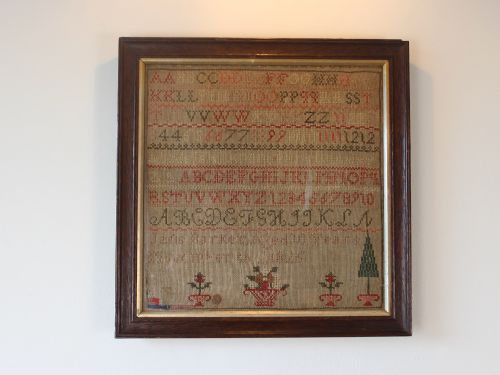
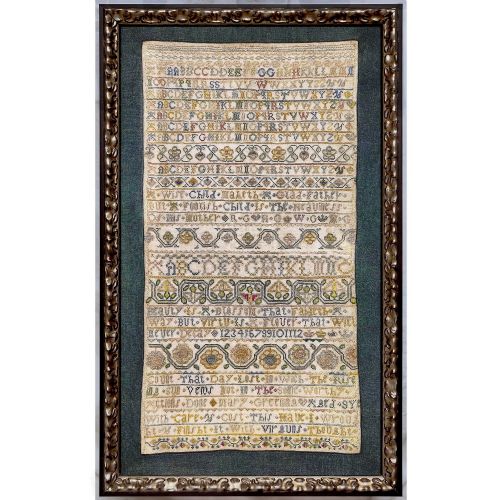
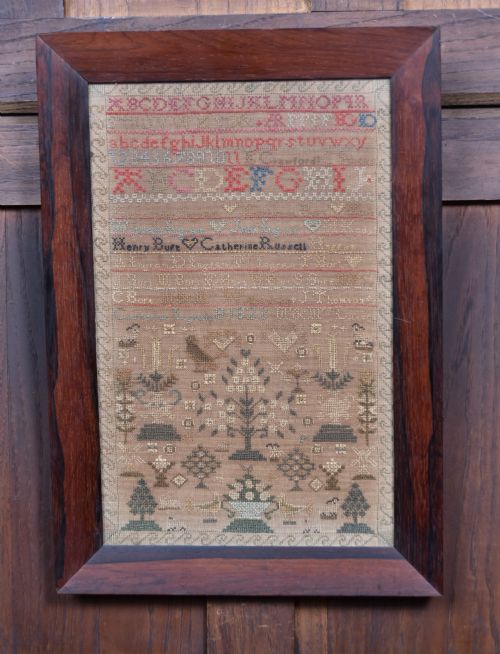


Framed Linen Needlework Sampler
These framed linen needlework sampler pieces bring centuries of domestic skill and verse into a room.
Framed Linen Needlework Sampler
A framed linen needlework sampler displays stitches practiced by young makers, often recording alphabets, maps, or moral verses.
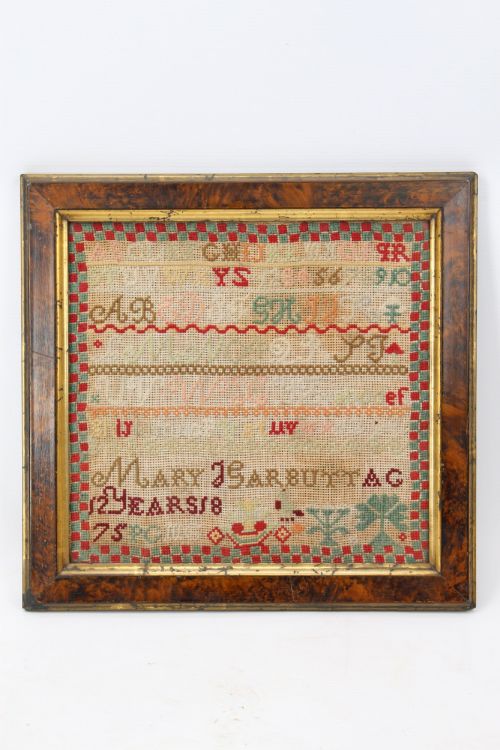
Most examples found here date from the Georgian and Victorian periods, carrying names, dates, and ages of the makers.
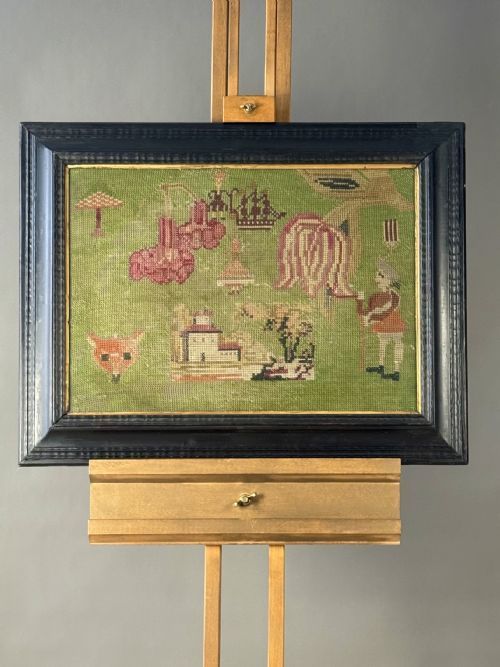
Formats range from simple linen panels worked in wool or silk thread to large educational maps and religious texts.
How They Were Made
Maker hands worked silk and wool thread onto a linen foundation, utilising varied stitches to build letters, figures, and borders.
Finished panels sit behind glass within wooden frames to protect fragile textile surfaces from dust and handling.
Materials recorded across these listings include linen, wool, silk thread, wood, and glass.
What Varies in Quality
Precision of execution and complexity of design separate standard alphabet exercises from ambitious map samplers or pictorial scenes.
Survival of bright thread colours and stability of the linen ground dictate the visual strength of the piece.
The Framed Linen Needlework Sampler Glossary
- Band sampler
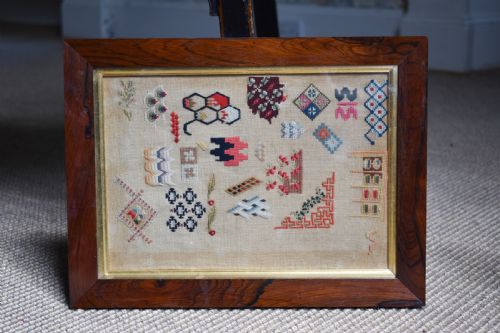
- A horizontal strip of diverse embroidery stitches worked by a maker to record patterns and techniques.
- Alphabet sampler
- A textile panel dedicated to practicing letter forms, numerals, and occasionally pious verses.
- Map sampler
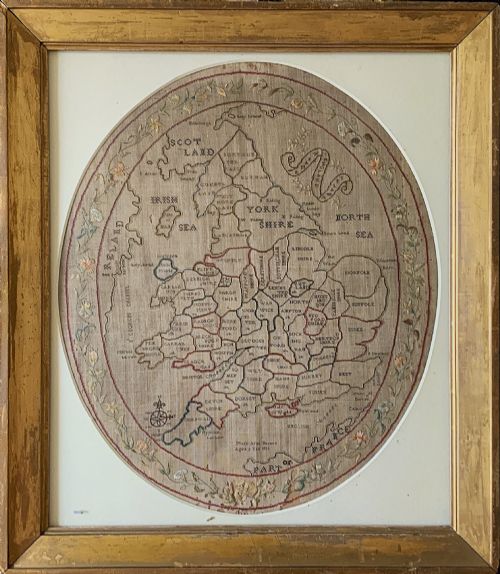
- An educational embroidery depicting geographical boundaries, often showing counties or countries like England and Wales.
- Needlepoint
- Stitches worked over a counted thread or canvas mesh foundation rather than flat embroidery.
- Silk floss
- Unspun or loosely twisted silk thread used to create lustrous highlights within a needlework panel.
Framed Linen Needlework Sampler: Frequently Asked Questions
How old are these samplers?
Most examples span the Georgian and Victorian eras, running from the early eighteenth century through to the late nineteenth century.
Dates are frequently stitched directly into the linen alongside the maker name and age.
Why did makers stitch them?
Young girls produced these panels to demonstrate competence in needlework, literacy, and moral instruction.
Schools and domestic tutors set these exercises to teach both scripture and technical stitch control.
How should I hang one?
Keep textile art away from direct sunlight to prevent silk and wool threads from fading against the linen ground.
Ensure the room maintains stable humidity to protect both the historic fabric and the wooden frame.
Are all pieces signed?
Many include the maker name, age, and completion date worked into the lower section of the composition.
Anonymous examples also appear, carrying only alphabets, motifs, or religious verses without personal details.