
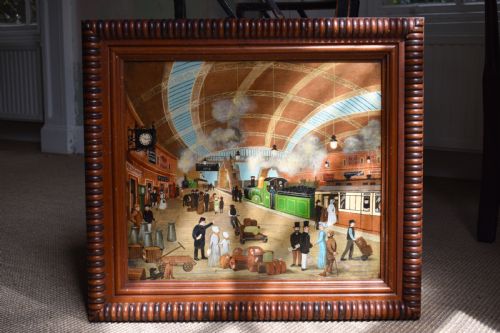
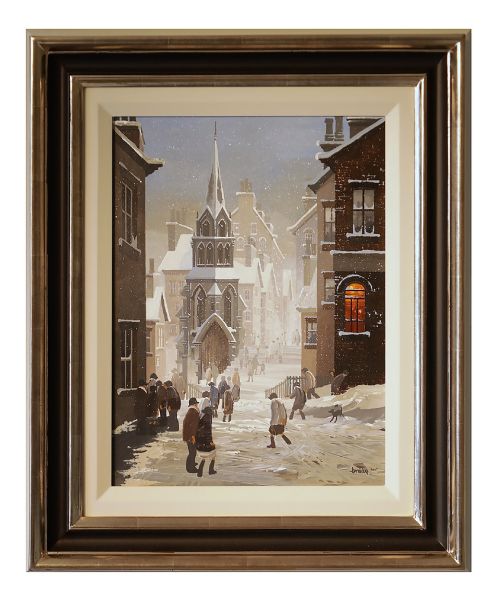
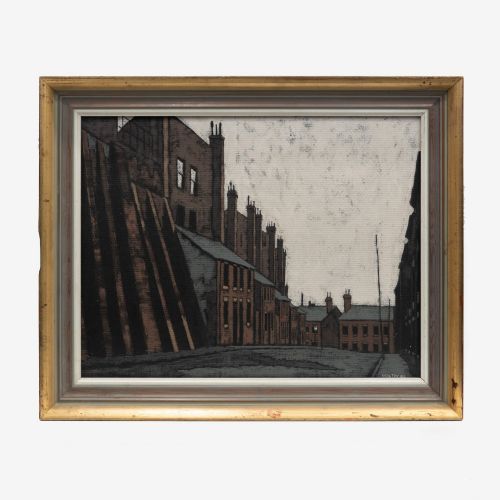


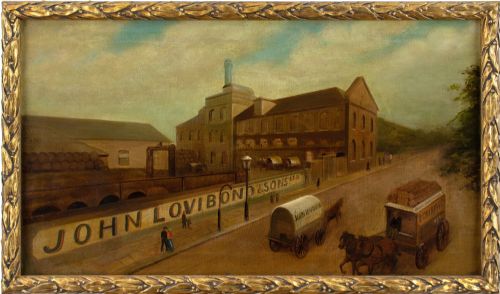


Framed Industrial Oil Painting
A framed industrial oil painting captures the grit and labour of past commerce, bringing raw civic history straight to your wall.
Framed Industrial Oil Painting
A framed industrial oil painting records the built environment, documenting factories, railways, shipyards and local tradesmen from the nineteenth century onwards. These works range from naive depictions of local works to deliberate modernist interpretations of urban expansion.
The pieces on this page span several decades, drawing heavily on British and European schools of painting from the nineteen-hundreds through to the nineteen-sixties. You will encounter scenes of heavy machinery, canals, railway stations and brewery yards rendered with varying degrees of realism.
Subjects often focus on the working life of specific regions, featuring blacksmiths, industrial estuaries and constructivist factory scenes. The accompanying frames, often made of wood, frequently complement the direct and unpretentious character of the canvases and boards they enclose.
Materials and methods
Artists painted these industrial subjects using oil paint applied to stretched canvas, wooden boards or panels. The medium allowed for both smooth, controlled rendering of architectural detail and heavy impasto to convey the texture of soot, water and masonry.
The works are typically housed in wooden frames, sometimes accented with gilt highlights, which serve to isolate the gritty urban subjects from domestic wall spaces. These surrounds range from simple mouldings to period frames contemporary with the execution of the painting.
A blacksmith immortalised in oil paint shares space with a transatlantic airliner and a bustling brewery yard.
Assessing quality and execution
Quality in these works rests upon the artist's command of tone, composition and atmosphere rather than the mere documentation of a factory or engine. Stronger pieces use light and shadow to articulate the scale of industrial structures and the dignity of manual labour.
The relationship between the painting and its wooden frame also influences the overall success of the piece. A well-matched frame respects the palette of the oil painting without overpowering the directness of the subject matter.
Brian Shields Braaq·Stuart Walton·David Shepherd·George R Havelka
The Framed Industrial Oil Painting Glossary
- Oil on canvas
- Pigment ground in drying oil and applied to a stretched woven fabric support. This combination provides a flexible yet durable surface favoured by artists for centuries.
- Oil on board
- Pigment applied to a rigid wooden panel or manufactured board rather than fabric. It offers a firm foundation that often indicates a smaller or more immediate study.
- Impasto
- Paint applied thickly to a canvas or board, standing out in relief from the surface. This technique creates a tangible texture that captures the heavy atmosphere of industrial scenes.
- Constructivism
- An artistic style originating in the early twentieth century that emphasises abstract structures and industrial forms. Works in this vein focus on geometric clarity and the shapes of modern machinery.
- Naive art
- Painting characterised by a childlike simplicity in perspective and detail, often produced by self-taught artists. These works prioritise direct narrative and local observation over academic rules.
Framed Industrial Oil Painting: Frequently Asked Questions
What subjects appear in these industrial paintings?
The works depict a range of heavy trades and urban infrastructure, including railway stations, breweries, smithies, factories and maritime shipping. Many capture specific regional landscapes associated with manufacturing and transport.
Artists focused on the physical reality of labour and commerce, recording structures like canal barges and industrial estuaries that shaped the modern landscape.
How do I date a framed industrial oil painting?
Dating relies on stylistic clues, clothing worn by figures, the types of machinery shown, and the framing materials used. Evidence from signatures and inscriptions also helps place works within specific decades from the nineteenth century to the mid-twentieth century.
Mid-century works often reflect modernist or constructivist approaches, whereas nineteenth-century pieces tend toward traditional realism and local documentation.
Are these paintings signed by the artists?
Several examples feature signatures or attributions to named painters, while others represent the work of anonymous regional schools. Signatures provide a direct link to known artists active within British and European traditions.
Unsigned works are frequently attributed through subject matter, technique, and stylistic comparison to documented periods such as the early twentieth-century English school.
How should I care for an oil painting on wood or canvas?
Protect the painting from direct sunlight and dramatic fluctuations in temperature or humidity, which can cause wood boards to warp and canvas to slacken. Keep the surface free of dust using a soft, dry brush without applying cleaning solutions.
Ensure the wooden frame remains stable and supports the painting properly without exerting undue pressure on the edges of the canvas or board.