




Framed Hunting Hound Canvas
These framed hunting hound canvas pieces capture the energetic spirit of traditional sporting art, bringing historic canine subjects directly into your room.
Framed Hunting Hound Canvas
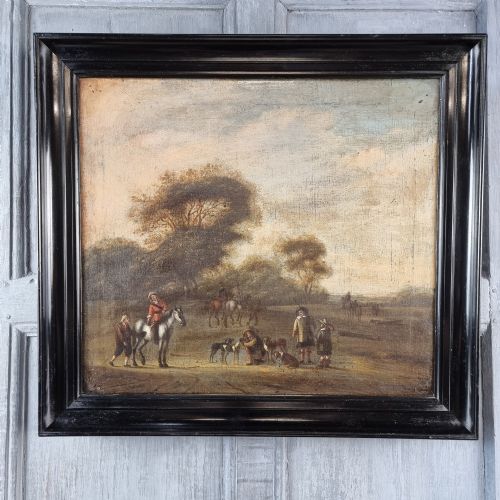
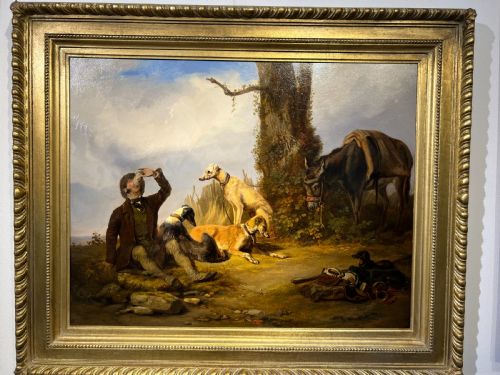
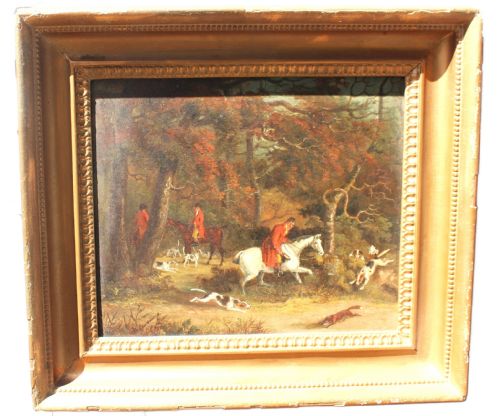
A framed hunting hound canvas presents traditional sporting art centred on dogs, huntsmen, and field sports. The selection relies heavily on nineteenth-century oil paintings, Victorian sporting scenes, and mid-century portraits of hounds.
Buyers encounter subjects ranging from solitary dog portraits to dynamic winter snow scenes and large foxhound compositions. These works draw heavily upon established British sporting traditions and continental European sporting styles.
The assortment spans from seventeenth-century landscapes to mid-century depictions, though nineteenth-century Victorian sporting art forms the core of what appears here.
How these artworks were produced
The primary medium involves oil paint applied directly to canvas or wood panels. Artists utilised oil on canvas to build rich animal textures and layered landscape backgrounds.
Framing is an integral component, with many pieces set within wooden and giltwood mouldings that complement the traditional character of the oil paintings.
The selection includes regional British sporting scenes alongside French nineteenth-century hunting compositions and Dutch Golden Age influences.
What distinguishes the quality of these paintings
Quality rests upon the artist's ability to render the anatomy and expression of the hounds with conviction. The handling of the surrounding landscape and the integration of the animals into the scene separate standard decorative works from accomplished fine art.
The preservation of the original oil paint layer and the condition of the canvas significantly influence the integrity of the piece. Surviving historical frames in gilt wood further elevate the standing of the work.
Sir Edwin Henry Landseer·George Wright·Colin Graeme Roe·Fannie Moody·Jules Chardigny·John Sanderson-Wells·Alfred Duke·Henri Schouten·Ludolf de Jongh·Heywood Hardy·Guillaume Urban Régamey·George Goodwin Kilburne·Henry Frederick Lucas-Lucas·Edward B Herberte
The Framed Hunting Hound Canvas Glossary
- Sporting Art
- A genre of painting that depicts rural pursuits, notably hunting, hounds, horses, and shooting scenes. This category forms the foundation of the current selection.
- Oil on Canvas
- A traditional painting technique where pigments suspended in oil are applied to a stretched woven fabric support. It allows for subtle blending and rich surface textures.
- Gilt Wood
- Carved timber treated with a thin layer of gold leaf or metallic gilt finish. It frequently frames nineteenth-century oil paintings to enhance their visual weight.
- Victorian Sporting
- Art produced during the nineteenth century under the reign of Queen Victoria that celebrates field sports, horses, and hounds.
Framed Hunting Hound Canvas: Frequently Asked Questions
What periods do these paintings come from?
The works span several centuries, with a strong concentration of pieces originating in the nineteenth century during the Victorian era. Other examples stretch back to the seventeenth century and extend forward into mid-century modern interpretations.
This chronological variety means buyers can find both early traditional compositions and later interpretations of classic sporting themes.
How should I hang an oil painting?
Hang these canvases on interior walls away from direct sunlight and excessive moisture to protect the oil paint and wood frames. Secure fixings suited to the weight of the canvas and the specific frame are essential.
Proper placement ensures the artwork remains stable and visible as a focal point within your room.
What subjects appear besides hounds?
While hounds dominate the selections, the paintings frequently include horses, huntsmen, stagecoaches, and winter landscape settings. Some works also incorporate broader rural views and tavern interiors.
These complementary elements provide narrative context to the central animal portraits.
How do I identify a Victorian sporting painting?
Look for specific stylistic markers such as detailed animal anatomy, traditional hunting pinks, and nineteenth-century canvas stretching techniques. Many pieces carry attribution to known animal and sporting artists of the period.
Examining the reverse of the canvas and the construction of the frame often yields additional clues about the date of creation.