




Framed Grand Tour Intaglios
Framed grand tour intaglios bring classical sculpture into domestic interiors through delicate miniature impressions mounted for display.
Framed Grand Tour Intaglios
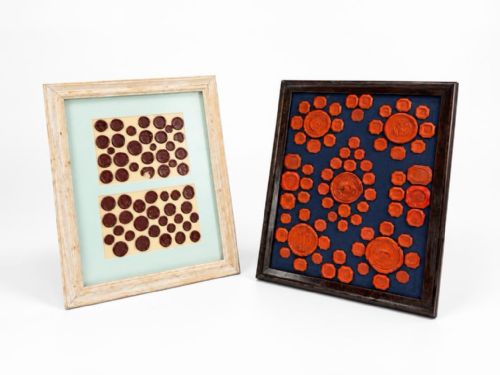
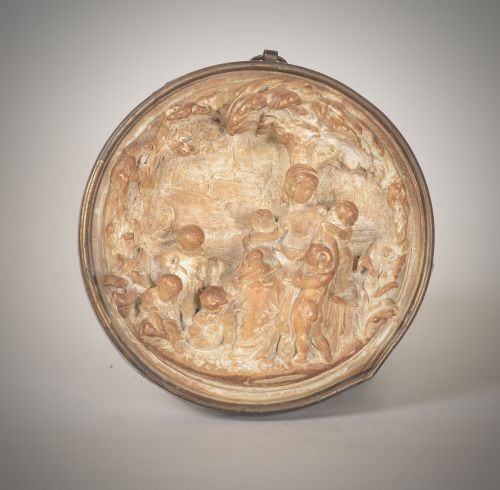
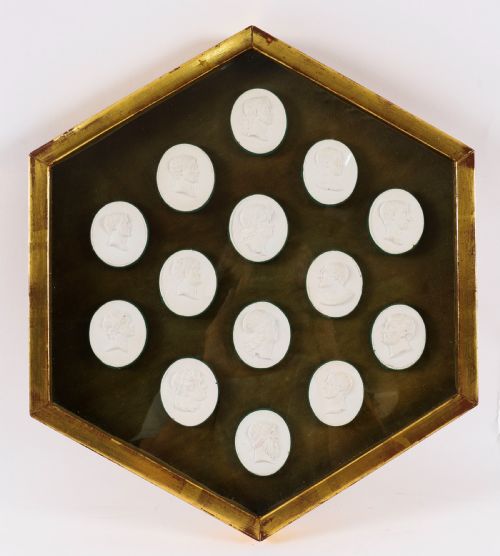
Framed grand tour intaglios comprise collections of miniature classical reliefs gathered by travellers on European journeys during the nineteenth century. These small casts and impressions record ancient gems, coins, and statues encountered abroad.
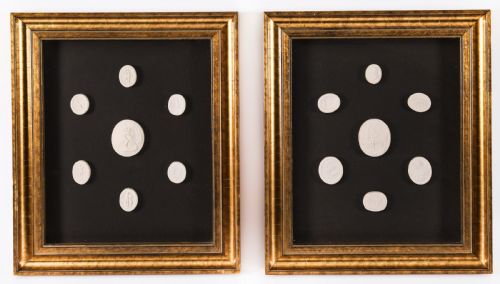
The pieces on this page appear primarily as nineteenth-century works, alongside Edwardian arrangements. They typically manifest as framed wall art, panels, and plaques housing multiple medallions.
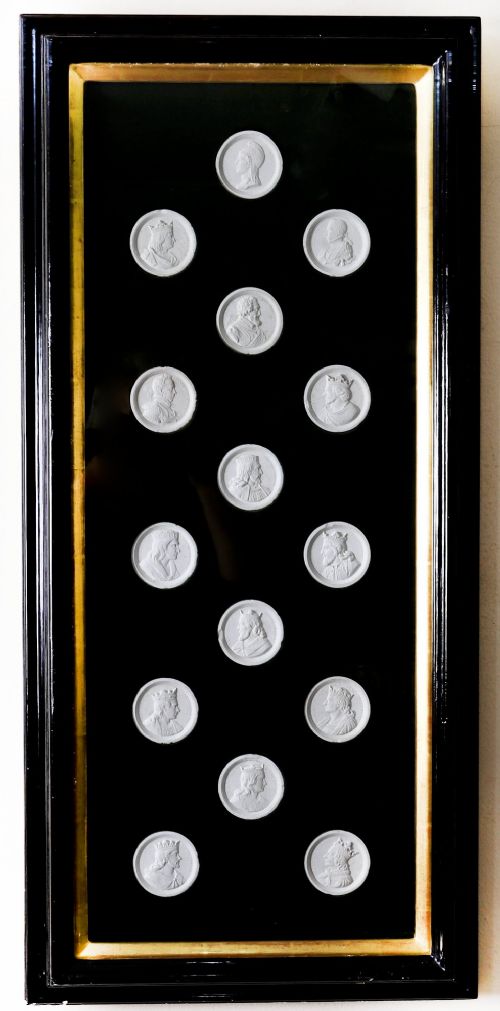
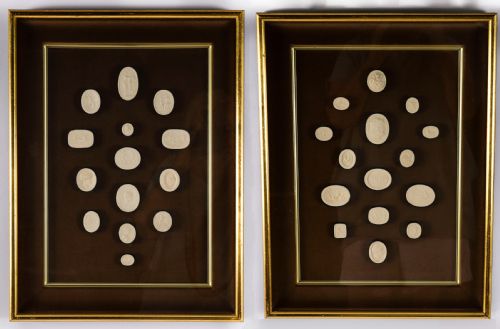
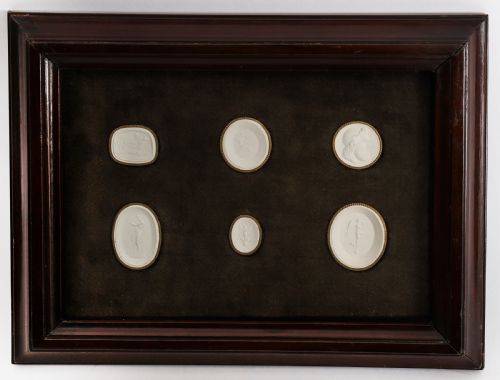
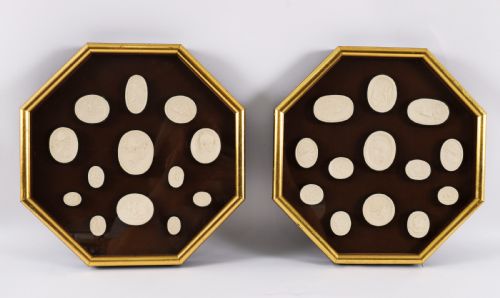
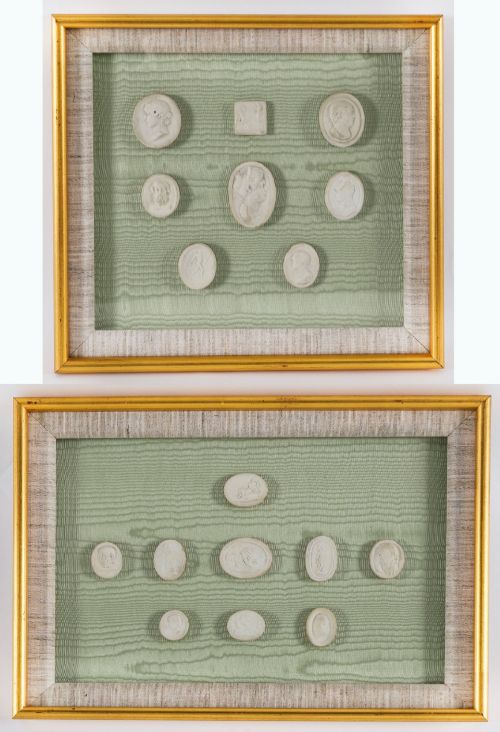
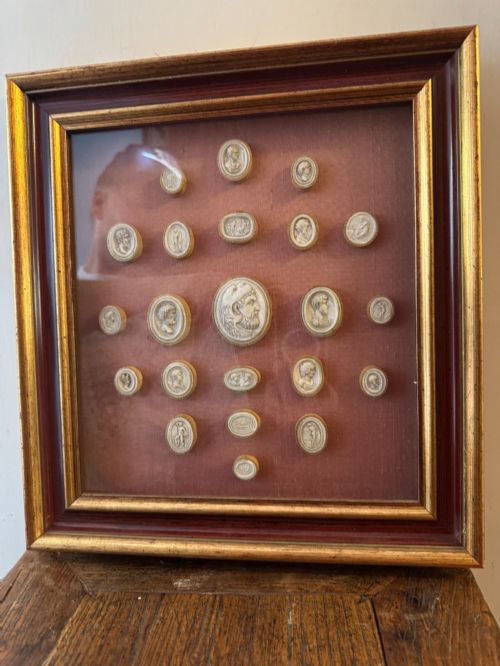
Makers and workshops assembled these plaster, glass, and gypsum casts inside velvet backgrounds and gilt wood or giltwood frames. Collectors encounter single framed pairs as well as extensive boxed sets containing numerous individual classical subjects.
How they were made
Craftsmen produced these intaglios using plaster, gypsum, and glass to take impressions from ancient glyptic art and carved gems. These medallions required careful pouring and setting to capture minute classical details.
The finished casts were arranged systematically against velvet or fabric backgrounds within wooden surrounds. Makers applied gold leaf to create giltwood and gilt frames that enhanced the miniature sculptural scenes.
Framed Grand Tour Intaglios Retail Price Guide 2026
Typical asking prices for framed grand tour intaglios among the pieces listed under this phrase on Sellingantiques today, from the lower quarter to the upper quarter. They describe what is for sale here now, not the wider market.
Nineteenth-century travellers essentially carried pocket-sized art galleries home in their luggage, disguised as plaster casts of Roman emperors.
What varies in quality
Quality separates through the crispness of the individual plaster or glass impressions and the depth of the classical detail preserved within the cast. Superior panels display sharp profiles and clean edges that remain faithful to ancient prototypes.
The mounting and housing further distinguish the pieces, particularly the selection of the velvet backing and the execution of the gilt wood frames. Larger collections demonstrate greater skill in symmetrical arrangement and secure housing.
Giovanni Liberotti
The Framed Grand Tour Intaglios Glossary
- Intaglio
- An engraved gem or impression where the design sinks below the surface, contrasting with a cameo. These miniature reliefs formed the core of grand tour collections.
- Grand Tour
- A traditional journey through Europe undertaken by upper-class young men during the eighteenth and nineteenth centuries to study classical art and culture. Travellers acquired local souvenirs including plaster casts and framed intaglios.
- Giltwood
- Wood carved and covered with a thin layer of gold leaf. This material frequently frames nineteenth-century intaglio panels and wall art.
- Plaster
- A workable mixture used to cast miniature classical reliefs. It forms the primary material for the medallions found in these framed collections.
Framed Grand Tour Intaglios: Frequently Asked Questions
What are framed grand tour intaglios?
Framed grand tour intaglios are collections of nineteenth-century plaster or glass impressions taken from ancient carved gems and sculptures. Travellers brought these miniature reliefs home as souvenirs of European journeys.
Craftsmen mounted the medallions against velvet backgrounds inside decorative wooden frames for wall display. They survive today as wall plaques and panels showcasing classical mythology and history.
How were intaglios originally displayed?
Travellers and collectors originally displayed these framed intaglios on the walls of studies, libraries, and drawing rooms. The arrangements allowed owners to exhibit classical learning and artistic taste to visitors.
Many sets were housed in bespoke box frames or octagonal surrounds to protect the delicate plaster medallions. Larger collections utilised symmetrical layouts to present dozens of individual subjects together.
How do I date these pieces?
Dating relies primarily on the style of the framing, the materials used for the backing, and the construction of the wooden mounts. Nineteenth-century examples often feature giltwood frames and specific velvet linings.
Edwardian interpretations continued the tradition using similar plaster casting techniques. Comparing the mounting style with period interior furnishings helps establish the exact era of assembly.
How do I care for framed intaglios?
Care requires maintaining stable indoor humidity and temperature to protect the delicate plaster casts and fabric backgrounds. Sudden environmental changes can affect the wood frames and backing materials.
Display the panels away from direct sunlight to prevent fading on the velvet or fabric inserts. Dust the frames gently with a soft dry cloth without applying liquid cleaners to the intaglios.