
Framed Fruit Canvas Art
Framed fruit canvas art brings centuries of traditional oil painting and still life subjects directly into modern interiors.
Framed Fruit Canvas Art
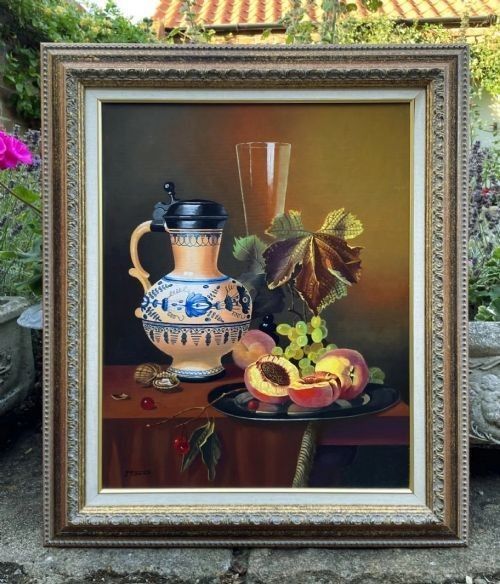
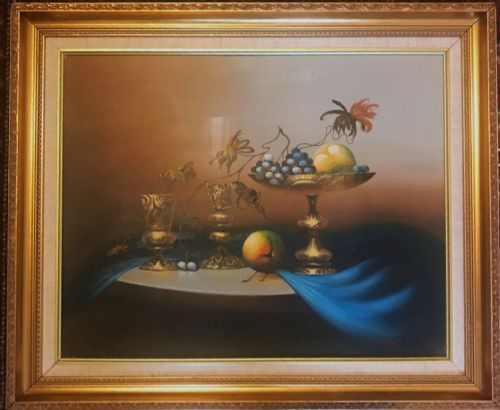
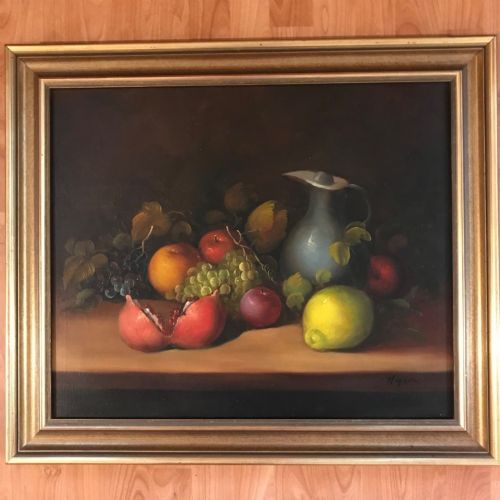
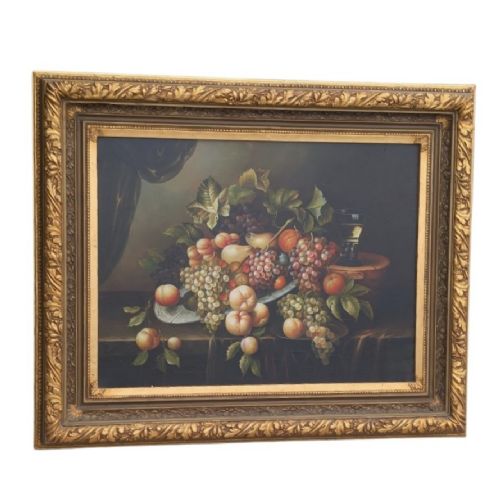
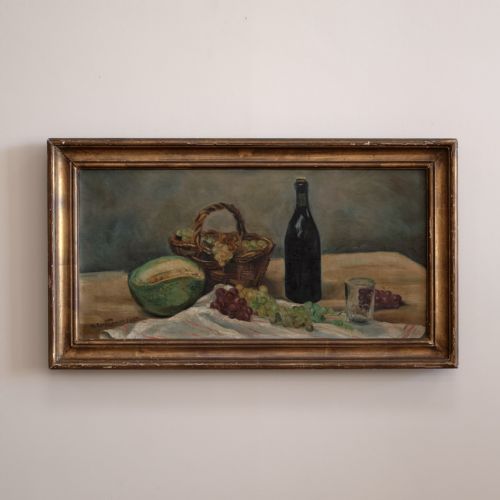
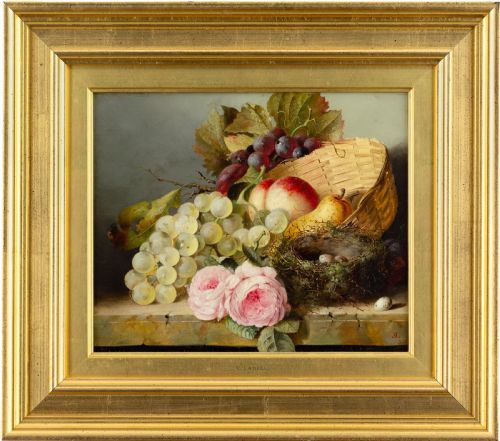
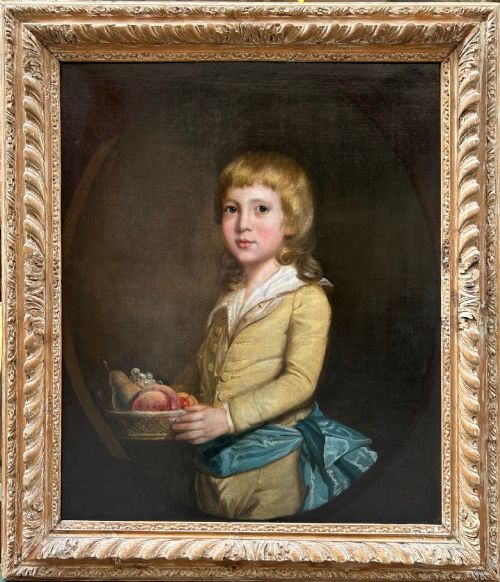
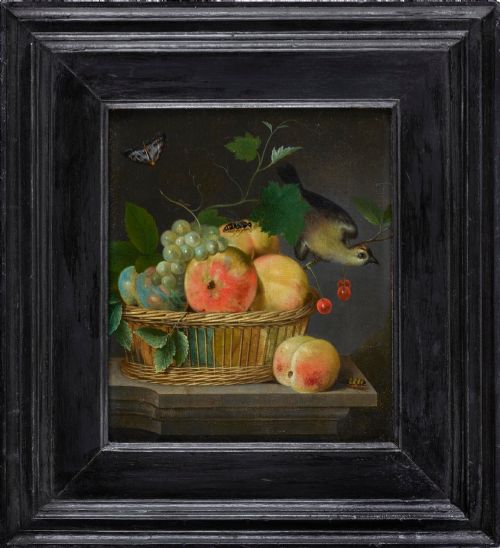
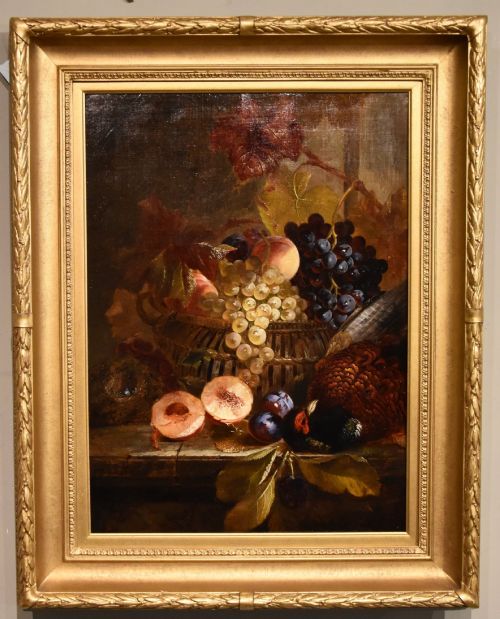
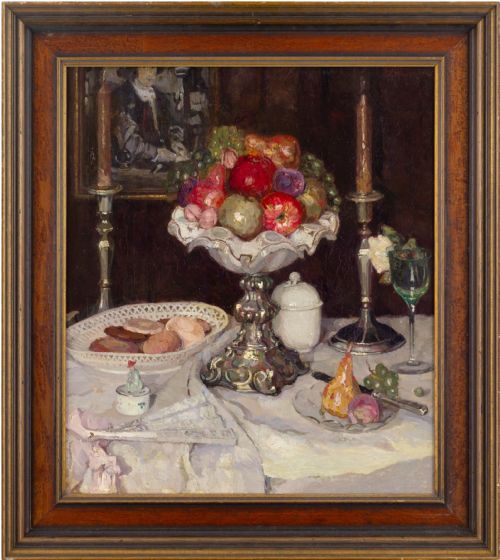
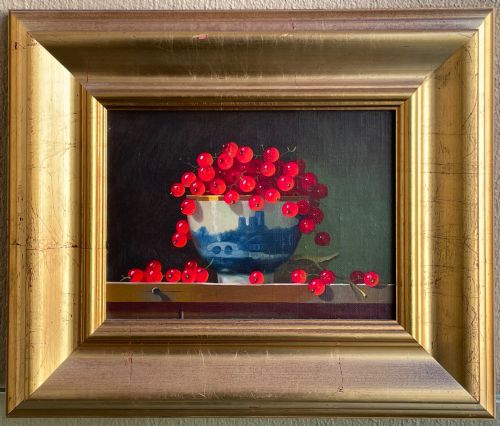
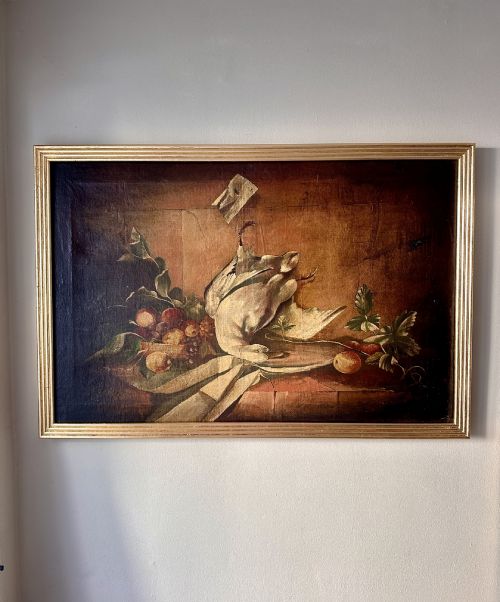
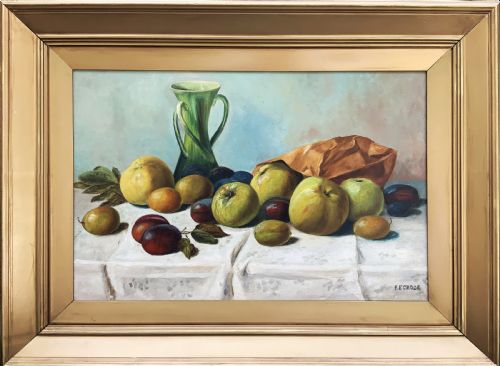
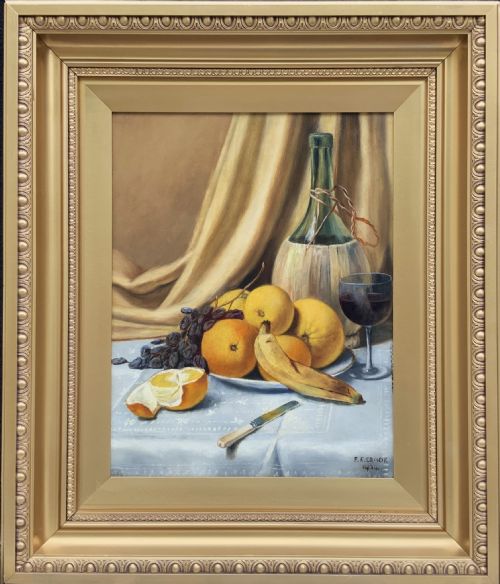
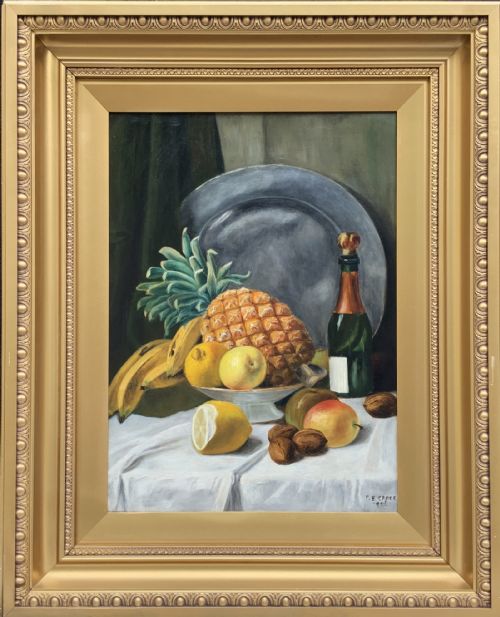
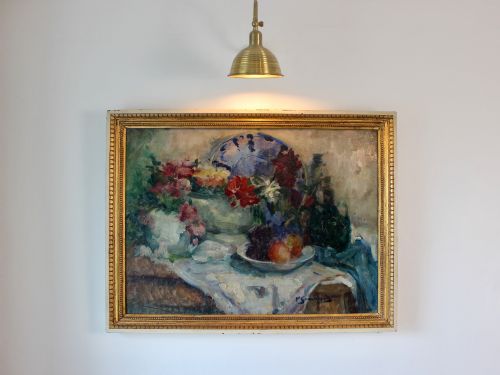
Framed fruit canvas art encompasses oil paintings and still life compositions created across the eighteenth, nineteenth, and twentieth centuries. These works frequently depict arrangements of apples, grapes, berries, and baskets within domestic or pastoral settings.
Buyers most commonly encounter Victorian and Edwardian examples alongside mid-century European school paintings. The selections span from classical realism to post-impressionist interpretations.
Many of these canvases arrive enclosed in period giltwood or wood frames that complement the painted compositions. The subjects range from intimate tabletop studies to large banquet scenes.
How they were made
Artists painted primarily with oil paint upon stretched canvas, occasionally utilising tempera for specific school styles. These pigments built up rich textures representing the skins of fruit, woven baskets, and glazed ceramics.
The surrounding frames consist of wood finished with gold leaf, gilt, or giltwood mouldings. These enclosures secured the canvas while providing a decorative border suited to the period aesthetic.
Several still life compositions tuck unexpected wildlife, such as small birds and nests, right beside the fruit.
What varies in quality
The depth of pigment application and the precision of tonal shading separate competent studies from masterworks. Skilled hands render the translucent quality of grapes and the texture of wicker with remarkable physical presence.
The integrity of the canvas and the preservation of the original paint layer dictate the overall preservation state. Frames matching the period of the painting also influence the cohesion of the piece.
Edward Ladell·Thomas Beach·Gaspar Peeter Verbruggen·William Henry Ward·Else Preußner·Ian Parker·Vladimir Aldoshin·Victor Simonin·Henri Joseph Pauwels·William Duffield·Bela Balogh·Thomas Hooper·Maud Frances Eyston Sumner·J.C.de Bruin
The Framed Fruit Canvas Art Glossary
- Oil on Canvas
- Pigments bound in a drying oil medium applied to a woven fabric support. This combination allowed artists to blend colours smoothly and achieve lasting durability.
- Giltwood
- Wood carved and coated with a thin layer of gold leaf or metallic gilt powder. It serves as a traditional framing material for fine art.
- Still Life
- A work of art depicting mostly inanimate subject matter, typically commonplace objects such as fruit, flowers, and tableware. These compositions focus on arrangement, light, and shadow.
- Classical Realism
- An artistic style that maintains traditional methods of drawing and painting with an emphasis on accurate observation. It avoids abstraction in favour of lifelike representation.
- Post-Impressionism
- A French art movement that extended Impressionism while rejecting its limitations. Artists departed from faithful depiction to explore emotional resonance and structural form.
Framed Fruit Canvas Art: Frequently Asked Questions
How do I date a canvas painting?
Dating relies on stylistic clues, framing techniques, and the type of canvas stretcher used. Pigment analysis and artist signatures provide further confirmation.
Examining the reverse of the canvas often reveals old exhibition labels, stamps, or handwritten inscriptions from previous owners.
What is a still life painting?
A still life painting focuses on inanimate objects arranged in an indoor setting. Common elements include fruit, flowers, glassware, and game.
These works allowed historical artists to demonstrate technical skill in lighting, texture, and spatial composition.
Are these paintings supplied with frames?
Most listings include the original or period-appropriate frame housing the canvas. Giltwood and wood frames are standard across many Victorian and Edwardian examples.
Buyers should verify whether the current frame dates to the same era as the artwork itself.
Where were these European school pieces created?
European school paintings originate from various continental art hubs, including France, Belgium, the Netherlands, and Germany. Different regions developed distinct approaches to light and palette.
Attributions often point to regional academies where artists trained in traditional realism or impressionism.