
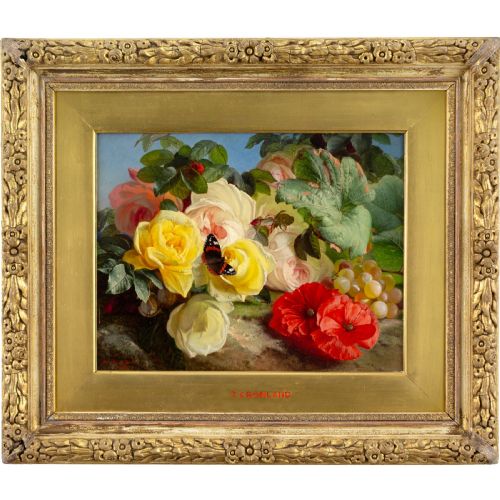
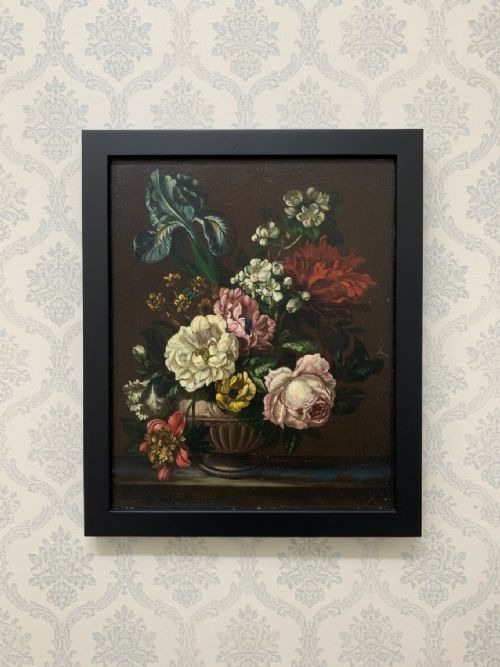
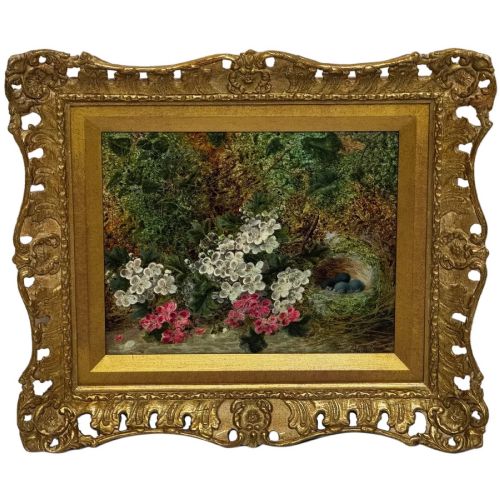
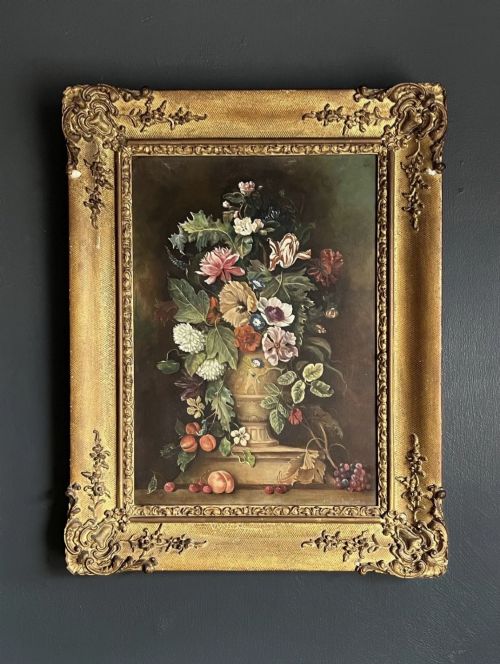
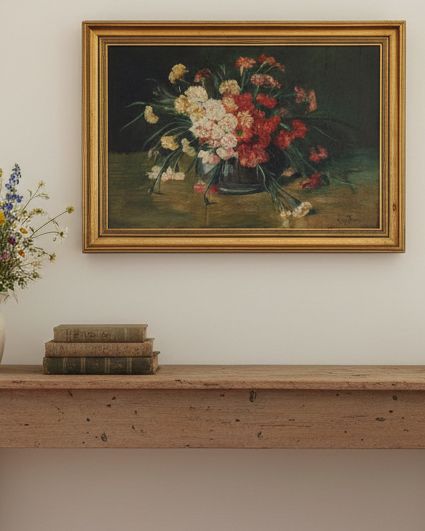
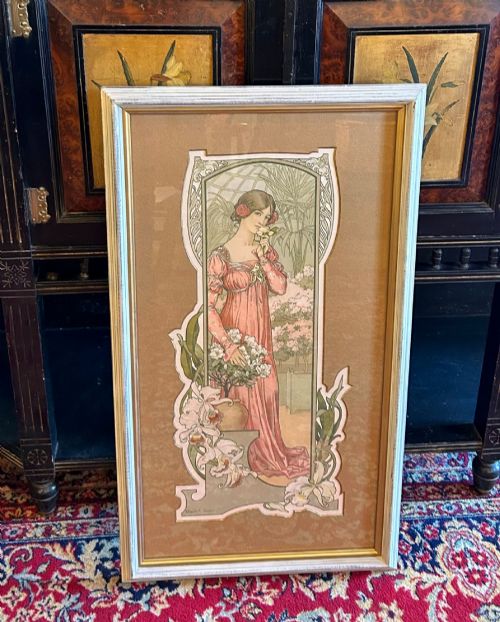
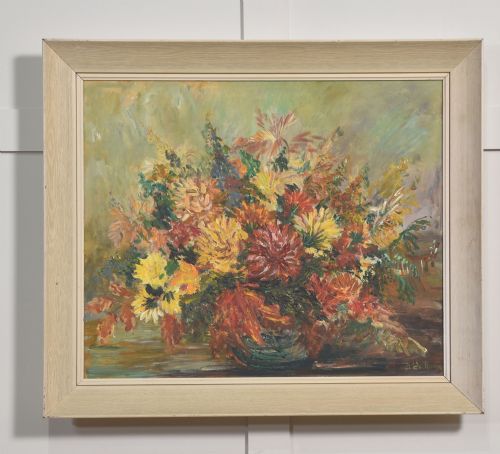
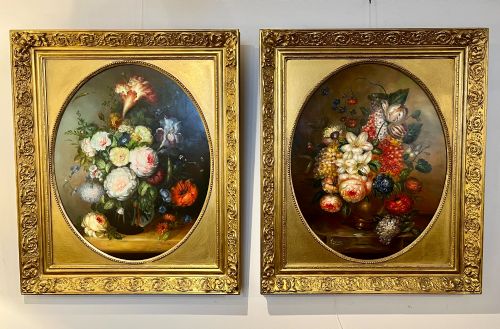
Framed Floral Botanical Art
These pieces of framed floral botanical art bring centuries of painted blossoms, watercolours and textiles directly to the wall.
Framed Floral Botanical Art
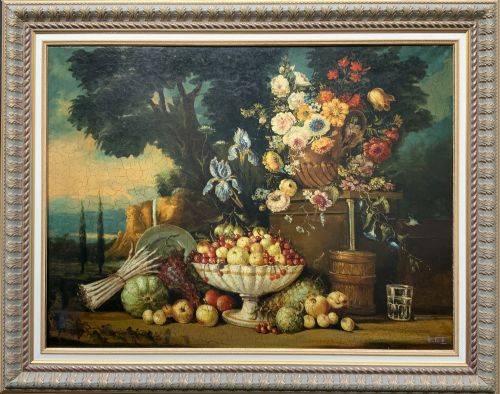
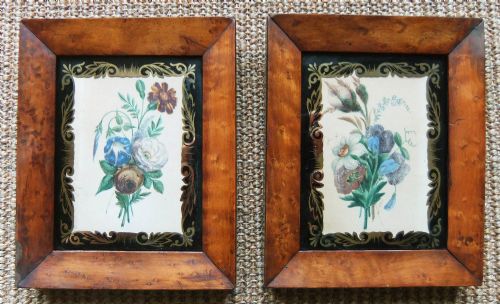
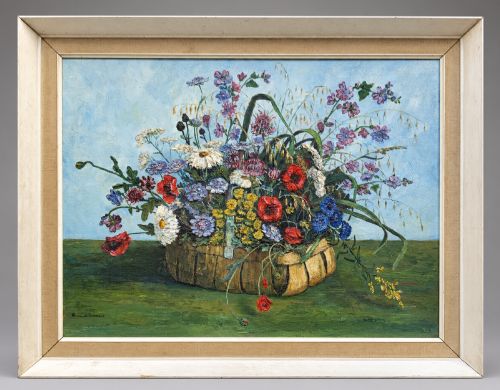
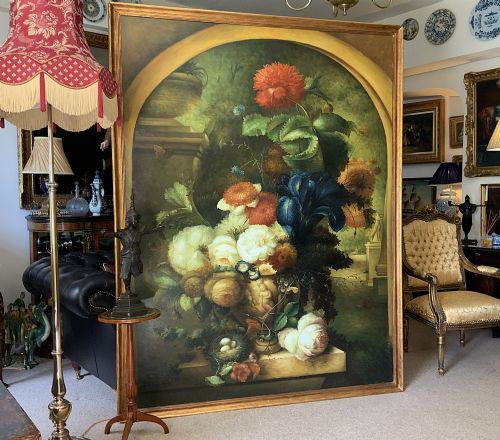
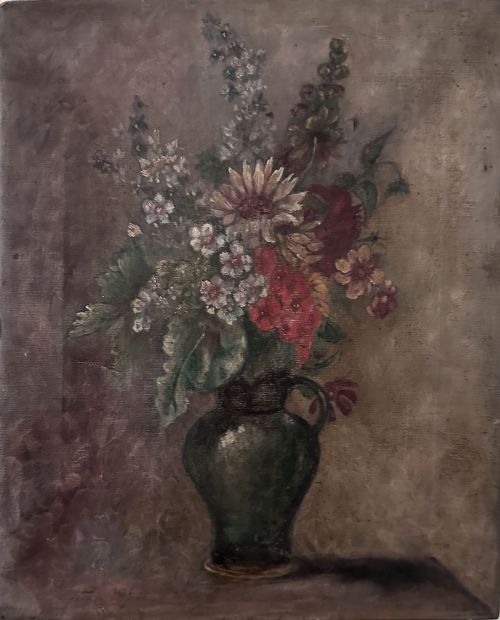
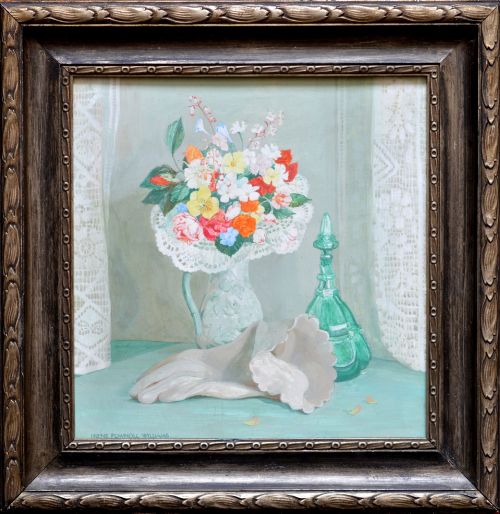
Framed floral botanical art covers centuries of painted, printed and drawn plant studies, from delicate nineteenth-century watercolours to monumental twentieth-century still lifes.
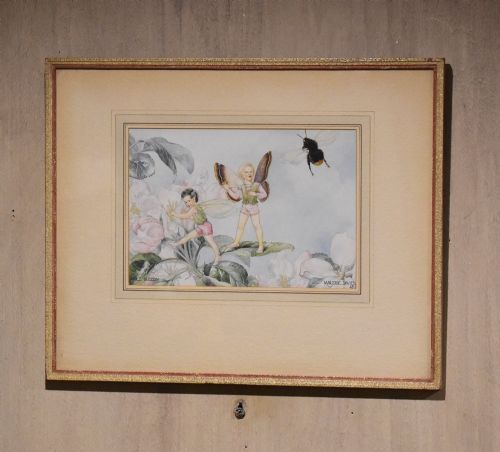
The selections span distinct periods including the seventeenth century, the Regency era, Victorian studies, and mid-century impressionism.
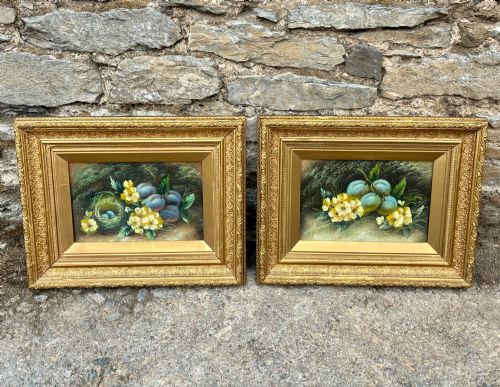
Buyers encounter works executed in oil, canvas, paper and panel, housed in period frames ranging from simple wood to ornate gilt gesso.
How they were made
Makers utilised traditional supports such as canvas, wood panels and heavy paper, applying media that included oil paint, watercolour, gouache and pencil.
Many works incorporate gold leaf or detailed gilding on the frames, accentuating the floral subjects with rich borders and gesso moulding.
The inventory ranges from seventeenth-century Dutch school oils to mid-century impressionist panels.
What varies in quality
Skill in handling light and botanical detail separates straightforward decorative student works from accomplished compositions by named artists.
The integrity of the original frame, particularly period gilt gesso or matched wood surrounds, heavily influences the overall character and standing of a piece.
Oliver Clare·Elisabeth Sonrel·Edward Ladell·Emma Fordyce MacRae·Gaspar Peeter Verbruggen
The Framed Floral Botanical Art Glossary
- Gilt gesso
- A plaster-like material applied to wood frames and coated in gold leaf to create ornate raised ornamentation.
- Oleograph
- A mechanical colour print on canvas that simulates the texture and appearance of an oil painting.
- Still life
- An artwork depicting inanimate subject matter, typically featuring cut flowers, fruit or domestic objects.
- Lithograph
- A print made from a flat stone or metal plate on which an image is applied using an oil-based medium.
Framed Floral Botanical Art: Frequently Asked Questions
How do I hang a heavy oil painting safely?
Ensure the wall fixings match the weight of the canvas and frame, utilising sturdy picture wire or D-rings screwed securely into the wooden stretcher bars.
Avoid hanging large works in areas subject to direct sunlight or damp conditions to protect both the pigment and the wooden frame over time.
Can I mix nineteenth-century watercolours with mid-century oils?
Grouping different periods together works well if the framing materials share a common tone, such as matching dark wood or subtle gilt edges.
Keep the centre lines aligned at eye level to create a cohesive gallery wall from disparate artistic eras.
How do I identify a Victorian botanical study?
Victorian pieces frequently rely on watercolour, gouache or pencil on paper, often showing precise attention to the natural structure of leaves and stems.
Signatures, framing styles and period mount boards offer additional clues to date the work accurately.
Should glass protect watercolour floral art?
Paper works executed in watercolour or gouache require glass protection to shield the delicate pigments from atmospheric moisture and dust.
Ensure a mount separates the paper from the glass surface to prevent humidity damage over the years.